
Summary
- At 30 June, 590 MW was leased to CoreWeave and 395 MW was billable; the remaining 195 MW was in construction and commissioning.
- By mid-July, 437 MW was billing. After new AMD and neocloud agreements, total leased capacity reached approximately 1.1 GW and more than US$24 billion of potential contracted revenue.
- Approximately US$1.0 billion of purchase and construction commitments, 7.75% secured debt and rent-start conditions place capital and timing between leased power and collected cash.
A megawatt changes meaning as it moves through the campus
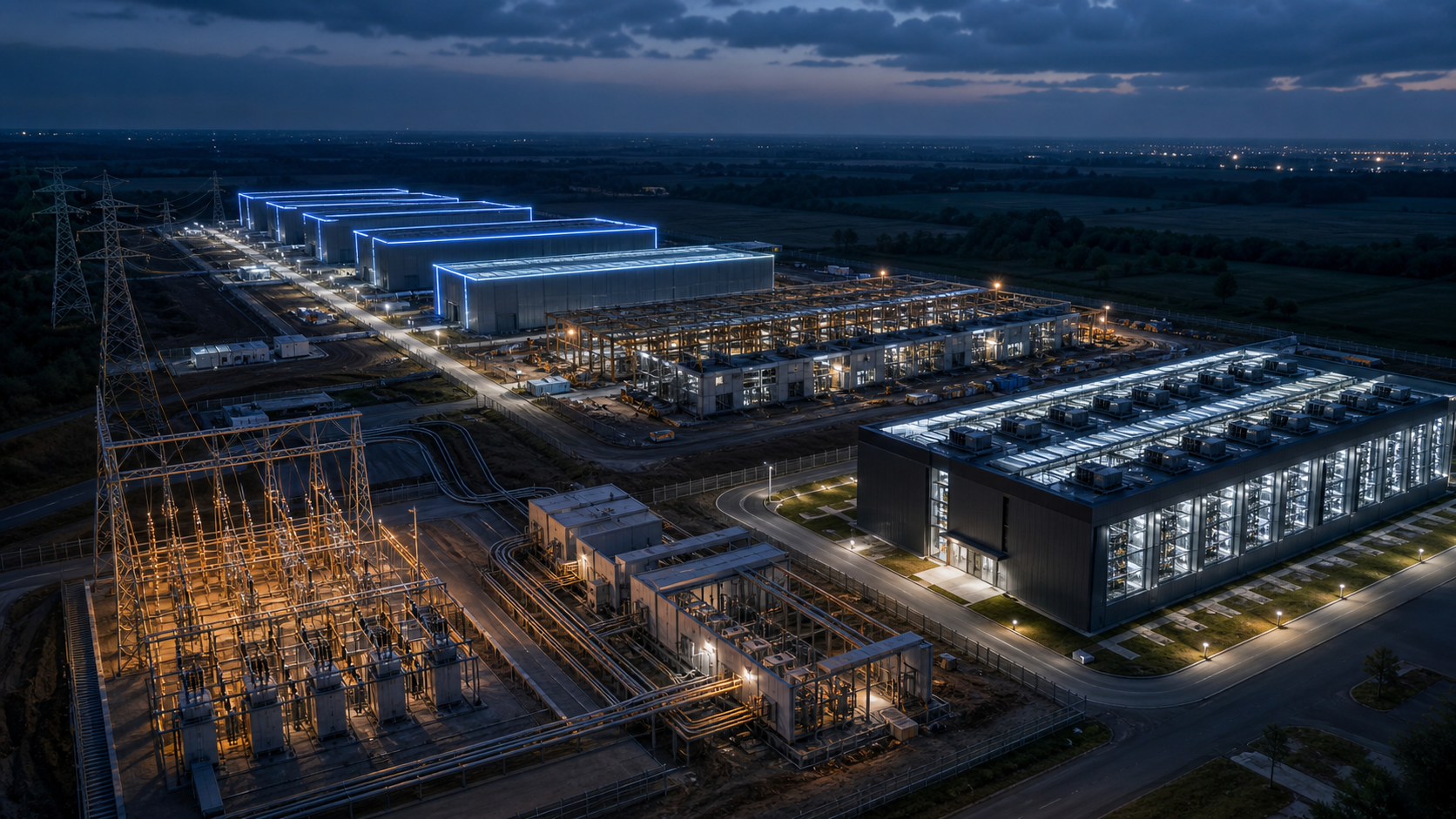
Core Scientific's transition from bitcoin mining toward high-density colocation is now large enough to be measured in several different power ledgers. At 30 June, it controlled approximately 2.1 GW of gross utility power and estimated 1.3 GW of total leasable customer power across 11 US data centres. Those figures describe the physical and engineering perimeter, including capacity not yet sold.
The contractual perimeter was narrower. CoreWeave had leased approximately 590 MW across five sites. Only 395 MW had commenced billing at quarter-end, leaving 195 MW in construction and commissioning. Billing capacity had advanced quickly—from 120 MW in fiscal Q4 2025 to 225 MW in Q1 and 395 MW in Q2—but leased capacity still ran ahead of the revenue-producing base.
On 28 July, Core Scientific announced 15-year agreements associated with AMD and a neocloud tenant for approximately 530 MW. Together with the CoreWeave estate, the company described approximately 1.1 GW of leased customer capacity and more than US$24 billion of potential contracted revenue. By mid-July, however, 437 MW was billing and represented about US$635 million of average annualised colocation GAAP revenue.
The dates and definitions must remain separate. The 1.1 GW reflects agreements announced after quarter-end. The 437 MW is a mid-July operating measure. Potential contracted revenue spans long terms and depends on delivery; it is not current revenue, cash or a one-year backlog. The AMD relationship may expand toward 2.5 GW, but expansion potential is neither leased nor billable capacity.
The conversion chain is physical before it is financial
A utility agreement does not energise a customer rack. Land, interconnection, substations, transformers, switchgear, cooling, fibre, halls and customer-specific fit-out have to arrive in sequence. Systems must be commissioned and accepted. Only then does the relevant rent or licence start and billing become possible.
That sequence appeared in current results. Q2 colocation revenue reached US$136.7 million, up from US$10.6 million a year earlier, as more billable MW entered service. Total quarterly revenue was US$164.2 million. The improvement is evidence that the conversion mechanism works; it does not remove the remaining construction gap.
At 30 June, Core Scientific was contractually committed to approximately US$1.0 billion of future purchase and construction expenditure, substantially all expected within 12 months. US$264 million would be passed through to a customer as invoiced. The filing does not allocate every remaining dollar to the 195 MW CoreWeave gap, later AMD sites or development for prospective customers, so the residual cannot be labelled a disclosed cost of one capacity cohort.
Financing follows delivery milestones, but it does not erase them
Core Scientific Finance issued US$3.3 billion of 7.75% senior secured notes due 2031. The secured project entities own or operate specified developments. The first instalment date is tied to rent commencement and the end of revenue credits under related data-centre leases. That design connects amortisation timing to operating delivery.
It does not make timing costless. Revenue credits reduce the tenant's payment obligation during ramp-up. Construction commitments still require labour, equipment and deposits. A delayed hall can postpone billing while interest and project overhead continue. Customer concentration also matters: CoreWeave remained the primary obligor after certain licences were assigned into a special-purpose financing structure.
The useful market dashboard therefore has several rows: gross utility MW, leasable MW, leased MW, construction MW, commissioned MW, billing MW, revenue per billing MW, unspent commitments, customer pass-throughs, credits, debt service and collected cash. Collapsing them into “power capacity” turns an execution chain into a promotional total.
Sources
Member Briefing
Deeper Profile Context
Sign in with the right membership level to unlock the full briefing and source notes.
Only for Strategic Circle
Strategic Circle
Open to all readers. Unlock profile briefings after joining and signing in.
Join Strategic CircleOnly for Leadership Alliance
Leadership Alliance
For qualified IP-asset owners and management; sign in to unlock alliance briefings.
Join Leadership Alliance