
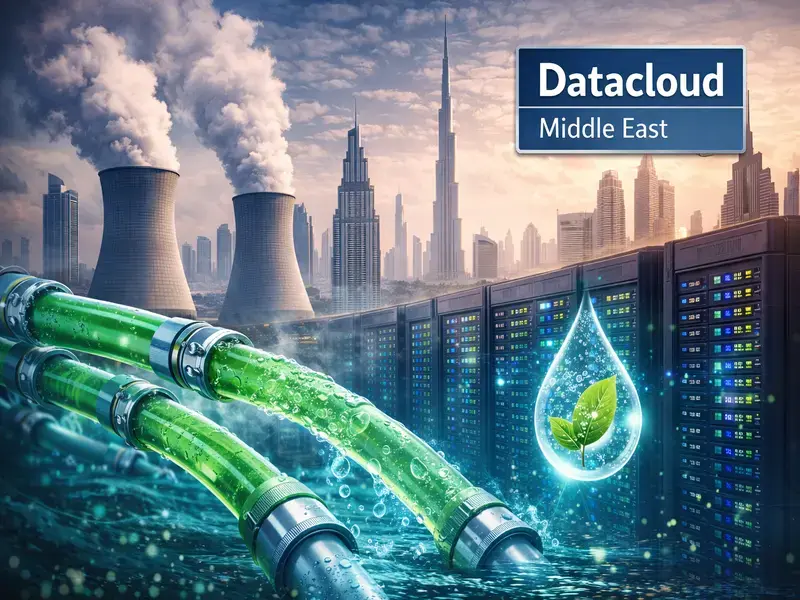
- Cooling technologies and energy efficiency were central themes at Datacloud Middle East
- Operators face mounting pressure to balance AI-driven demand with sustainability targets
What happened: Heat becomes the headline
Cooling and sustainability emerged as defining themes at Datacloud Middle East, as developers, operators and technology suppliers confronted the realities of rising compute intensity. According to coverage by Capacity Media, discussions repeatedly returned to how data centres in the region can manage higher rack densities while limiting environmental impact.
Datacloud Middle East is a flagship industry event bringing together hyperscalers, colocation providers, investors and infrastructure specialists. This year’s programme reflected a shift in priorities: rather than focusing solely on expansion, panels examined the engineering and financial implications of next-generation cooling systems, including liquid cooling and advanced airflow management.
Speakers highlighted that AI workloads are significantly increasing power densities per rack, placing strain on traditional air-based cooling systems. According to entities cited by Capacity, regional operators are exploring alternative approaches to maintain performance without escalating energy consumption.
The Middle East presents particular challenges. High ambient temperatures and rapid digital growth complicate efforts to improve efficiency. Yet governments across the region are also advancing sustainability agendas, making energy performance a commercial as well as regulatory concern.
Also Read: Vodafone IoT and Hyundai to roll out connected cars in Middle East
Also Read: Middle East telecoms pivot towards venture capital
Why it’s important
Data centres underpin cloud computing, digital services and AI development, but they are also large energy consumers. As AI adoption accelerates, the industry faces a structural tension: more compute capacity generates more heat, and cooling that heat demands more power.
The emphasis on sustainability at Datacloud Middle East suggests operators are moving beyond marketing rhetoric. Cooling architecture is increasingly seen as core infrastructure strategy rather than a facilities afterthought. From a financial standpoint, energy efficiency can directly affect operating expenditure, particularly in markets where electricity costs are significant.
The regional focus is equally important. The Middle East has become a growing hub for hyperscale and colocation investment, driven by government digital strategies and strong enterprise demand. Ensuring that expansion aligns with environmental targets will shape the next phase of development.
In short, the debate in Dubai signals that future competitiveness in the data centre sector may hinge less on sheer capacity and more on how efficiently that capacity can be cooled and sustained.