
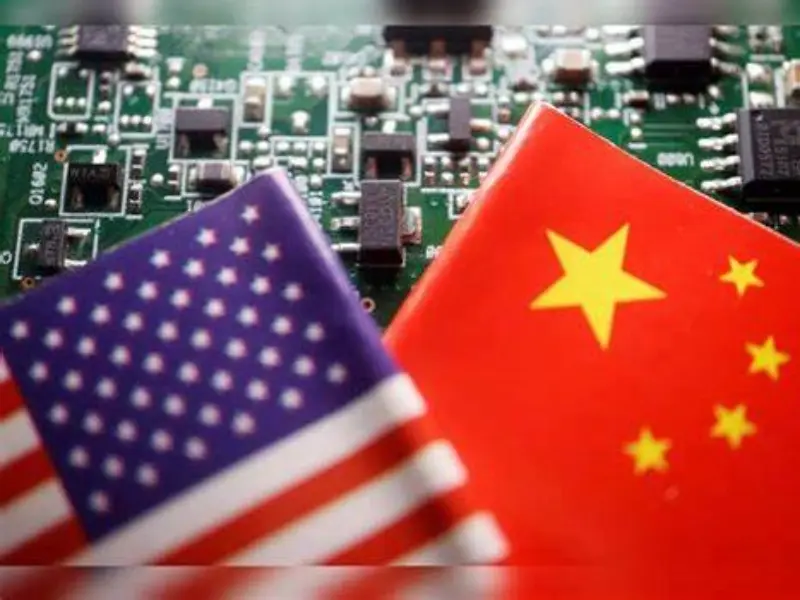
- Chinese tech firms, including Huawei and Baidu, are stockpiling high bandwidth memory (HBM) semiconductors from Samsung Electronics ahead of expected US export restrictions.
- US authorities are reportedly set to unveil a package of export controls this month, which will impose new restrictions on semiconductor shipments to China’s industry.
OUR TAKE
The proactive stockpiling of HBM chips by Chinese tech firms highlights their efforts to secure essential components for advanced AI systems amidst looming US export restrictions. This underscores the strategic importance of securing access to advanced technologies and the impact of geopolitical tensions on the global semiconductor industry.
–Vicky Wu, BTW reporter
What happened
Chinese tech giants, including Huawei and Baidu, along with startups, are increasing their purchases of high bandwidth memory (HBM) semiconductors from Samsung Electronics in anticipation of US export restrictions on these chips to China, according to three sources.
Since the beginning of this year, these companies have significantly stepped up their acquisition of AI-capable semiconductors, contributing to China accounting for roughly 30% of Samsung’s HBM chip revenue in the first half of 2024, one source noted.
These moves demonstrate China’s efforts to maintain its technological ambitions amidst growing trade tensions with the United States and other Western nations. They also illustrate the impact of these tensions on the global semiconductor supply chain.
US authorities are reportedly planning to introduce a package of export controls this month, which will impose new restrictions on semiconductor shipments to China’s industry.
Also read: Samsung’s profit skyrockets on AI demand and rising chip prices
Also read: Huawei unveils nova Flip with a square cover screen
Why it’s important
Nori Chiou, investment director at Singapore-based White Oak Capital Partners, said, “Given that its domestic technology development is not yet fully mature, China’s demand for Samsung’s HBM has become exceptionally high, as other manufacturers’ capacities are already fully booked by American AI companies.”
The proactive stockpiling by Chinese companies demonstrates their determination to secure critical components for advanced AI processors, such as Nvidia’s graphics processing units, which are used in generative AI applications. HBM chips are essential for the development of sophisticated processors, and only three major manufacturers produce them: SK Hynix and Samsung from South Korea, and US-based Micron Technology. Chinese demand has primarily focused on the HBM2E model, which is two generations behind the latest HBM3E version.
These developments underscore the strategic importance of securing access to advanced technologies in the face of tightening export controls and the complex interplay between geopolitical tensions and the global technology landscape. The restrictions could disproportionately affect Samsung, which relies heavily on the Chinese market, compared to its competitors like Micron and SK Hynix.