
Institution Profiling / Internet infrastructure institution

Candle cable system links Japan and Singapore by 2028

Candle cable system links Japan and Singapore by 2028 is tracked as a internet infrastructure institution within the internet infrastructure ecosystem.

Candle cable system links Japan and Singapore by 2028

Evidence Pack

Primary-source references used for classification and impact scoring.

CategoryInstitution Type

Controlled classification for comparative analysis.

RegionAsia Pacific

Primary geography where strategy signal is most visible.

Signal FocusInternet infrastructure institution

Principal area tracked in this profile.

Content TypeProfile

Structured profile with operational and governance relevance.

Primary DomainTechnology

Domain interpretation lens.

TopicInternet infrastructure institution

Session topic under controlled profile taxonomy.

ImpactMedium

Leadership and execution signals affect strategy timing.

Confidence?Confidence Grade · doctrine v2 §8 / SOP §2
0.90–1.00AHigh — direct sources
0.75–0.89A/BStrong
0.55–0.74B/CMedium
0.35–0.54C/DWeak–medium
0.10–0.34DWeak signal
0.00–0.09DInternal monitoring
C · 0.82

Mixed-source

Candle cable system links Japan and Singapore by 2028 is profiled by BTW Media because public-source evidence links it to internet infrastructure, governance, operational dependencies, or market visibility.

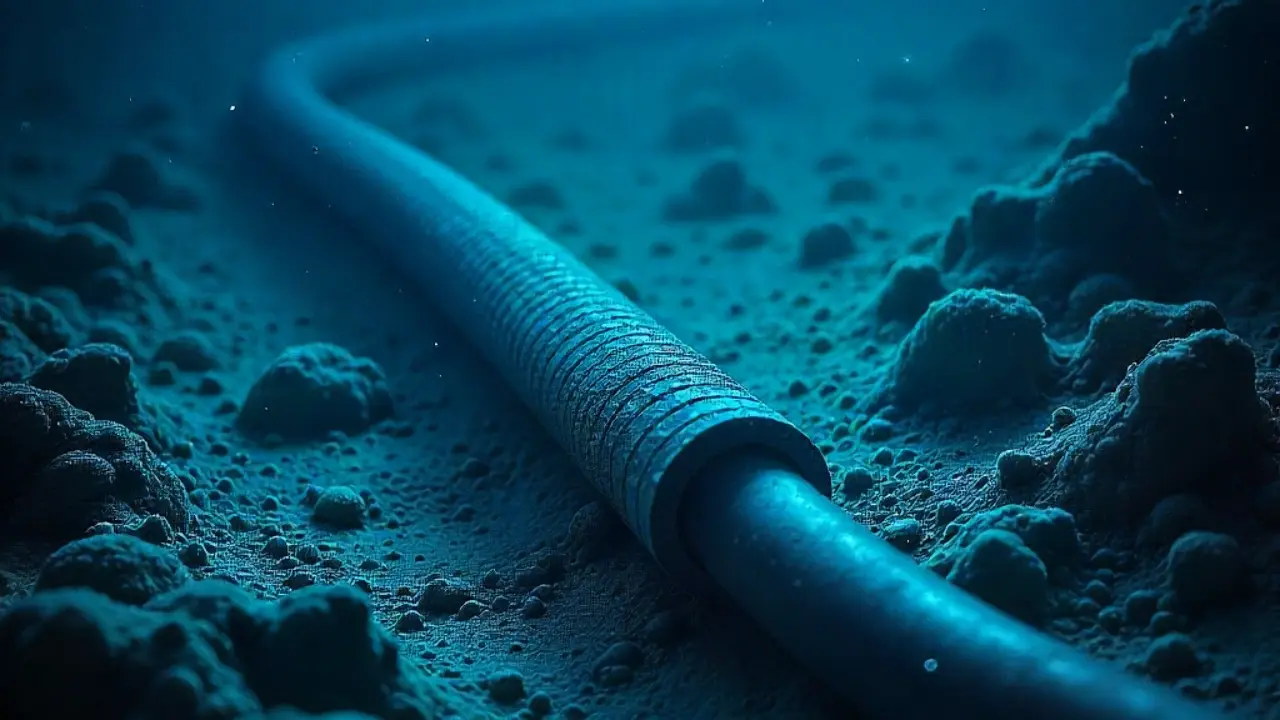
  • A consortium led by Meta and SoftBank launches the Candle submarine cable system to connect six Asia-Pacific economies with 24 fibre pairs.
  • The project aims to increase network resilience, reduce latency and support surging demand from 5G, AI and cloud services.

What happened: Candle submarine cable system announced

Meta, SoftBank, IPS, TM Technology Services, PT XLSmart Telecom Sejahtera, and NEC are collaborating on a new international subsea cable system called Candle, which will connect Japan, Taiwan, the Philippines, Indonesia, Malaysia, and Singapore. The cable will be 8,000 km long, feature twenty-four fibre pairs, and is scheduled to come online in 2028.

SoftBank will act as the landing party in Japan. It will use the SoftBank Maruyama Landing Station in Minamiboso, Chiba Prefecture. Additional cable landing stations will be built in Tomakomai, Hokkaido, and Itoshima, Kyushu. Don Pang, Chairperson of the Candle Management Committee (Meta), said Candle represents a pivotal advancement in fortifying the region’s digital infrastructure. It will deliver greater network diversity and resilience along this essential corridor, leveraging state-of-the-art technology. Kimimasa Kudo, Vice President and Head of the Global Business Division, Enterprise Unit at SoftBank, highlighted growing demand driven by generative AI and IoT. He noted that Candle will be integrated with other submarine cables such as JUPITER, ADC, and E2A. This integration enhances redundancy for communications originating from Japan.

Also read:Red Sea cable cuts disrupt Asia–Mideast traffic

Also read:GlobalConnect to build subsea cable between Sweden and Finland

Why it’s important

Asia-Pacific is one of the fastest-growing regions for data, driven by cloud computing, AI applications, and the expansion of 5G networks. Existing submarine cables are often constrained by capacity or architecture—with typical fibre-pair counts around sixteen to twenty. Candle‘s 24 fibre pair design significantly increases throughput and allows for lower latency and higher redundancy.

Japan’s landing stations are geographically dispersed. This enhances disaster resilience. SoftBank has stations in Maruyama, Tomakomai, and Itoshima. If one route fails, others can maintain service. For Malaysia, Singapore, the Philippines, and Indonesia, the cable adds international backbone capacity. This is critical for edge cloud and real-time services. AI models and data demands are surging, so infrastructure must scale. Candle fills capacity gaps and provides a resilient corridor amid climate risks and geopolitical tensions. Through this joint venture, the partners signal that multi-stakeholder collaboration is essential for future-ready digital infrastructure.

Core Entity Brief

  • Entity: Candle cable system links Japan and Singapore by 2028
  • Subject Type: Internet infrastructure institution
  • Region: Asia Pacific
  • Classification: Institution Type

Service Surface / Control Surface

  • Public records support monitoring of governance, service, and infrastructure control surfaces.

Governance and Policy Surface

  • Public-source signals support medium-impact monitoring for infrastructure visibility and dependency analysis.
  • Operational criticality: Medium
  • Time horizon: Quarter (30-120d)

Decision Trigger Matrix

  • Monitoring focuses on verified service continuity, governance changes, and relationship signals.
NowMedium priority

Current state favours active tracking due to infrastructure relevance.

QuarterMedium policy sensitivity

Public-source signals support medium-impact monitoring for infrastructure visibility and dependency analysis.

YearQuarter (30-120d) continuity dependency

Long-cycle infrastructure decisions likely to remain path-dependent.

Member Unlock

Restricted Profile Intelligence

Login is required to unlock full profile briefings and deep-dive sections.

Only for Strategy Circle

Strategic Circle Access

Open to all readers. Unlock profile briefings after joining and logging in.

Join Strategic Circle

Only for Leadership Alliance

Leadership Alliance Access

For owners and management of IP-holding companies. Login required to unlock.

Join Leadership Alliance
← BackAll Companies