
- Doodling, the spontaneous and often abstract scribbles we make while thinking or on the phone, is a universal human activity.
- The intersection of AI and doodling could lead to innovative tools for artistic expression and communication, further blurring the lines between technology and human creativity.
Within the domain of artificial intelligence (AI), neural networks have demonstrated their efficacy as robust tools across a spectrum of functions, encompassing image recognition to natural language processing. One intriguing question that arises is whether a neural network can learn to recognise doodling – spontaneous and often abstract drawings that reflect the creative essence of an individual. The answer is a resounding yes.
Exploring the potential of neural networks in doodling recognition
Doodling is a unique form of expression that transcends traditional artistic boundaries, providing insight into a person’s thoughts, emotions, and personality. While doodles may appear simplistic or abstract, they hold significant meaning and symbolism for the creator. The challenge lies in teaching a neural network to decipher and interpret these seemingly random sketches.
Recent advancements in AI and deep learning have enabled researchers to explore the potential of neural networks in understanding and categorising doodling. By training a neural network on a diverse dataset of doodles encompassing various styles and motifs, researchers can teach the AI system to recognise common patterns, shapes, and symbols present in doodling.
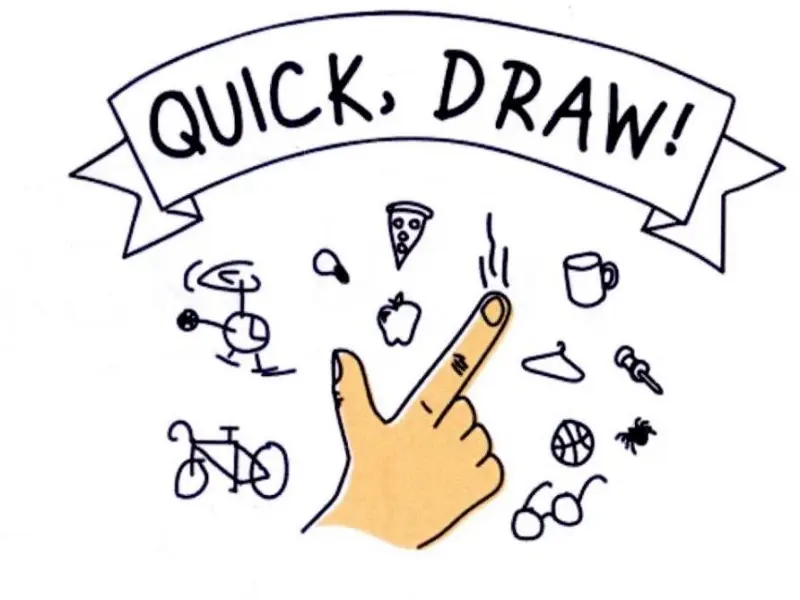
One notable example is Google’s “Quick, Draw!” experiment, where users were prompted to doodle specific entities within a limited time frame, challenging the neural network to identify the doodles based on incomplete and rough sketches. Through machine learning algorithms, the neural network gradually improved its accuracy in recognising doodles and providing real-time feedback to users.
Also read: 7 reasons why we use neural networks in machine learning
The intersection of creativity and technology
The convergence of creativity and technology is exemplified by the capacity of neural networks to interpret doodling, unlocking avenues for personalised digital tools and applications. This technological capability not only facilitates new forms of creative expression but also prompts contemplation on the interaction between human ingenuity and artificial intelligence. By serving as a conduit between human creativity and machine learning, neural networks have the capacity to revolutionise artistic endeavours, spark collaborations between individuals and AI systems, and redefine the parameters of creative expression.
This harmonious relationship between creativity and technology showcases the immense potential for innovation and exploration in the digital landscape. Through this symbiosis, neural networks have the ability to catalyse groundbreaking advancements in the arts, fostering a dynamic ecosystem where human creativity is augmented and complemented by the capabilities of AI. As the boundaries between human expression and machine intelligence blur, the intersection of creativity and technology presents a realm ripe with possibilities for artistic evolution and collaboration.
Also read: What is an artificial neural network in deep learning?
Challenges and limitations
Despite the vast potential, recognising doodles poses challenges. Doodles are often personal and abstract, complicating categorisation. Furthermore, the subjective nature of art means interpretations vary; what one perceives as a doodle, another may view as a complete work of art. Such complexities present obstacles in training neural networks to accurately identify and understand the nuances of doodling.