
Institution Profiling / Internet infrastructure institution

BYD partner with Huawei to develop autonomous electric vehicles

BYD partner with Huawei to develop autonomous electric vehicles is tracked as a internet infrastructure institution within the internet infrastructure ecosystem.

BYD partner with Huawei to develop autonomous electric vehicles
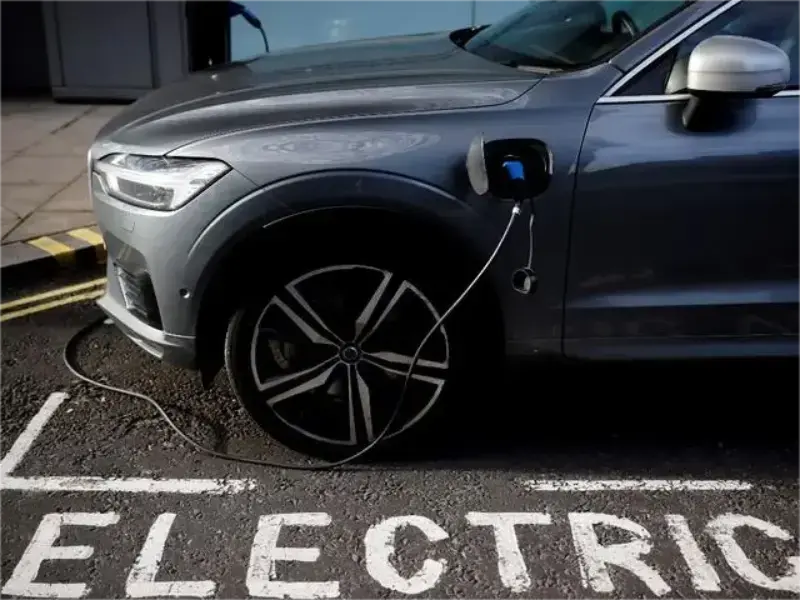
Caption: BYD partner with Huawei to develop autonomous electric vehicles · Source context: featured article image · Relevance reason: visual context for BYD partner with Huawei to develop autonomous electric vehicles · Image provenance: BTW media library

Sources

Public references used for this article.

CategoryInstitution

BYD partner with Huawei to develop autonomous electric vehicles is tracked as a internet infrastructure institution within the internet infrastructure ecosystem.

RegionAsia Pacific

BYD partner with Huawei to develop autonomous electric vehicles has public-source relevance to network operations, governance, dependency mapping, or market structure.

Signal FocusInternet infrastructure institution

BYD partner with Huawei to develop autonomous electric vehicles has public-source relevance to network operations, governance, dependency mapping, or market structure.

Content TypeProfile

BYD partner with Huawei to develop autonomous electric vehicles is tracked as a internet infrastructure institution within the internet infrastructure ecosystem.

Primary DomainTechnology

Public-source signals support medium-impact monitoring for infrastructure visibility and dependency analysis.

TopicInternet infrastructure institution

BYD partner with Huawei to develop autonomous electric vehicles is profiled by BTW Media because published evidence links it to internet infrastructure, governance, operational dependencies, or market visibility.

ImpactMedium

Public-source signals support medium-impact monitoring for infrastructure visibility and dependency analysis.

Confidence?Confidence Grade
0.90–1.00AHigh — direct sources
0.75–0.89A/BStrong
0.55–0.74B/CMedium
0.35–0.54C/DWeak–medium
0.10–0.34DWeak signal
0.00–0.09DInternal monitoring
Limited confidence (82%)

Several public sources

BYD partner with Huawei to develop autonomous electric vehicles is profiled by BTW Media because published evidence links it to internet infrastructure, governance, operational dependencies, or market visibility.

  • Huawei has struck a deal with Chinese electric car maker BYD that will see the tech giant supply its autonomous driving system for electric vehicles.
  • Huawei’s third-generation autonomous driving solution is expected to provide a more user-friendly experience and improve the safety and effectiveness of driver assistance systems.

OUR TAKE
The collaboration between BYD and Huawei to develop autonomous off-road electric vehicles is a forward-looking project that combines the expertise and technological strengths of both companies in their respective fields. As one of the world’s leading electric vehicle manufacturers, BYD controls the entire production chain from battery manufacturing to vehicle assembly through a vertical integration strategy, which provides a solid foundation for its competitiveness in the electric vehicle industry.
— Iydia Ding, BTW reporter

What happened

Huawei has struck a deal with Chinese electric car maker BYD, under which the tech giant will supply its autonomous driving system for electric vehicles. The Bao 8, the first SUV produced under the deal, will be released later this year. It will be the first to be equipped with the Qiankun ADS 3.0 intelligent driving system.

Huawei’s third-generation autonomous driving solution features a number of advanced performance features. It is expected to provide a more user-friendly experience and improve the safety and effectiveness of driver assistance systems. The system is equipped with a comprehensive collision avoidance protocol that takes into account not only the front and rear orientation, but also the lateral orientation. It also ensures that no other individual is put at risk by unintended acceleration.

ADS 3.0 also features remote parking, providing precise driving and navigation assistance even in complex environments such as gates, passageways and U-turns. The tie-up between the two companies is in line with BYD’s strategy to strengthen its high-end product lineup, which includes the Denza, Fang Chengbao and Yangwang brands. In the first half of this year, these luxury car lines accounted for 5 per cent of BYD’s total sales, according to the China Association of Automobile Manufacturers.

Also read: Uber and BYD partner to bring EVs to the global ride-hailing market

Also read: Uber and BYD forge alliance to roll out 100,000 EVs worldwide

Why it’s important

The collaboration between BYD and Huawei to develop autonomous off-road electric vehicles is a forward-looking project that combines the expertise and technological strengths of both companies in their respective fields. As one of the world’s leading electric vehicle manufacturers, BYD controls the entire production chain from battery manufacturing to vehicle assembly through a vertical integration strategy, which provides a solid foundation for its competitiveness in the electric vehicle industry.

The vertical integration strategy means that the company can better control costs, improve efficiency, and be able to respond quickly to market changes. BYD has a particular advantage in battery technology because batteries are one of the most central components of electric vehicles. By producing batteries and other key components in-house, BYD is able to ensure product quality and supply chain stability. The partnership between BYD and Huawei is expected to advance the development of autonomous off-road electric vehicle technology and could have a profound impact on the entire electric vehicle industry.

At A Glance

  • Name: BYD partner with Huawei to develop autonomous electric vehicles
  • Type: Internet infrastructure institution
  • Base: Asia Pacific
  • Profile focus: Institution

What It Does

  • Public records support monitoring of its role, services, and key relationships.

Why It Matters

  • Public-source signals support medium-impact monitoring for infrastructure visibility and dependency analysis.
  • Operational criticality: Medium
  • Time horizon: Next quarter

What To Watch

  • Monitoring focuses on verified service continuity, governance changes, and relationship signals.
NowMedium priority

Track verified source updates, role changes, and current public evidence.

QuarterMedium policy sensitivity

Public-source signals support medium-impact monitoring for infrastructure visibility and dependency analysis.

YearNext quarter outlook

Longer-term relevance depends on verified operating, policy, and relationship changes.

Member Briefing

Deeper Profile Context

Login is required to unlock the full profile briefing and source notes.

Only for Strategy Circle

Strategic Circle Access

Open to all readers. Unlock profile briefings after joining and logging in.

Join Strategic Circle

Only for Leadership Alliance

Leadership Alliance Access

For owners and management of IP-holding companies. Login required to unlock.

Join Leadership Alliance
← BackAll Companies