
Summary
- The exact company object is BONAREAENERGIA Bonarea Energia SLU. Spain's Ministry for Ecological Transition also names BONAREA ENERGIA SLU, tax identifier B25672213, in dated sustainability-certificate material for an operator with storage. Those records establish identity and regulatory context, not broad proof of every current operational claim.
- Bonarea Energia's public service surface spans fuel, electricity, gas, solar, electric-vehicle charging and CarPay. Its electricity pages distinguish households, businesses, solar users and larger accounts, while its station pages describe more than 65 locations and a self-service, volume-oriented model. These are first-party capability claims rather than audited productivity results.
- CarPay is a visible control surface because it connects a mobile action to pumps, vehicle-wash equipment and charging endpoints. The useful transaction depends on identity, authorization, endpoint state, price and product selection, payment, receipt and later reconciliation remaining aligned.
- Product capability, production reliability and customer outcome are separate questions. A tariff, virtual solar wallet or app-authorized charger can exist as a feature while a particular transaction still fails, requires support or produces a disputed bill. Even reliable completion does not by itself prove lower customer cost or better business performance.
- Supervision, integration, maintenance and exception handling are material parts of the operating model. Tariff periods change, meter and billing data must reconcile, station equipment needs care, support teams handle authorization and invoice exceptions, and regulatory evidence must remain current.
- Public routing records associate AS211320 with the entity context, but they do not disclose Bonarea Energia's private application architecture, traffic, cyber-security controls, transaction volume, service availability or customer results.
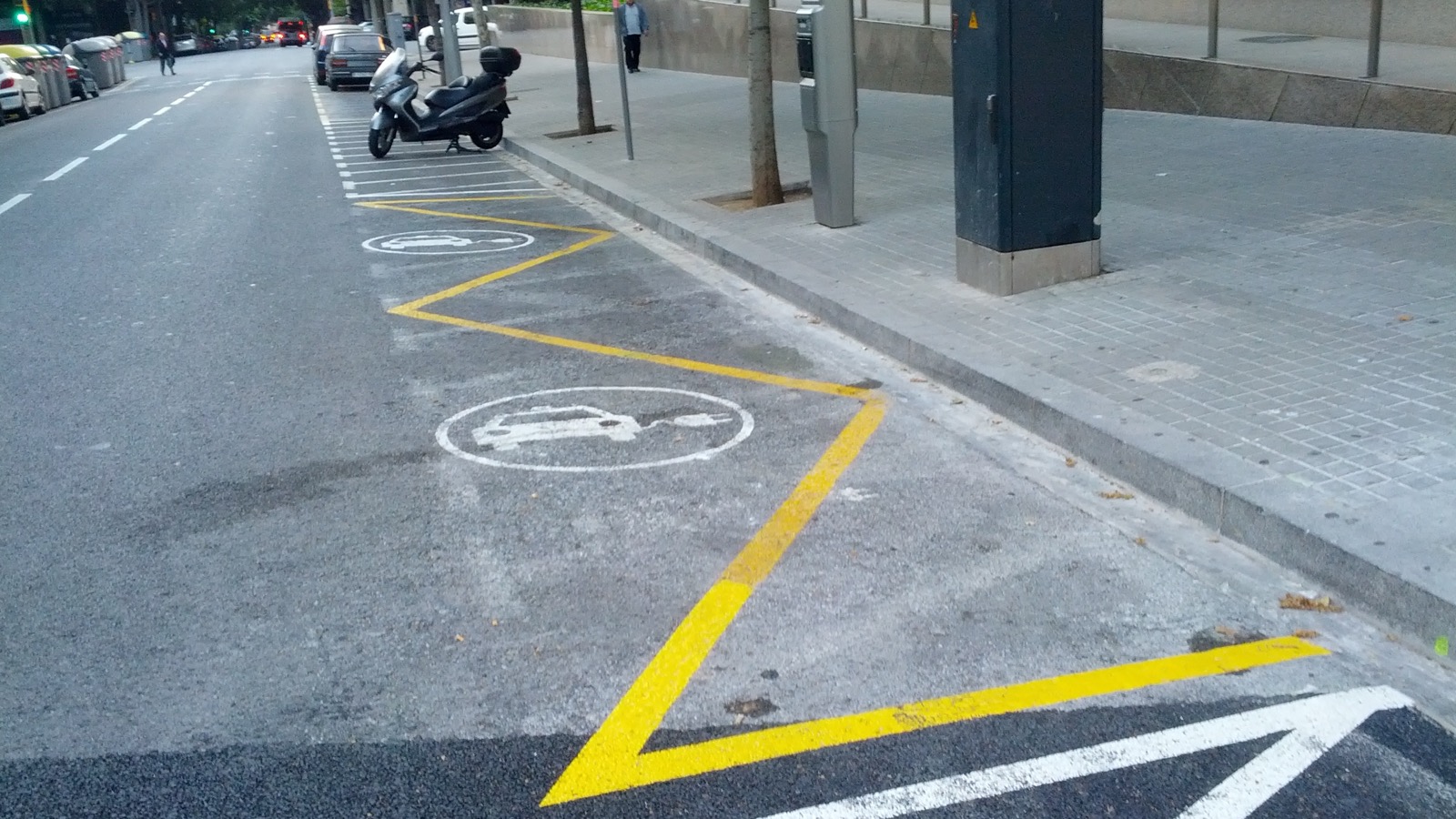
- The featured photograph shows generic electric-vehicle charging infrastructure in Barcelona. It does not depict a Bonarea Energia station, charger, customer, employee, asset, deployment, reliability result or production outcome.
Energy retail is often described through commodities and prices: litres of fuel, kilowatt-hours, contracted power, a tariff or a charging rate. That description is incomplete once a retailer connects physical stations, electricity contracts, solar-export credits, mobile authorization, receipts and support. The customer sees a purchase. The operator has to keep many states consistent before that purchase can be completed, explained and settled.
Bonarea Energia provides a useful public example of this physical and digital coupling. Its official pages present several energy services under one commercial surface. They include electricity offers for different customer segments, a virtual mechanism for carrying eligible solar-export value into later bills, electric-vehicle charging, fuel stations, and CarPay functions for authorizing and paying at physical endpoints. Its fuel FAQ exposes a less visible layer: authorization expiry, receipts, invoicing, calibration, delivery questions and support recovery.
That evidence is enough to analyze the operating model, but not enough to rate performance. The official pages describe what Bonarea Energia offers and how selected workflows are supposed to work. They do not publish an independently measured uptime series, transaction-success rate, billing-error rate, fraud rate, support-response distribution or controlled customer saving. A regulatory certificate establishes a defined legal and sustainability context. It does not establish all-system reliability. Public routing data establishes number-resource visibility. It does not reveal private systems.
The central thesis is therefore narrow. A digitized energy retail network can reduce friction only when its physical and digital controls are supervised as one system. Every added service creates capability, but also adds integration, maintenance and exception-handling work. The right evaluation asks where state is created, who controls it, how it is reconciled, what happens when it diverges and which customer outcome is actually measured.
1. Exact entity and evidence boundary
The starting point is the exact entity. The BTW directory object names BONAREAENERGIA Bonarea Energia SLU and places it in Spain, with public network-resource context around AS211320. The Spanish ministry's sustainability materials separately name BONAREA ENERGIA SLU and tax identifier B25672213. A dated certificate identifies an operator-with-storage role and a Guissona address. The bonArea group sustainability report also places Bonarea Energia SLU within the consolidated group structure.
These sources support a legal and organizational anchor. They do not make every statement on a group website a subsidiary-level fact. A group sustainability policy may describe governance or environmental priorities at a wider level. It should not be treated as proof that every Bonarea Energia transaction, station, electricity contract or support case follows an identical control or produces a particular result.
The first-party energy site supports the commercial surface. It presents fuel, electricity, gas, solar, electric-vehicle charging and CarPay. The tariff, FAQ, station and app pages add workflow detail. That is stronger than a name-only record because it shows how the public offer is organized. It remains first-party material. It can establish stated capability and stated process, not measured production reliability.
The ministry sources need equally careful treatment. A sustainability certificate has a scope, issue context and date. It can support the exact entity, tax identifier, address, role and certificate facts visible in the document. It cannot be expanded into a claim that every fuel unit, electricity product, app transaction or station operation is currently certified under every applicable rule. Current compliance requires current, scope-specific evidence.
The group report is also bounded by the text that is directly available. The report identifies Bonarea Energia SLU as an energy subsidiary and describes the wider group's structure and sustainability reporting. It does not disclose the subsidiary's private software architecture, transaction controls, staffing model or detailed service economics. Those gaps should remain gaps.
Public RIPEstat responses add a different evidence class. They expose routing-status and announced-prefix information around AS211320 at a point in time. Number-resource evidence can help attribute a visible routing object and monitor change. It does not prove that a customer transaction traverses a particular prefix, that a private application is hosted there, or that routing visibility equals application availability.
No retained source names a Bonarea Energia customer and reports a controlled result. No public document in the retained set supplies a transaction benchmark, an independently measured availability rate, a billing-accuracy study or a private architecture diagram. Any operational scenario in this article is therefore a diligence scenario. It identifies a condition that an operator or buyer should test; it is not an allegation that the condition occurred at Bonarea Energia.
This evidence boundary permits a useful analysis without false certainty. Bonarea Energia is an exact company object with a public multi-service offer, a regulatory identity, a group context and public network-resource evidence. The operating questions concern the cost of making those capabilities dependable. They do not justify a verdict on actual service quality without customer and production data.
2. The portfolio as one operating surface
The official home page presents several energy activities together. Fuel stations, electricity, gas, solar, charging and CarPay may appear to be separate products, but they share commercial and operational state. A customer identity can be associated with contracts, payment methods, invoices and app access. A physical location can support fuel, washing or charging. A support team may need to trace a problem across more than one system.
Portfolio breadth is a capability advantage when it reduces separate interactions. One public account or app can make several actions easier to discover and authorize. A combined relationship can make billing and support more coherent. Yet every connection creates a dependency. A shared identity problem can affect more than one service. A shared payment token can create a wider recovery task. A shared customer record can propagate an incorrect address, tax detail or entitlement.
Production reliability must therefore be measured across complete workflows. A home page loading is not sufficient. A useful electricity workflow includes offer selection, eligibility, contract data, switching, meter data, tariff application, invoice production, payment and support. A useful station workflow includes endpoint availability, product and price display, authorization, dispensing or charging, payment completion and receipt. A useful solar workflow includes export measurement, valuation, wallet state, later application and reconciliation.
The portfolio also mixes different clocks. A fuel transaction is usually immediate. Electricity consumption and solar export are metered over settlement periods. Contract changes can take effect on a regulated schedule. Payment capture may be immediate while invoicing follows another cycle. A virtual credit can be created in one period and applied later. Reliable operation requires each event to carry a clear effective time and settlement context.
Different regulators and counterparties create additional integration. Electricity retail depends on metering and regulated access structures. Fuel operations involve physical delivery, calibration and sustainability requirements. Card or app payments involve payment authorization and later settlement. Charging combines electrical equipment, location, payment and user support. A commercial portfolio can look unified while its operational dependencies remain heterogeneous.
Supervision should reflect that heterogeneity. One team may own customer account and billing state, another physical stations, another application operation, and another regulatory reporting. The risk is not only that one component fails. It is that ownership becomes ambiguous at the boundary. A customer should not have to diagnose whether a failed charging event belongs to the app, payment method, charger, site power or account team.
Integration should preserve separation as well as connection. A common customer identifier can be helpful, but a failure in one service should not silently change another. Payment and contact data may be shared under defined rules while technical records remain service-specific. The data model needs to express both the relationship and the boundary.
Maintenance cost grows with each product rule. Tariffs change. Payment methods evolve. Mobile operating systems change. Station equipment ages. Regulatory evidence expires or is renewed. Help material must follow the current workflow. A portfolio strategy should include a dependency register and change calendar rather than treating each public feature as a permanent object.
Customer outcome must be defined at the right level. A combined portfolio may reduce the number of suppliers or interfaces, but that is not automatically a saving. It can also increase concentration and switching effort. A buyer should measure the intended result, such as fewer manual reconciliations, faster exception resolution or clearer consolidated reporting, and include the added dependency cost.
The official service surface demonstrates breadth. The operating question is whether Bonarea Energia can keep state and ownership clear across different energy, payment and physical processes. Public pages do not answer that production question, but they reveal where a diligence review should concentrate.
3. CarPay as a physical-digital control point
The CarPay page describes app-based authorization and payment for fuel, vehicle-wash and electric-vehicle charging actions. This is a meaningful capability because it moves part of a station transaction into a personal device. It can reduce a separate terminal interaction and connect the purchase to a digital account. It also creates a control chain that spans software, payment and physical equipment.
A transaction begins with intent. The user selects a location, service, endpoint or amount. The system must ensure that the choice corresponds to the physical place and equipment the user intends to operate. A location error can authorize the wrong endpoint. A stale status can present equipment that is unavailable. Clear identifiers and a confirmation step reduce that risk.
Authorization creates temporary state. The fuel FAQ discusses the possibility that an authorization expires. Expiry is a sensible control because an unused authorization should not remain open indefinitely. It creates an exception path: the customer needs to know whether money was only authorized, actually captured or released, and whether another attempt is safe.
The physical endpoint then has to accept and execute the instruction. The app can report an authorization while a pump, wash unit or charger is unavailable. The endpoint can begin a session and later stop. A communication path can break after one system records success. Reliability cannot be inferred from the app's first response. It depends on reconciliation among authorization, endpoint action and settlement.
Payment adds another boundary. A financial authorization is not identical to delivery. A delivery is not identical to final capture. A receipt is not identical to a tax invoice. Each state needs a stable transaction identifier so support can determine what happened without guessing from timestamps or amounts. Retries should not create duplicate charges or duplicate service commands.
The public pages support a digital payment and authorization capability. They do not disclose private security design, fraud controls, encryption, identity architecture, uptime or transaction volume. It would be inappropriate to label CarPay secure or insecure from these sources. A security review would need architecture, control, testing and incident evidence that is not public here.
Production reliability can be evaluated through observable workflow measures. Useful measures include authorization completion, endpoint-start completion, successful reconciliation, receipt availability, duplicate rate, reversal time and support-resolution time. These measures should be segmented by service type because a fuel pump, wash unit and charger do not fail in the same way.
Supervision is necessary where automatic state cannot be reconciled. A queue should identify authorizations with no matching delivery, deliveries with no final settlement, repeated attempts, receipt failures and customer disputes. People handling the queue need enough evidence to resolve the case without exposing unnecessary payment data or changing unrelated service state.
Integration cost includes app releases, endpoint protocols, payment interfaces, customer records, pricing, station identifiers, receipts and invoices. A change in one component can affect the full transaction. Representative regression tests should cover normal completion, cancellation, expiry, partial completion, network interruption, payment decline and duplicate retry.
Maintenance cost includes mobile compatibility, endpoint configuration, certificate or credential rotation where applicable, price synchronization, help content and observability. None of these costs means the product is defective. They are the continuing work required to convert a digital feature into production reliability.
Customer outcome should not be assumed from reduced visible steps. A faster authorization can be valuable, but the full outcome includes failed attempts, support contact, receipt retrieval and dispute handling. The correct comparison is the end-to-end transaction against another method for a representative mix of normal and exception cases.
CarPay is therefore best viewed as a physical-digital control point. Its capability is clear from the official pages. Its production reliability depends on state alignment, and its customer outcome depends on whether the complete journey improves after exception work is counted.
4. Electricity tariffs and state complexity
Bonarea Energia's electricity tariff page distinguishes several customer situations, including households, businesses, solar users and larger accounts. It also reflects regulated access-period structures. Segmentation is commercially useful because consumption patterns and contracted power differ. Operationally, it creates rules that have to be selected, dated and applied consistently.
The first state is eligibility. A public offer can describe a segment without proving that every applicant qualifies. Supply point, customer type, contracted power, meter configuration, region and regulatory status can affect the available path. The application process should preserve which rule and public terms were used when the customer chose.
The second state is effective time. A tariff selected today may take effect later. A price can change while a switch is pending. A regulated charge can change independently of a commercial component. A reliable billing process needs dated versions and an audit trail that can reproduce why a period was charged under a particular rule.
The third state is consumption allocation. Time periods matter only if interval or period data is correctly obtained and mapped. Missing, estimated or corrected meter data can change a later invoice. The billing system needs a distinction between original, estimated and corrected values, plus a controlled rebilling path.
The fourth state is contracted power and other standing terms. A customer may change a contract while usage continues. Effective dates, distributor actions and invoice cycles can cross. Production reliability means that the current contract state, metering state and billing state converge rather than each appearing correct in isolation.
The electricity FAQ exposes switching, contracting, eligibility, billing and support questions. The presence of these questions is operational evidence. It shows that customer service is part of the product. It does not establish how often an exception occurs or how quickly it is resolved.
Supervision should focus on cases where states diverge: a switch accepted but not effective, meter data missing, a tariff version mismatched, a direct debit rejected, an invoice corrected, or a customer record inconsistent with distributor data. A queue with ownership and aging is more reliable than informal follow-up.
Integration is not only technical. It also includes legal and commercial interpretation. A data field may be valid while the applied rule is wrong for the period. Changes should be reviewed by people who understand both system behavior and the tariff context. Automated calculation needs versioned rule tests and representative invoice checks.
Maintenance includes regulatory updates, tariff publication, billing configuration, customer communication, staff guidance and regression tests. A small rule change can affect many accounts. The change process should include approval, effective date, sample calculation, deployment evidence and post-change reconciliation.
Exception handling must preserve explainability. A customer disputing an invoice needs a trace from meter values through period mapping, tariff version, taxes or regulated components, credits and payments. A final amount without that chain is difficult to verify. A correction should not erase the original evidence.
Capability is visible in the range of tariffs and the public workflow. Production reliability requires accurate, versioned execution. Customer outcome may concern price, predictability, support or switching effort, but each needs an agreed baseline. A listed tariff alone does not prove universal savings.
The electricity offer is thus a software and operations problem as well as an energy product. The cost of maintaining rules, data and explanations belongs in the operating model, even when the customer interface appears simple.
5. Solar credit and reconciliation
The Guardiola Virtual page describes a virtual wallet for eligible value from solar electricity exported to the grid. The basic capability is easy to state: value not fully offset in one bill can be carried into later billing under the described arrangement. The operating implementation is more demanding because it creates state across time.
The first input is measured export. The process needs a supply point, interval or settlement data, a classification of imported and exported energy, and a period. Missing or corrected data can change the eligible amount. The system must preserve the source and version of the measurement used.
The second input is the applicable valuation rule. A public page can describe compensation, but the actual value depends on the contract and period. A rule should be versioned, and a later change should not silently rewrite earlier calculations. Support staff need to identify the rule applied to a disputed amount.
The third state is the bill itself. Export compensation can interact with consumption charges and other components. Public language should not be converted into a promise of a zero bill. A particular customer's standing charges, taxes, consumption, export volume and contract determine the result. The retained sources do not support a universal saving.
The fourth state is the wallet balance. Creation, application, expiry or other constraints must be represented clearly. A balance is an accounting state, not cash unless the contract explicitly makes it so. The customer should be able to see how the balance arose, where it was applied and what remains.
Reconciliation is the core reliability control. The meter record, bill calculation, wallet movement and customer display should agree. If a corrected meter value arrives, the process needs a controlled adjustment. If a contract ends or moves, the treatment of remaining value needs an explicit rule.
Supervision is required for anomalies. Negative or unusually large values, repeated corrections, an unmatched supply point, a balance that fails to apply, and a customer move can require review. The review should use stable identifiers and preserve the calculation path. Manual correction without a reason code can create a new unexplained difference.
Integration spans metering data, tariff calculation, customer contract, invoicing, wallet state and communication. A successful data import does not prove a correct financial outcome. Representative tests should include normal creation and application, missing data, corrected data, a tariff change, contract termination and a billing reversal.
Maintenance includes changes to compensation rules, invoice presentation, meter-data interfaces, customer help and reporting. Solar adoption can change volume and case mix. Capacity planning should consider the number of exceptions and the complexity of reconciliation, not only the number of enrolled accounts.
Failure modes are bounded but important. A wallet can display stale state, a credit can be applied to the wrong period, a correction can be duplicated, or an account transition can strand value. These are general scenarios, not reported Bonarea Energia incidents. They should be tested because the feature stores value over time.
Customer outcome should be measured in terms the customer can verify: correct application, understandable trace, timely correction and the intended financial effect under the actual contract. The feature's existence is capability. Consistent reconciliation is production reliability. A measured and correctly attributed benefit is customer outcome.
The virtual wallet illustrates the wider theme of digitized energy retail. A simple customer concept is supported by a stateful accounting process. Its value depends on the quality of that process and the cost of handling the cases that do not follow the normal path.
6. Station automation and exception work
Bonarea Energia's station page says the network includes more than 65 stations and describes a low-margin, high-volume, self-service model. This first-party statement indicates scale and operating intent. It should not be treated as an audited count, productivity measure or proof that every station has the same services or performance.
Self-service moves work rather than eliminating it. The customer performs more of the visible interaction, while the operator maintains equipment, pricing, authorization, safety, delivery, calibration, receipts, invoices and support. Automation can lower routine handling cost only if exception cost remains controlled.
The normal fuel path includes station selection, pump availability, product selection, price display, payment authorization, delivery, final amount and receipt. Each step creates evidence. A reliable system should be able to connect them through a transaction identifier and a time sequence.
The fuel FAQ describes practical exception areas. Authorization can expire. A customer may need a receipt or invoice. Questions can arise about calibration or delivered amount. Support may need to explain what happened. These public procedures are valuable because they show that operations include recovery, not only sale.
Physical maintenance is unavoidable. Pumps, hoses, card or app interfaces, wash equipment and charging devices operate outdoors and under repeated use. Inspection, cleaning, calibration where required, preventive care and repair planning are part of production reliability. The public sources do not disclose maintenance intervals or measured availability.
Digital maintenance is coupled to the physical estate. Station identifiers, product configuration, prices, endpoint status and payment routing must stay aligned. A configuration error can make working equipment unavailable to an app or direct a customer to the wrong service. Change control should treat station data as production data.
Supervision needs both local and central visibility. A site condition may require immediate physical action, while a payment or account issue may be resolved centrally. Ownership rules should identify who can disable an endpoint, correct configuration, issue documentation, investigate payment state and communicate with the customer.
Exception handling should avoid premature conclusions. A customer reporting no fuel or no charge after authorization may face an endpoint, payment, location or timing issue. Support should use transaction and equipment evidence before deciding. A financial reversal does not prove physical recovery, and an equipment reset does not prove correct settlement.
Integration with invoicing matters especially for business use. A completed physical transaction may need customer tax details, vehicle or cost-centre reference and later invoice retrieval. Incorrect account mapping can turn a successful delivery into an administrative exception. A reliable workflow checks both delivery and document state.
High volume magnifies small exception rates. Even a low percentage can create a material queue when transaction count grows. The retained public material does not disclose volume, so no calculation is made here. The governance principle is still valid: measure exception demand and the time to resolve it, rather than evaluating automation only by normal-path speed.
Customer outcome should include availability, clarity, resolution and the complete cost of an attempt. A self-service model may be convenient, but a failed authorization or missing invoice can consume more time than a staffed interaction. The relevant measure is the distribution of complete journeys, including recovery.
The station network is therefore a continuing maintenance and control system. Its capability is physical access combined with digital transaction options. Production reliability requires accurate state and recoverable endpoints. Customer outcome depends on normal and exception performance together.
7. Electric-vehicle charging as a coupled service
The electric-vehicle charging page describes public charging and a CarPay interaction. Charging adds a distinctive physical-digital sequence. The vehicle, cable, connector, charger, site power, user account, authorization, price, session meter, payment and receipt all have to align.
Capability begins with connector and power availability. A page can list charging, but a particular vehicle needs a compatible connector and acceptable charging conditions. The public material does not establish compatibility with every vehicle or a universal charging speed. A customer-facing description should keep those limits visible.
Authorization should bind the user to the intended charger. Location and equipment identifiers must be clear enough to avoid starting another endpoint. A remote start should produce evidence of acceptance, but acceptance alone is not delivery. Session start and energy transfer are separate states.
During a session, the charger and vehicle negotiate and monitor conditions. A session may stop because of vehicle, connector, charger, site or communication state. The retained sources do not report Bonarea Energia session-failure causes. An operator should nevertheless classify observed causes so maintenance and support do not treat every stop as one problem.
Metered energy and price determine settlement. The user should be able to connect session duration or energy, applicable price, payment and receipt. A session that stopped early may still have a valid charge for delivered energy. A payment hold may not equal the final amount. Explainability reduces disputes.
Integration with CarPay adds mobile and account dependencies. A customer may have a working charger but no app access, or working app access while the charger is unavailable. Monitoring should distinguish these components. A single red or green service indicator can hide the location of a failure.
Maintenance includes charger inspection, connector condition, firmware and configuration, communications, station data, price publication and payment integration. A change should be tested at a representative endpoint. Remote updates need a fallback when a unit does not return to service as expected.
Exception handling should provide a safe stop and a clear support route. A customer should know whether to reconnect, end a session, move to another charger or wait for support. The operator needs session and equipment evidence. Any remote action should preserve safety and avoid creating an unrecorded state.
The image accompanying this article is generic Barcelona charging context. It is not evidence of Bonarea Energia's charging estate. Visual relevance is not operational proof. Claims about Bonarea Energia charging rely only on the company's page and the bounded public record.
Production reliability can be measured through endpoint availability, successful start, successful completion, reconciliation and recovery. Customer outcome may include convenient access or reduced journey friction, but it should be measured against the complete attempt. A listed charging price or feature is not an economics benchmark.
Charging shows why energy retail technology cannot be assessed as software alone. Physical delivery and digital control are inseparable in the customer journey. A responsible review covers both and assigns ownership for the boundary between them.
8. Network-resource evidence and its limits
RIPEstat provides public announced-prefix and routing-status responses for AS211320. This creates a monitorable number-resource reference. It can support attribution of a public autonomous-system object and show whether routing observations change over time.
That evidence belongs to a different layer from electricity, fuel or charging. An autonomous system is a routing identity. It is not a diagram of applications, data stores, payment services or station control. A visible prefix does not show which public or private workload it carries. No such workload assignment is claimed here.
Routing status is time-sensitive. A response can change as announcements, upstream relationships or registry state change. A diligence process should record the observation time and compare later state rather than treating one response as permanent. An unexpected change can be a reason to investigate, not proof of an incident.
Number-resource monitoring can support dependency management. If a public service is later proven to use the resource, routing changes can be correlated with service observations. Without that proof, the relationship remains an entity-level context. The analysis should not infer customer traffic or operational importance from the ASN alone.
Security claims require similar restraint. Route-origin or visibility data can contribute to routing-security analysis, but it does not establish application security, payment security, data protection or fraud resistance. Different controls and evidence apply at each layer.
Production reliability should therefore use layered monitoring. DNS, certificate, application response, transaction workflow, physical endpoint and routing observations answer different questions. A good incident review connects them without collapsing them into one availability number.
Ownership also matters. A change may be made by the entity, a provider or another authorized party. Public data does not automatically reveal the contractual relationship. Escalation should follow verified operational contacts and agreements rather than assumptions based only on a registry label.
Maintenance includes keeping resource contacts, route policy and monitoring expectations current. These are ordinary network-governance tasks. The sources do not establish how Bonarea Energia performs them, so they remain procurement and operational questions.
The useful conclusion is modest. AS211320 gives Bonarea Energia's public record an observable network-resource dimension. It does not prove private architecture or service performance. Treating it as bounded evidence preserves its value without turning a routing identifier into a universal technology claim.
9. Capability, production reliability and customer outcome
Technology evaluations often combine three questions that should remain separate. The first is capability: does the public offer include a function? The second is production reliability: can the exact workflow complete repeatedly under normal and exception conditions? The third is customer outcome: does dependable completion produce a measured benefit for the intended user?
Bonarea Energia's public pages provide substantial capability evidence. They describe electricity tariffs, switching and billing questions, a solar wallet, public charging, a station network and CarPay authorization. The ministry and group materials add identity and governance context. RIPEstat adds public routing evidence.
Production reliability needs different evidence. A buyer or operator would need transaction and workflow measures, change records, reconciliation results, support outcomes and recovery tests. A feature page cannot supply these simply by describing the normal path. Reliability is an operational property of the exact system, people, data and dependencies in use.
Customer outcome is narrower still. A customer may value price, convenience, understandable billing, consolidated service, charging access or faster support. Each outcome needs a baseline and a definition. A successful app action is not automatically a saving. A correct invoice is not automatically the lowest price. A broad portfolio is not automatically less work.
This distinction prevents two common errors. The first is to dismiss a useful capability because independent outcome evidence is absent. The second is to treat capability as proof of outcome. Bonarea Energia's public offer can be relevant while measured results remain unknown.
The distinction also guides testing. Capability tests ask whether the feature and required conditions exist. Reliability tests cover representative normal and failure paths. Outcome measurement follows real use over enough time to include maintenance and exception handling. The evidence should not be substituted across levels.
Supervision is part of reliability. A human queue, approval or second check may be necessary where automatic state is uncertain or financially material. Removing supervision can make the normal path appear cheaper while increasing unresolved exceptions.
Integration is part of reliability because state crosses boundaries. Meter data, contract rules, wallet balances, endpoint actions, payment and invoices can each be valid while the combined result is wrong. Reconciliation tests the relationship.
Maintenance is part of reliability because public features depend on changing software, equipment, rules and external services. A launch demonstration says little about behavior after several tariff changes, app releases, endpoint repairs or corrected data sets.
Exception handling is part of reliability because customers experience the recovery path as part of the service. A system with a good normal path and opaque recovery can create a poor overall result. Resolution evidence should therefore sit beside completion evidence.
Failure mode analysis should remain factual and bounded. Relevant scenarios include stale tariff state, missing meter data, unmatched wallet movement, expired authorization, endpoint unavailability, duplicate retry, receipt failure, invoice mismatch, routing change and regulatory-document expiry. They are conditions to test, not claims of Bonarea Energia incidents.
The public record supports a mature diligence question: how does the company turn a multi-service capability surface into dependable, explainable operation? It does not supply the production and customer data needed to answer. That boundary should be explicit in any commercial or technical decision.
10. Supervision, integration and maintenance cost
Total operating cost includes visible fees and hidden work. For Bonarea Energia's public service model, the hidden work includes account administration, rule maintenance, endpoint data, billing reconciliation, support, regulatory evidence, physical inspection, software updates and exception queues.
Supervision cost can be estimated by role and queue. Who reviews unmatched authorizations? Who approves a billing correction? Who handles meter-data changes? Who disables an unsafe endpoint? Who validates a tariff release? A responsibility matrix reveals work that a feature list does not show.
Integration cost can be mapped by state handoff. Customer identity moves into contracts and payments. Meter data moves into billing. Export values move into a wallet. App commands move into physical endpoints. Delivery state moves into settlement and documentation. Each handoff needs validation and recovery.
Maintenance cost should be separated into planned and unplanned work. Planned work includes tariff updates, app releases, endpoint checks, regulatory review and representative testing. Unplanned work includes outages, failed transactions, disputed invoices, broken equipment and urgent corrections. Both belong in capacity planning.
Observability is another cost. Reliable support requires logs, identifiers, timestamps, endpoint status, calculation traces and controlled access. Collecting everything without structure creates noise and privacy risk. Collecting too little makes reconciliation slow. The evidence design should follow specific decisions and retention rules.
Change management connects these costs. A tariff update can affect billing, customer communication and support. An app release can affect endpoint authorization and receipt retrieval. A charger update can affect sessions and payment. A regulatory change can affect product rules and reporting. Cross-functional review is justified where one change crosses several surfaces.
Training is ongoing. Customer-support staff need current explanations. Station teams need safe physical procedures. Billing staff need rule and correction paths. Technical teams need monitoring and rollback. Training should be tied to changed tasks and verified with representative cases.
Vendor and counterparty dependencies should be explicit. Metering, distribution, payment, mobile platforms, connectivity and equipment may sit outside the direct control of one company. A customer still experiences the combined workflow. Contracts and escalation paths should identify ownership without making Bonarea Energia responsible for every external failure.
Switching cost also belongs in the model. A customer using several services, stored account data or wallet state may face more work when changing. An operator using integrated systems and endpoint configurations faces technical migration. Portability, final settlement and data retention should be defined before urgency.
A useful cost model combines routine transaction volume, exception rate, average handling time, maintenance calendar, regulatory changes and consequence of downtime. The retained sources do not provide those inputs, so this article does not calculate a result. It identifies the measurements required.
Cost should not be minimized by hiding work. A manual reconciliation that protects customers is real value and real expense. The optimization target is a controlled reduction in repeated exception work while preserving explainability, safety and correction.
Bonarea Energia's public breadth makes these costs strategically important. The portfolio can create convenience and operational leverage, but only when its state transitions and recovery paths are maintained. The business case should account for that continuing work.
11. Failure modes and recovery economics
A failure mode is useful when it identifies an observable condition, a consequence and a recovery owner. It becomes misleading when it is presented as an incident without evidence. The following scenarios are therefore controls for evaluation, not reports about Bonarea Energia.
One failure mode is stale or incorrect tariff state. The immediate risk is an incorrect invoice or customer expectation. Detection can compare configured versions, effective dates and sample calculations. Recovery includes correction, rebilling where appropriate, communication and a review of affected scope.
Another is missing or corrected meter data. The risk is a delayed or estimated bill and later adjustment. Detection needs data-quality flags and aging. Recovery requires a controlled estimate or wait policy, then reconciliation when the corrected record arrives.
A solar-wallet failure mode is an unmatched movement. A credit can be calculated but not displayed, displayed but not applied, or adjusted twice after corrected data. Detection compares source measurement, calculation, wallet transaction and invoice. Recovery preserves both original and corrected state.
A CarPay failure mode is authorization without matched delivery. The customer may see a hold while no fuel, wash or charge begins. Detection joins payment and endpoint events. Recovery may release or reconcile the authorization, investigate the endpoint and explain the state to the customer.
The inverse can also occur: delivery evidence without expected settlement or documentation. Detection should not rely on one system declaring completion. Recovery needs a controlled financial and operational review, with protection against duplicate capture.
An endpoint failure mode is unavailable or partial operation. A pump, wash unit or charger can be listed while unable to complete. Monitoring and local inspection can detect the state. Recovery may disable the endpoint in customer channels, route demand elsewhere, repair equipment and verify return to service.
A receipt or invoice failure mode can follow a technically successful transaction. The customer's commercial task remains incomplete. Detection uses document-generation and delivery status. Recovery should allow retrieval or correction without duplicating the underlying sale.
An identity failure mode includes lost app access, incorrect account mapping or a changed customer relationship. Recovery should verify the person and preserve service state. It should not require weakening access controls or re-creating transactions without reconciliation.
A routing or connectivity change can affect a public dependency, but it should be diagnosed at the correct layer. Routing evidence, DNS, application response and endpoint state should be compared. Recovery depends on the verified dependency and owner; an ASN observation alone is not enough.
A regulatory-evidence failure mode is an expired, superseded or misapplied certificate. A document register can detect upcoming review dates and scope. Recovery involves obtaining current evidence and correcting claims or process scope. It does not automatically mean the underlying service is unavailable.
Recovery economics includes detection time, diagnosis, customer communication, correction, verification and prevention. A quick technical reset can still leave a billing or customer record unresolved. A financial reversal can still leave equipment unavailable. Full recovery closes every affected state.
Prioritization should use consequence as well as frequency. A rare state that affects financial accuracy, safety or many accounts may justify stronger controls. A common low-impact question may be addressed through clearer interface or help content. The right response is evidence-driven improvement, not an assumption that all exceptions should be automated.
The goal is not zero exceptions. Energy retail involves physical assets, regulated data, payments and external dependencies. The goal is visible state, assigned ownership and a recovery path that can be verified. That is how exception handling becomes a component of production reliability rather than a hidden cost.
12. Procurement and governance questions
A buyer evaluating Bonarea Energia should begin with exact scope. Which legal entity is contracting? Which service, tariff, station function or digital feature is included? Which public terms and effective date apply? Which external parties perform parts of the workflow? The answer should be recorded rather than inferred from a group brand.
For electricity, the buyer should ask how switching state, meter corrections, tariff versions and billing disputes are handled. Sample invoices should be checked against representative usage and contract conditions. The buyer should understand which values can change and how notice is given.
For solar credit, the buyer should ask how export data is obtained, valued, displayed, applied, corrected and treated when a contract changes or ends. A representative reconciliation should connect measurement to invoice and wallet history. Marketing language should not replace contract rules.
For CarPay, the buyer should ask how an authorization is linked to a physical endpoint and how expiry, partial completion, duplicate attempts, receipts and disputes are resolved. Security and privacy evaluation require separate evidence. They should not be inferred from feature availability.
For fuel and charging locations, the buyer should confirm service availability, equipment compatibility where relevant, price presentation, support routes and documentation. A network-wide statement should not be assumed to apply identically at every location.
Governance should identify data ownership and access. Customer, vehicle, payment, meter, transaction, wallet and invoice records may have different purposes and retention needs. Roles should be limited to work, and support should have enough evidence without unnecessary exposure.
Change governance should cover tariffs, app releases, endpoint configuration, billing rules, regulatory evidence and help content. Material changes need an owner, effective date, representative test and rollback or recovery path. Communication should match the actual customer impact.
Operational reporting should separate capability, reliability and outcome. Capability can be reported through coverage. Reliability needs completion, reconciliation and recovery measures. Outcome needs customer or business measures with baselines. Combining them into one adoption number hides important differences.
The buyer should also ask about exit. Final invoices, remaining wallet state, transaction records, personal data, support cases and account access need a defined treatment. Portability and retention should be tested before dependency is difficult to unwind.
Bonarea Energia's regulatory and group materials can support identity and governance context, but current obligations should be verified against current documents. A dated certificate should be read as dated evidence. Group reporting should not substitute for a service-level commitment.
Network-resource evidence may be relevant to technical diligence if a service dependency is established. The buyer should not assume that AS211320 carries a particular application. If a dependency is documented, monitoring and escalation can include it as one layer.
Finally, acceptance should include exception cases. A normal demonstration does not test an expired authorization, corrected meter value, wallet adjustment, failed receipt, unavailable charger or account transition. Representative exceptions reveal ownership and recovery cost before real use creates urgency.
The public record supports asking these questions. It does not supply every answer. A responsible procurement decision converts the feature surface into dated responsibilities, acceptance evidence, operating measures and recovery obligations.
Verdict
Bonarea Energia's public materials show a substantial energy-retail capability surface. Fuel stations, electricity tariffs, solar credit, electric-vehicle charging and CarPay connect physical delivery to digital authorization, billing and support. Regulatory, group and routing records add bounded identity and infrastructure context.
The technology case is not that this breadth automatically produces efficiency. It is that a broad portfolio can create leverage when state is controlled across contracts, meters, wallets, endpoints, payments, receipts and invoices. The same breadth can create hidden operating cost when ownership, maintenance and exception handling are unclear.
Capability is supported by the public pages. Production reliability is not established by those pages and should be measured through complete workflows, reconciliation, change control and recovery. Customer outcome is also unproven and should be tied to a defined baseline rather than inferred from a feature, tariff or station count.
The most useful diligence focus is the boundary between normal automation and exception work. CarPay authorization, tariff state, solar-wallet movements, charging sessions and station documentation each need a traceable recovery path. Supervision is not a temporary flaw in this model; it is a control that should be designed, measured and improved.
Bonarea Energia can therefore be evaluated as a digitized physical network rather than a collection of pages or endpoints. The public evidence establishes enough capability to justify that evaluation. It does not justify claims about private architecture, security, uptime, fraud, universal savings or named customer results.
Sources
- BTW directory, BONAREAENERGIA Bonarea Energia SLU: https://btw.media/en/directory/bonareaenergia-bonarea-energia-slu
- Bonarea Energia official home: https://www.bonarea-energia.com/es/home
- Bonarea Energia electricity tariffs: https://www.bonarea-energia.com/es/electricitat/tarifeselectricitat
- Bonarea Energia electricity FAQ: https://www.bonarea-energia.com/es/Electricitat/FAQs
- Bonarea Energia Guardiola Virtual: https://www.bonarea-energia.com/es/Electricitat/GuardiolaVirtual
- Bonarea Energia electric-vehicle charging: https://www.bonarea-energia.com/es/Electricitat/Electrolineres
- Bonarea Energia CarPay: https://www.bonarea-energia.com/es/carburant/appcarpay
- Bonarea Energia service stations: https://www.bonarea-energia.com/es/carburant/estacionsservei
- Bonarea Energia fuel FAQ: https://www.bonarea-energia.com/es/carburant/faqs
- bonArea group sustainability reporting portal: https://www.bonarea.com/sostenible/es/public/Memoria
- bonArea group 2023 sustainability report: https://bonarea.com/sostenible/content/pdf/memoria_sostenibilidad_2023.pdf
- Spanish Ministry sustainability certificates page: https://www.miteco.gob.es/es/energia/hidrocarburos-nuevos-combustibles/biocarburantes/listado-certificados-sostenibilidad/listado-de-certificados-de-sostenibilidad-2024.html
- Spanish Ministry BONAREA ENERGIA certificate: https://www.miteco.gob.es/content/dam/miteco/es/energia/files-1/biocarburantes/Listado-certificados-sostenibilidad/Certificados2023/BONAREA_ENERGIA_.pdf
- RIPEstat announced prefixes for AS211320: https://stat.ripe.net/data/announced-prefixes/data.json?resource=AS211320
- RIPEstat routing status for AS211320: https://stat.ripe.net/data/routing-status/data.json?resource=AS211320
Member Briefing
Deeper Profile Context
Sign in with the right membership level to unlock the full briefing and source notes.
Only for Strategic Circle
Strategic Circle
Open to all readers. Unlock profile briefings after joining and signing in.
Join Strategic CircleOnly for Leadership Alliance
Leadership Alliance
For qualified IP-asset owners and management; sign in to unlock alliance briefings.
Join Leadership Alliance