

- “Black Myth: Wukong” has set new standards for graphics and gameplay in video games. The demand for advanced semiconductor technology is skyrocketing due to the gaming industry’s growth. Global semiconductor shortages are affecting not only gaming but also other technological sectors.
- Companies are investing heavily in research and development for next-gen chips tailored for gaming. AI integration in gaming is pushing the need for more powerful and efficient processors.
OUR TAKE
The release of “Black Myth: Wukong” highlights an exciting intersection between advanced gaming technology and the semiconductor industry. As developers create ever more sophisticated experiences, the demand for high-performance chips will only increase. This trend underscores the necessity for semiconductor manufacturers to innovate rapidly, addressing supply chain challenges while pushing the boundaries of what’s possible in gaming.
–Lily,Yang, BTW reporter
On a bustling street in Shanghai, a group of gamers gathers around a large screen displaying the stunning visuals of “Black Myth: Wukong.” As they watch the gameplay showcasing the legendary monkey king battling formidable foes with breathtaking animations, one thing becomes clear—this isn’t just a video game. It’s a glimpse into the future of technology fueled by advancements in semiconductor chips. This event encapsulates a transformation not only in gaming but also in the broader tech industry, where the demand for more powerful and efficient semiconductors is escalating, driven by innovations like “Black Myth: Wukong.”
Amidst this growth, games like “Black Myth: Wukong” are not only showcasing high-performance graphics but also setting new benchmarks for what users can expect from their devices. With each pixel rendered using advanced semiconductor technology, the game’s development emphasises a crucial trend: the need for next-generation chips that can handle intricate workloads efficiently.
The semiconductor industry is at a crossroads, with gaming pushing the boundaries of what’s possible.
John Neuffer, President and CEO of SIA
Facts and phenomena
The global Graphics Processing Unit market is projected to reach $200 billion by 2028, driven by gaming and AI applications. Artificial intelligence is revolutionising gameplay and NPC interactions, creating a need for sophisticated processing capabilities. The ongoing global semiconductor shortage has affected numerous sectors, including gaming, automotive, and consumer electronics. Major tech companies are investing heavily in R&D to design chips that can support the next generation of gaming experiences.
Also read: Oracle boosts AI cloud with Nvidia GPUs

The semiconductor landscape
Understanding semiconductors
Semiconductors are the cornerstone of modern electronics, enabling devices to process information efficiently. These materials, primarily silicon-based, have properties that allow them to serve as conductive pathways for electricity under specific conditions. From smartphones and computers to gaming consoles, semiconductors play a vital role in virtually every electronic device.
The role of GPUs
Graphics Processing Units emerged as essential components in rendering images and animations for video games. Initially designed for graphical output, their adaptability has led to widespread usage in machine learning and data analysis. The gaming industry’s insatiable appetite for realistic graphics has accelerated the development of more powerful and efficient GPUs.
The intersection of gaming and semiconductor technology is where we’re seeing remarkable advancements. Games like ‘Black Myth: Wukong’ set new standards, driving demand for advanced chips.
Jane Doe, industry analyst
The intersection of gaming and semiconductors
As digital content becomes increasingly sophisticated, gamers expect more from their hardware. High-definition graphics and complex algorithms require powerful processing capabilities. This is where semiconductors come into play. According to market analysts at Gartner, the demand for semiconductors in the gaming sector is projected to grow by 15% annually, fueled by innovations in cloud gaming and immersive technologies like virtual reality.
Ray tracing for realistic lighting, AI-driven game mechanics, enhanced graphics rendering engines. The technological arms race among console manufacturers and PC builders has sparked an upward trend in semiconductor development. AMD, Intel, and NVIDIA are racing to produce faster and more efficient chips, transforming how games are developed and played.
“Semiconductors are the backbone of modern gaming. Without continued innovation in chip technology, we would be limited to rudimentary graphics and game mechanics,” says Dr. Emily Tran, a lead researcher in semiconductor technology at Stanford University. Her insights reveal the critical nature of ongoing investment in semiconductor advancement. Gaming has become a primary driver of semiconductor innovation. With stunning titles like “Black Myth: Wukong” pushing the limits of what is visually possible, chip manufacturers must continually adapt their designs to meet new demands.
Also read: Tencent-backed ‘Wukong’ makes gaming history in first day rush
We are witnessing a convergence of gaming and chip technology, with today’s video games driving tomorrow’s semiconductor designs.
Mark Liu, Chairman of TSMC
Pop Quiz
What significant factor has driven the demand for advanced semiconductors in the gaming industry, as highlighted by the release of “Black Myth: Wukong”?
A) The popularity of mobile games
B) The need for high-performance graphics and gameplay
C) A decrease in the number of gamers worldwide
D) The rise of streaming platforms
The correct answer is at the bottom of the article.
Economic implications of the shift
The semiconductor industry is experiencing a transformative moment. Governments worldwide are recognising the strategic importance of semiconductor manufacturing, leading to initiatives aimed at boosting domestic production. The U.S. CHIPS Act, for instance, allocates billions to revive the American semiconductor sector, thereby reducing reliance on foreign manufacturers.
The global chip shortage highlighted vulnerabilities in supply chains. Investment in semiconductor manufacturing could create millions of jobs. Countries are vying for leadership in this critical technology sector. These shifts have profound implications, especially as industries such as gaming, automotive, and telecommunications rely heavily on chips for innovation. Companies like NVIDIA and Advanced Micro Devices are strategically well-positioned to benefit from this increasing demand.
Current trends in semiconductor chips
The gaming sector significantly influences semiconductor innovations, prompting companies to develop new technologies to keep up with evolving consumer expectations. Here are some key trends shaping the industry:
As AI becomes more integral to gaming, the demand for chips that can handle sophisticated algorithms and processing tasks has surged. Developers are utilising machine learning to create dynamic environments and responsive characters, requiring powerful chips equipped with neural processing capabilities.
With increasing performance comes the responsibility of energy consumption. The semiconductor industry is focusing on developing energy-efficient chips that provide high performance without excessive power usage. This focus not only benefits consumers but also addresses environmental concerns.
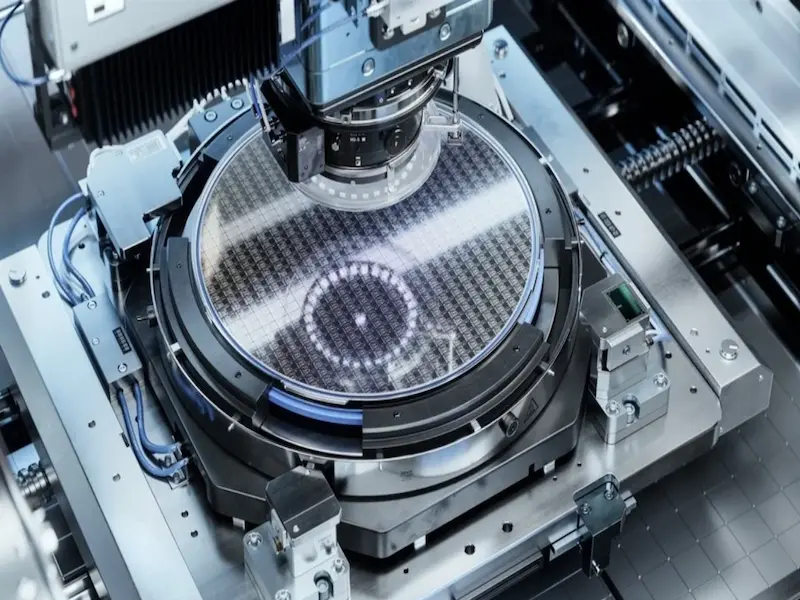
To meet the growing demand for smaller, faster chips, manufacturers are adopting advanced techniques such as extreme ultraviolet lithography. This method allows for creating smaller transistors, improving overall chip performance while reducing physical size.
Supply chain dynamics
Despite the potential for growth, the semiconductor industry faces significant challenges, particularly regarding supply chain management. The COVID-19 pandemic exposed vulnerabilities that have led to widespread shortages and increased prices across several sectors.
The semiconductor shortage has created a ripple effect, impacting not just gaming but also the automotive industry and consumer electronics. Manufacturers are struggling to secure enough chips to meet consumer demands, leading to delays and supply constraints.
In response to these challenges, major companies are implementing strategies to mitigate risks. Some are investing in domestic chip production to reduce reliance on foreign suppliers, while others are diversifying their supplier networks to ensure stability.

Securing the future through innovation
The growing interdependence between the gaming industry and semiconductor technology means that companies must innovate to remain competitive. It is not enough to simply produce chips, companies must develop specialized processors designed specifically for gaming applications. Environmentally friendly chip manufacturing methods are becoming more popular, with new custom chips tailored to enhance the performance of gaming consoles and PCs, taking advantage of smaller process nodes to improve efficiency.
The correct answer is B the need for high-performance graphics and gameplay.