
Summary
- Bell Canada and Saskatchewan announced a non-binding agreement for up to 900MW of additional AI infrastructure capacity, powered through partner-developed natural-gas generation.
- The original 300MW grid arrangement remains. Provincial framework approval and a possible SaskTel wholesale allocation do not settle all the conditions for delivery.
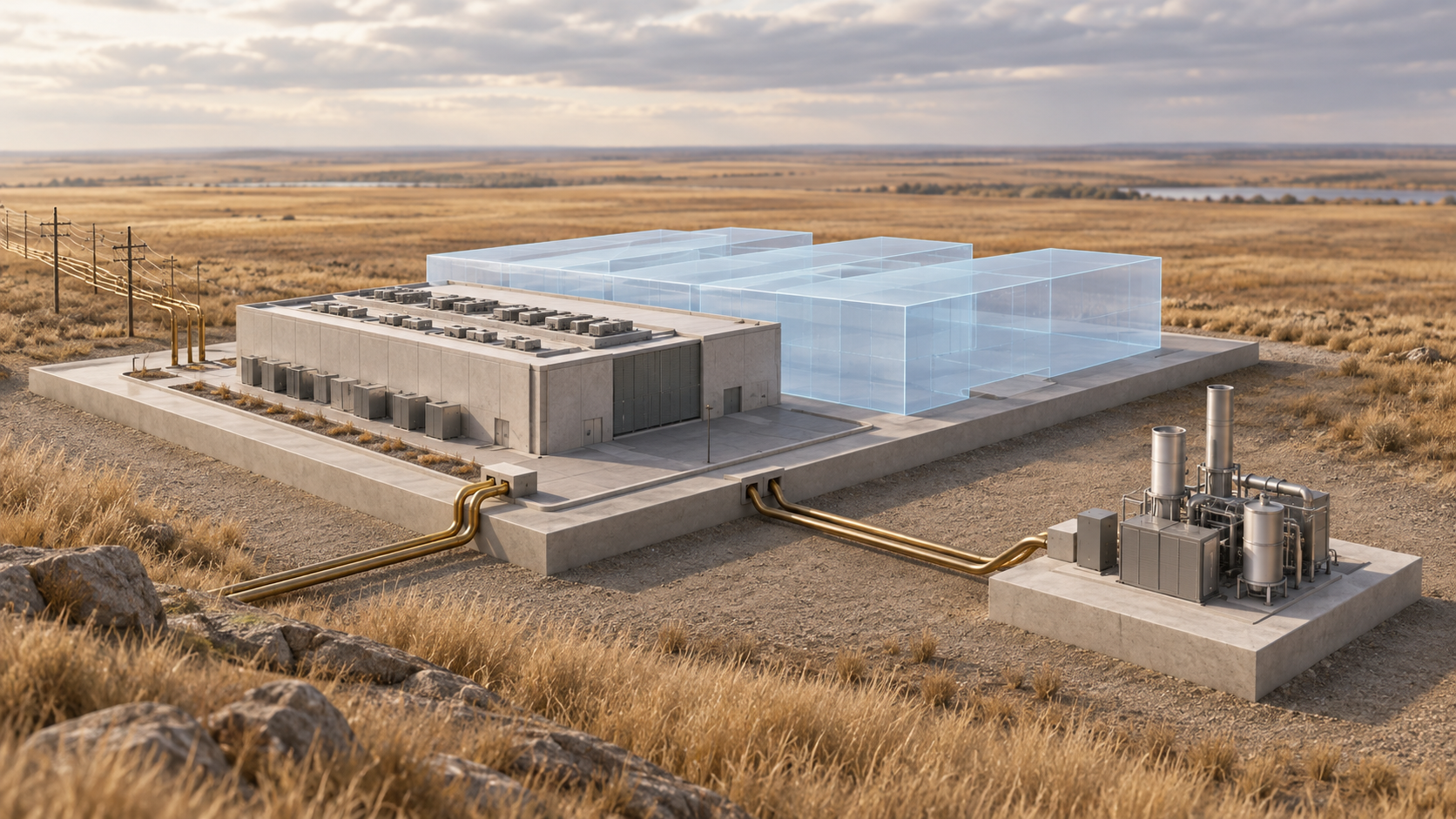
The most consequential line in Bell Canada's Saskatchewan expansion is the one that divides the power bill. The original project retains its 300MW arrangement with the provincial grid. Up to 900MW of additional capacity would have to bring its own supply. The proposed 1.2GW hub is therefore not one undifferentiated claim on the grid, nor a wholly self-powered project.
That split sits inside a non-binding memorandum of understanding announced on September 14. It gives the expansion a development framework, not an operating date. For customers, suppliers and local institutions, the useful question is how generation, permissions and demand become matched at each phase.
One hub, different supply responsibilities
Bell's announcement says the additional capacity would use natural-gas generation developed by partners. Development would proceed in phases as customer commitments are secured, subject to commercial agreements, permits, approvals and relevant environmental assessments. It does not name the generation partners or identify signed customers for the addition.
The provincial release makes the distinction from the original project explicit: 300MW of provincial grid power is retained, while the added capacity follows Saskatchewan's Bring Your Own Power principle. Retaining an arrangement is not evidence that the original project is already drawing 300MW. Equally, the new proposal does not demonstrate that 900MW has been built or energised.
The government's backgrounder says Bell is responsible for bringing forward the expansion's power as it grows, and that Saskatchewan families and businesses will not pay for that additional power. That is the province's stated allocation of responsibility. The published material does not provide the power price, fuel terms or financial backstop needed to test how the promise will work in practice.
For the project, generation is consequently another delivery requirement, not something removed from the critical path by the size of the announcement. Partner-developed supply still needs to arrive in a form and at a time that a data-centre phase can use. The releases do not establish a fixed sequence or schedule for doing so.
Framework approval is not every permit
Saskatchewan says the expansion has been approved under the Data Centre Framework it released in August. The same announcement preserves applicable municipal permitting and bylaws. The backgrounder explains that final design could require approvals concerning fuel storage, air emissions, water and coolant management, or wildlife and sensitive habitat. An environmental assessment would be required if the project meets the applicable legislative threshold.
Those statements are compatible. Approval under an investment framework is not a declaration that every site-specific permission has been obtained. Nor does the announcement determine an environmental assessment's outcome.
Cooling claims need similarly careful scope. Bell describes closed-loop cooling that does not require municipal water. The backgrounder expressly retains ordinary uses such as drinking water, washrooms and fire safety. Avoiding municipal water for cooling is not the same as a water-free development, and it says nothing by itself about the emissions of the proposed gas generation.
A local route to capacity, with conditions attached
The backgrounder provides a more concrete link between the hub and Saskatchewan customers than the general language of sovereignty. Bell would set aside up to 10MW of wholesale capacity for SaskTel in the expansion phase, subject to technical readiness and commercial arrangements. SaskTel would also act as an agent reselling Bell products and services to its customers.
That is a prospective distribution mechanism, not 10MW already in service or an unconditional purchase order. It does not establish that the larger expansion is pre-sold. A customer still needs to know what service, computing equipment, availability and price the wholesale capacity would actually support.
The headline investment projection also spans more than a single developer's building cost: Bell includes data-centre infrastructure, tenant compute and related power generation. It should not be treated as one disclosed Bell spending commitment. But the important difference from earlier coverage of the original build's quarterly cash flow is now the supply model for the addition: customers, separately developed power and project approvals must come together before planned megawatts become usable service.
Member Briefing
Deeper Profile Context
Sign in with the right membership level to unlock the full briefing and source notes.
Only for Strategic Circle
Strategic Circle
Open to all readers. Unlock profile briefings after joining and signing in.
Join Strategic CircleOnly for Leadership Alliance
Leadership Alliance
For qualified IP-asset owners and management; sign in to unlock alliance briefings.
Join Leadership Alliance