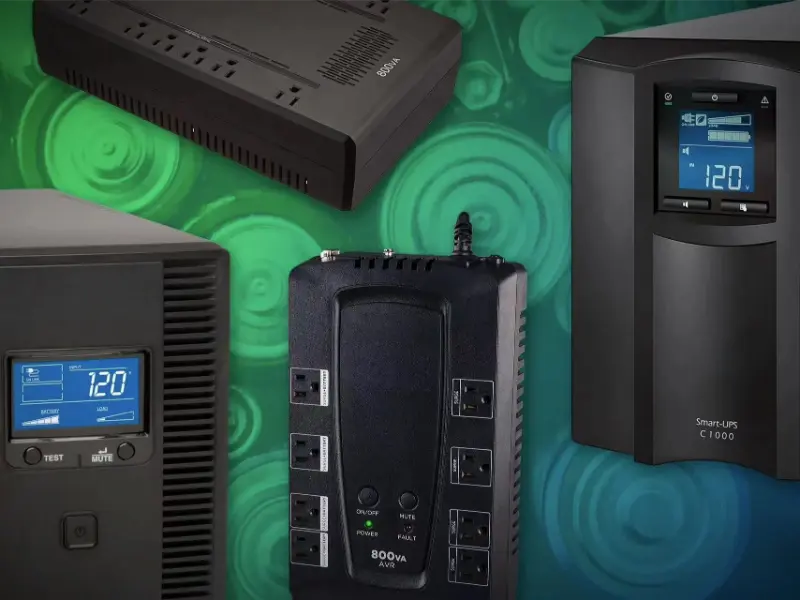
- The potential risks associated with Uninterruptible Power Supplies (UPS), such as fire and electrical hasards, emphasises the importance of proper installation and maintenance to mitigate these dangers.
- The 3 main types of UPS systems—Offline/Standby, Line-Interactive, and Online/Double-Conversion—highlight their varying levels of protection and applications.
It explores the importance of UPS in providing backup power during outages, the risks associated with their use, and the various types of UPS systems available, emphasising the need for proper installation, maintenance, and understanding of their functions to ensure safety and reliability.
The risks of UPS
UPS are essential devices that provide backup power during outages, but they do carry certain risks that need to be addressed. One of the primary concerns is the potential fire hasard associated with the batteries inside the UPS. These batteries store and release energy, which, if not properly maintained or if damaged, can overheat and potentially cause a fire. Additionally, improper ventilation or placement of the UPS can exacerbate this risk by not allowing enough heat to dissipate.
Another significant risk comes from electrical hasards related to the wiring and installation of the UPS. Incorrect installation or overloading the UPS can lead to electrical malfunctions, such as short circuits or even electric shocks. This makes professional installation and regular maintenance crucial to ensuring the safe operation of the UPS.
While these risks exist, they can be effectively managed by following proper safety measures. Investing in a high-quality UPS, ensuring it is properly installed by a certified electrician, and regularly maintaining the system can significantly reduce the dangers associated with its use. When these precautions are taken, a UPS can safely provide the vital protection needed to keep critical systems running smoothly during power disruptions.
Also read: AI startups ramp up lobbying efforts to shape future policy
Also read: Tourism at 100,000 feet: Startups offer stratospheric balloon rides
3 types of UPS systems
There are three main types of UPS systems, each designed to provide different levels of protection and suited for various applications:
1.Offline/Standby UPS: The Offline or Standby UPS is the most basic type, primarily designed for smaller systems like personal computers or home office setups. During normal conditions, the connected equipment runs directly off the main power supply. If the main power fails or drops below a certain threshold, the UPS quickly switches to battery power. This transition usually takes a few milliseconds. Small, non-critical devices where minor power interruptions are acceptable.
2.Line-Interactive UPS: The Line-Interactive UPS offers a higher level of protection by not only providing backup power but also regulating voltage variations. It is commonly used in small businesses, network closets, and server rooms. This type of UPS continuously regulates the incoming voltage to the connected equipment. It automatically corrects under-voltage (sags) and over-voltage (surges) conditions without switching to battery power. If there’s a power outage, it immediately switches to battery mode. Environments with moderate power fluctuations and where equipment requires continuous power with minimal disruption.
3.Online/Double-Conversion UPS: The Online or Double-Conversion UPS provides the highest level of protection and is used in critical environments like data centers, hospitals, and industrial applications. Unlike the other types, the Online UPS continuously converts incoming AC power to DC and then back to AC. This double-conversion process ensures that the connected equipment always receives clean and stable power, completely isolated from any anomalies in the main power supply. Even during a power outage, there’s no switch time, as the UPS is already providing power through its batteries. Mission-critical systems where even the slightest power interruption or fluctuation could have severe consequences.