Institution Profiling / Internet infrastructure institution

Apple turns to Google’s chips for training AI models

Apple turns to Google’s chips for training AI models is tracked as a internet infrastructure institution within the internet infrastructure ecosystem.

Apple turns to Google’s chips for training AI models
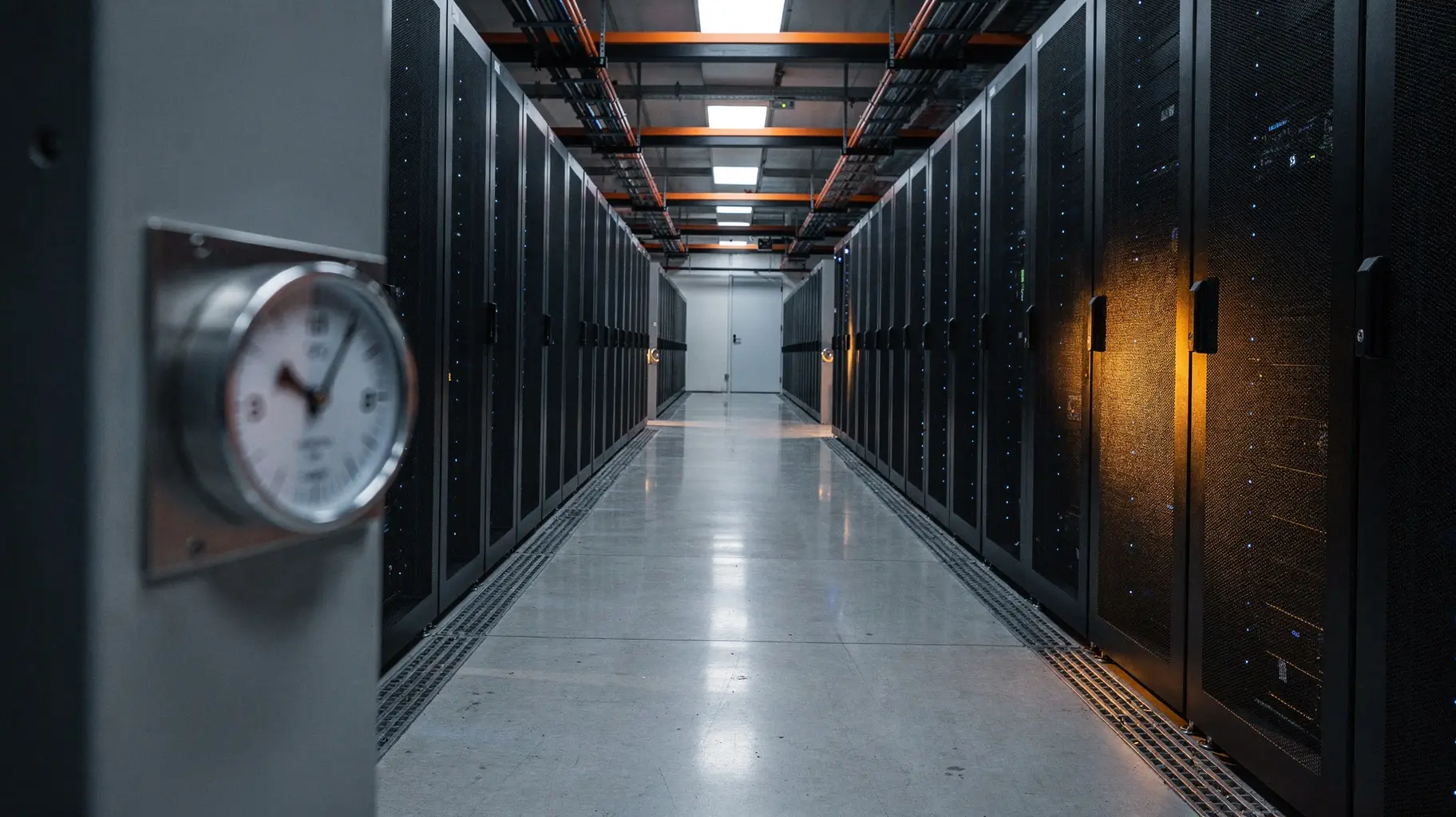
Caption: Apple turns to Google’s chips for training AI models visual context for BTW intelligence coverage. · Source context: Existing article media was retained or restored as the subject-specific visual basis. · Relevance reason: Apple turns to Google’s chips for training AI models is the primary subject or event subject; the image supports the article's market reading. · Image provenance: Existing curated article image retained because it is subject- or event-specific and not a generic pool placeholder.

Sources

Public references used for this article.

CategoryInstitution

Apple turns to Google’s chips for training AI models is tracked as a internet infrastructure institution within the internet infrastructure ecosystem.

RegionGlobal

Apple turns to Google’s chips for training AI models has public-source relevance to network operations, governance, dependency mapping, or market structure.

Signal FocusInternet infrastructure institution

Apple turns to Google’s chips for training AI models has public-source relevance to network operations, governance, dependency mapping, or market structure.

Content TypeProfile

Apple turns to Google’s chips for training AI models is tracked as a internet infrastructure institution within the internet infrastructure ecosystem.

Primary DomainTechnology

Public-source signals support medium-impact monitoring for infrastructure visibility and dependency analysis.

TopicInternet infrastructure institution

Apple turns to Google’s chips for training AI models is profiled by BTW Media because published evidence links it to internet infrastructure, governance, operational dependencies, or market visibility.

ImpactMedium

Public-source signals support medium-impact monitoring for infrastructure visibility and dependency analysis.

Confidence?Confidence Grade
0.90–1.00AHigh — direct sources
0.75–0.89A/BStrong
0.55–0.74B/CMedium
0.35–0.54C/DWeak–medium
0.10–0.34DWeak signal
0.00–0.09DInternal monitoring
Limited confidence (82%)

Several public sources

Apple turns to Google’s chips for training AI models is profiled by BTW Media because published evidence links it to internet infrastructure, governance, operational dependencies, or market visibility.

Apple has chosen Google’s tensor processing units (TPUs) over NVIDIA’s GPUs for its latest AI software infrastructure. Apple’s engineers have indicated in the paper that Google’s chips could facilitate the creation of even larger and more sophisticated AI models than those currently discussed. OUR TAKE Apple’s latest choice stands out amidst the wave of global technological competition. The company’s decision to use Google’s tensor processing units (TPUs) instead of NVIDIA’s graphics processing units (GPUs) in this new phase of its artificial intelligence (AI) software development is a break with tradition and brings a new topic of discussion to the AI space. –Elodie Qian, BTW reporter What happened In a strategic shift, Apple has chosen Google’s chips for its latest artificial intelligence (AI) software infrastructure, as outlined in a research paper made public on Monday. The software infrastructure will power its forthcoming suite of AI tools. This move is a deviation from the norm, with Nvidia traditionally leading the AI processor market, boasting a substantial 80% share. Apple’s decision to utilise Google’s cloud technology is significant. While the research paper did not explicitly state the absence of Nvidia chips, there was a conspicuous lack of reference to Nvidia hardware in the AI tools and features’ infrastructure description. At the time of writing, Apple has publicly documented context a statement. The paper, however, detailed the deployment of Google’s tensor processing units (TPUs) for AI model training. Specifically, Apple has employed 2,048 TPUv5p chips for models to be implemented on iPhones and other devices, alongside 8,192 TPUv4 processors for server-based AI models. Also read: Apple’s AI leap: Partnering with Google to boost Siri’s capabilities Also read: Apple delays AI features rollout until after iOS 18 release Why it’s important Nvidia’s high-performance GPUs have long dominated the high-end AI model training market, with a number of tech companies including OpenAI, Microsoft, and Anthropic using its GPUs to accelerate model training. But over the past few years, Nvidia’s GPUs have consistently fallen short of demand, and for this reason companies such as Google, Meta, Oracle and Tesla are developing their own chips to meet the needs of their respective AI systems and product development. Google, despite having its own in-house TPUs, maintains its position as a top Nvidia customer, using both Nvidia GPUs and its own TPUs to train its AI systems and providing access toNvidia technology on its cloud platform. Apple is in the process of introducing its Apple Intelligence to a select group of beta testers. This follows the June announcement of incorporating OpenAI’s ChatGPT technology into its software offerings. Although Reuters had previously reported on Apple’s TPU chip usage, the extent of Apple’s reliance on Google’s hardware was only fully disclosed in the recent research paper. Neither Google nor Nvidia have offered comments on the matter. Apple’s engineers have indicated in the paper that Google’s chips could facilitate the creation of even larger and more sophisticated AI models than those currently discussed. This suggests a promising trajectory for Apple’s AI development, underpinned by Google’s technology.


At A Glance

  • Name: Apple turns to Google’s chips for training AI models
  • Type: Internet infrastructure institution
  • Base: Global
  • Profile focus: Institution

What It Does

  • Public records support monitoring of its role, services, and key relationships.

Why It Matters

  • Public-source signals support medium-impact monitoring for infrastructure visibility and dependency analysis.
  • Operational criticality: Medium
  • Time horizon: Next quarter

What To Watch

  • Monitoring focuses on verified service continuity, governance changes, and relationship signals.
NowMedium priority

Track verified source updates, role changes, and current public evidence.

QuarterMedium policy sensitivity

Public-source signals support medium-impact monitoring for infrastructure visibility and dependency analysis.

YearNext quarter outlook

Longer-term relevance depends on verified operating, policy, and relationship changes.

Member Briefing

Deeper Profile Context

Login is required to unlock the full profile briefing and source notes.

Only for Strategy Circle

Strategic Circle Access

Open to all readers. Unlock profile briefings after joining and logging in.

Join Strategic Circle

Only for Leadership Alliance

Leadership Alliance Access

For owners and management of IP-holding companies. Login required to unlock.

Join Leadership Alliance
← BackAll Companies