
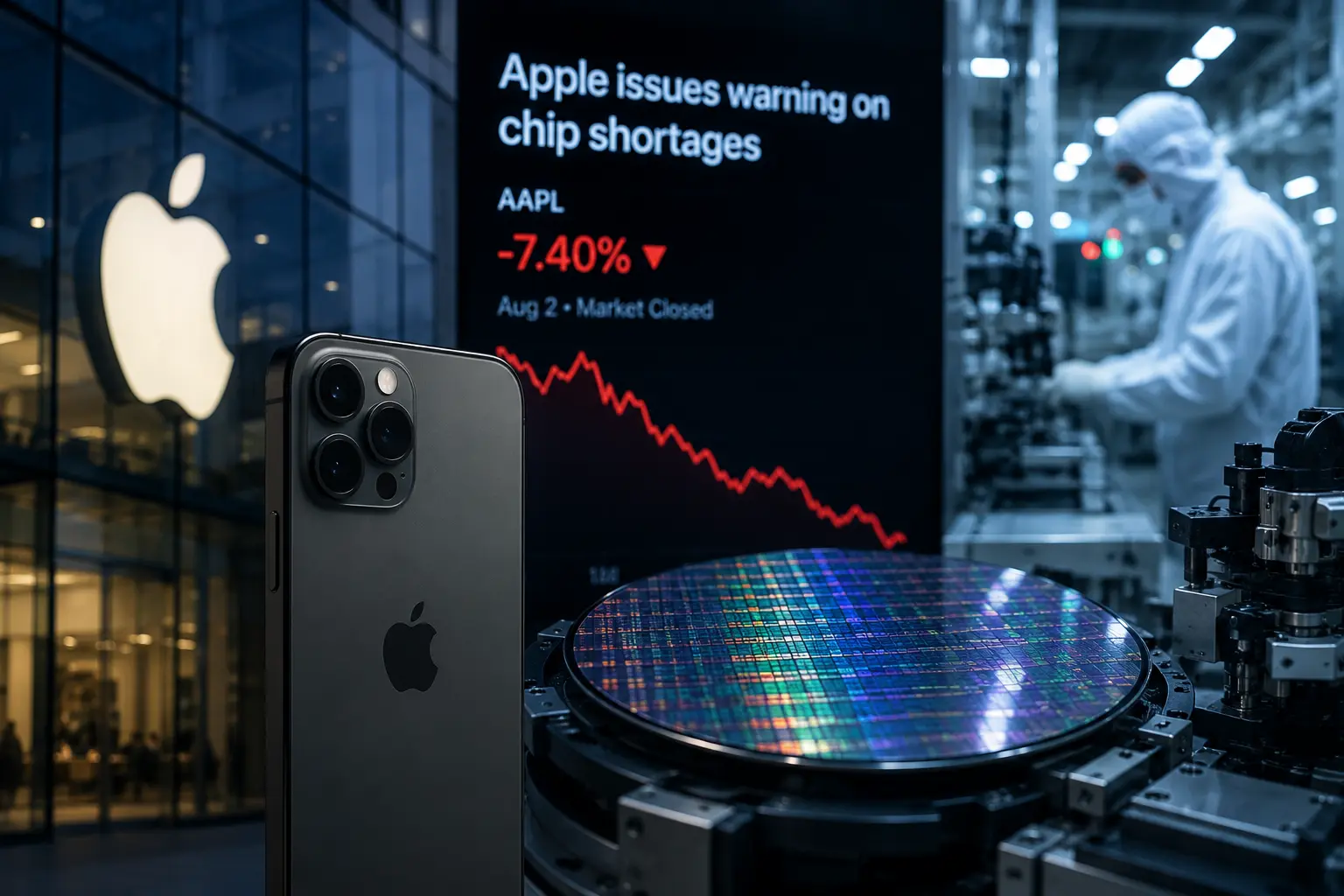
- Apple expects current-quarter revenue growth of 9–11%, below Wall Street’s estimate of about 12%, as component shortages restrict production
- AI data-centre demand is influencing semiconductor production priorities and reducing supply flexibility for consumer-device manufacturers
The fact
Apple shares fell 7.4% on Friday after the iPhone maker issued weaker-than-expected sales guidance and warned that component shortages would intensify. Apple expects revenue to grow by 9–11% in the current quarter, below Wall Street’s estimate of about 12%. Chief executive Tim Cook said constraints affecting advanced processors would be significant and limit the supply of iPhones, Macs and iPads.
The warning followed a strong fiscal third quarter. Apple reported revenue of $109.4 billion, up 16% from a year earlier, while iPhone revenue rose 22% to $54.3 billion. However, Services revenue fell short of market expectations, and higher component costs are putting pressure on margins. Apple has linked rising memory and storage prices to demand from expanding AI data centres and has already raised prices for some Macs and iPads.
The assessment
Apple is dealing with two distinct supply problems. The first is cost: strong server demand is encouraging memory manufacturers to prioritise higher-margin data-centre products, contributing to higher prices for memory and storage used in consumer devices. The second is availability: Apple says limited advanced-processor capacity is restricting production. The available evidence does not establish that data-centre demand caused the processor shortage, so the two constraints should not be treated as one.
Apple can partly manage higher memory costs through inventory and product pricing, but those measures do not create additional components. Price increases may protect margins, while inventory can only bridge a shortage until existing stocks are used. If processor supply remains constrained, Apple may be unable to produce enough devices to meet demand regardless of pricing. For BTW readers, Apple’s warning shows how infrastructure spending can affect downstream electronics through both supplier economics and physical capacity. The appropriate commercial response depends on whether a constraint raises costs or prevents production.
What to watch
Watch for further Apple price increases, longer product lead times or weaker gross margins during the current quarter. Guidance from memory manufacturers should show whether data-centre products continue to receive priority, while foundry updates will indicate whether Apple’s separate advanced-processor constraint is beginning to ease.
Member Briefing
Deeper Profile Context
Sign in with the right membership level to unlock the full briefing and source notes.
Only for Strategic Circle
Strategic Circle
Open to all readers. Unlock profile briefings after joining and signing in.
Join Strategic CircleOnly for Leadership Alliance
Leadership Alliance
For qualified IP-asset owners and management; sign in to unlock alliance briefings.
Join Leadership Alliance