
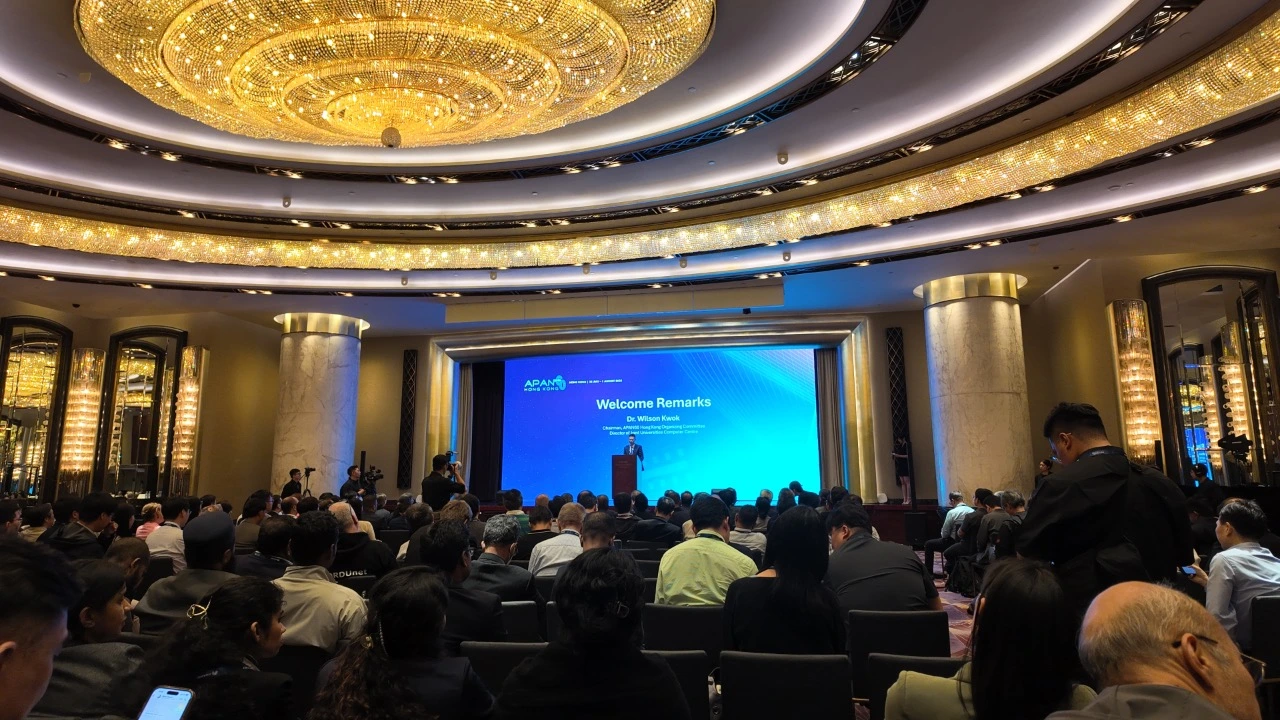
- Internet fragmentation addressed with a proposed multistakeholder impact assessment tool.
- Workshops empowered NREN professionals with GenAI tools and sustainable fibre networking strategies.
What happened: From fragmentation risks to AI empowerment
The Asia Pacific Advanced Network’s 60th meeting (APAN60), hosted in Hong Kong from 28 July to 1 August 2025, brought together researchers, policymakers, and digital infrastructure leaders to address emerging challenges—chief among them, the risk of a fragmented Internet.
During the Internet Governance SIG, researchers underscored the multistakeholder model as essential, calling for stronger cooperation between governments, civil society, and tech providers. An ICANN representative echoed this sentiment, warning that financial and educational barriers limit youth participation—creating a generational gap in shaping the Internet’s future.
The session proposed a unified “Impact Assessment Form” to help countries assess and mitigate the risks of data localisation, censorship laws, and digital sovereignty policies. Delegates highlighted how such fragmentation undermines global knowledge-sharing and scientific collaboration.
the AP-GAINED workshop—funded by APNIC’s ISIF Asia grant—trained NREN staff from across the region in practical Generative AI applications, from automating campus operations to optimising network management. It was co-hosted by LEARN and BdREN and featured cross-sectoral collaboration.
Meanwhile, Nokia’s expert-led session introduced entities to the Green Fibre Optical LAN solution, demonstrating how future-ready campus networks can be built sustainably to support AI workloads, smart classrooms, and data-intensive research.
Also Read: IETF 123: Boosts protocols with hackathon and sprint
Also Read: IETF 123 advances in Madrid following hackathon conclusion
Why it’s important
The sessions at APAN60 underscored a growing tension in the Asia-Pacific region between national digital sovereignty and the need for a borderless Internet, especially within research and education communities. As countries implement fragmented data governance—ranging from censorship frameworks to cybersecurity and localisation mandates—scientific collaboration, access to global knowledge, and network interoperability are increasingly under threat.
The proposed Impact Assessment Form aims to provide governments and stakeholders with a structured, evidence-based tool to evaluate and mitigate these risks, and to ensure that regulatory intentions do not unintentionally hinder progress.
Equally vital is the reaffirmation of the multistakeholder governance model, long championed by bodies like ICANN. At a time when centralised state controls are expanding, entities highlighted the importance of keeping Internet policy inclusive—engaging not just governments, but also technologists, researchers, civil society groups, and end-users. Of particular concern was the lack of youth participation in Internet governance discussions—often excluded not by disinterest, but by cost and lack of educational access. Addressing this gap is critical to ensuring intergenerational equity in shaping digital futures.
On the infrastructure front, the sessions made it clear that National Research and Education Networks (NRENs) will be key actors in resisting digital fragmentation and in building future-ready, AI-enabled systems. Initiatives like AP-GAINED, which equip network professionals with hands-on GenAI experience, mark a shift from theory to operational capacity. When coupled with sustainable innovations like Nokia’s Optical LAN and green fibre, NRENs are better positioned to create resilient, low-emission digital backbones that serve both research and environmental goals.
Ultimately, APAN60 meeting reflected a maturing consensus: that open, resilient, and sustainable Internet ecosystems are not a luxury for academia—they are foundational to scientific, economic, and civic progress in the Asia-Pacific and beyond.