Summary
- ANZENNA SOLUTIONS PTE LTD should be valued as an implementation-support and service-continuity account, not as a provable scaled platform business. The customer is buying remembered configuration, renewal handling, supplier coordination, local response and reduced switching pain.
- The cheaper substitute is a larger integrator, an internal employee, a self-serve SaaS plan, a regional managed-service competitor or delayed automation. The reason to pay Anzenna would have to be continuity: lower disruption cost than the substitute, not a unique public technology asset.
- The main cost driver is labour. Public sources support the Singapore SME digitalisation setting, the cyber and data obligations around business systems, and one APNIC network-resource transfer, but they do not disclose Anzenna's customer count, revenue, margins, response times, uptime record or retention.
- The strongest company-specific evidence is the public APNIC transfer log showing AS140629 moving from ANZENNA SOLUTIONS PTE LTD to another Singapore recipient in February 2024. That is useful evidence of network-resource history, not proof of a current network operation or a customer base.
- The commercial judgement is therefore conditional: Anzenna matters if private customers pay for continuity and recovery that a generic platform cannot deliver locally; it is weakly evidenced if the only public proof remains a company name and a past resource record.
The Failure That Prices The Account
The economic case for ANZENNA SOLUTIONS PTE LTD begins with a small failure rather than with a product brochure. Imagine a Singapore SME that has automated a booking flow, a finance handoff, a customer notification system or a narrow internal reporting job through a small provider. Nothing looks expensive while the service runs. Then a renewal date is missed, a cloud account changes terms, a staff member who knew the setup leaves, a customer data issue needs an answer, or a payment file fails before a month-end close. The buyer does not ask whether the supplier is a "cloud company" in the abstract.
It asks who remembers how the service was implemented, who can reach the upstream supplier, who knows the customer's local constraints, and how long the business can tolerate interruption.
That is the unit this article tests. A customer would be paying for an implementation-support and service-continuity account: a small bundle of setup memory, maintenance, recovery, renewal administration, documentation, local escalation and supplier coordination. The cheaper substitute is visible and often compelling: buy a generic SaaS subscription, ask a larger integrator to absorb the work, assign an internal employee, hire a lower-cost regional provider, or delay automation until the manual process becomes unbearable. The cost driver is not mainly code. It is the labour needed to understand a customer's existing process, preserve configuration choices, deal with upstream terms, respond in the same business day, and keep records good enough for Singapore's cyber, data and grant environment. The strongest evidence class is not a sales claim from Anzenna, because no current official website or financial disclosure is visible in the public materials used here. It is public infrastructure evidence: the BTW directory anchor for ANZENNA SOLUTIONS PTE LTD Only for Strategic Circle, the APNIC transfer log, and Singapore's official business, digitalisation, cyber and data-protection sources. The three missing proof categories are economics, reliability and retention: customer count, margin, support response, outage history, renewal rates, churn and account depth.
That boundary matters. Sparse evidence is not a reason to invent a larger company story. It is part of the commercial story. The public record tells us that Anzenna is an existing Singapore private-limited company in the directory and that a network-resource transfer record once named it. It does not tell us that the company currently operates a cloud platform, owns a live network, sells cybersecurity, carries a regulated licence, has named enterprise customers, or earns recurring revenue. The more serious inference is narrower.
If a company with this public footprint has commercial value, that value is likely embedded in relationships where customers pay for continuity despite thin public proof: retained knowledge, local support, handover risk and the cost of changing suppliers after a system has been woven into daily work.
Identity With A Thin Public Surface
The company identity is straightforward but lightly evidenced. The existing public directory page identifies the subject as ANZENNA SOLUTIONS PTE LTD Only for Strategic Circle, with Singapore as the jurisdictional setting and no public website shown in the directory context. Singapore's official registry environment sits with ACRA and Bizfile: ACRA's eService tools and portals page describes Bizfile as the one-stop portal for business registration, filing and information services, while ACRA's business information page explains that business profiles and certificates are formal information products. For a private company with little web presence, that distinction is important. A registry trail can establish legal existence and formal particulars, but it does not prove a service line, customer base or quality of execution.
Public silence also changes how a buyer should think about diligence. A high-visibility platform can be assessed through product pages, status pages, developer documents, customer cases, audits, press releases, app reviews and third-party comparisons. A small implementation-support provider may leave few such signals. The lack of a visible company website, public pricing page or public case study in the evidence base is therefore a negative commercial signal, but not a conclusive one. Many small service suppliers win accounts by referral, prior employment ties, direct support and local familiarity rather than by mass marketing.
The analytical problem is that those strengths, if they exist, are mostly private. They need contract files, tickets, invoices, renewal records and customer references to prove them.
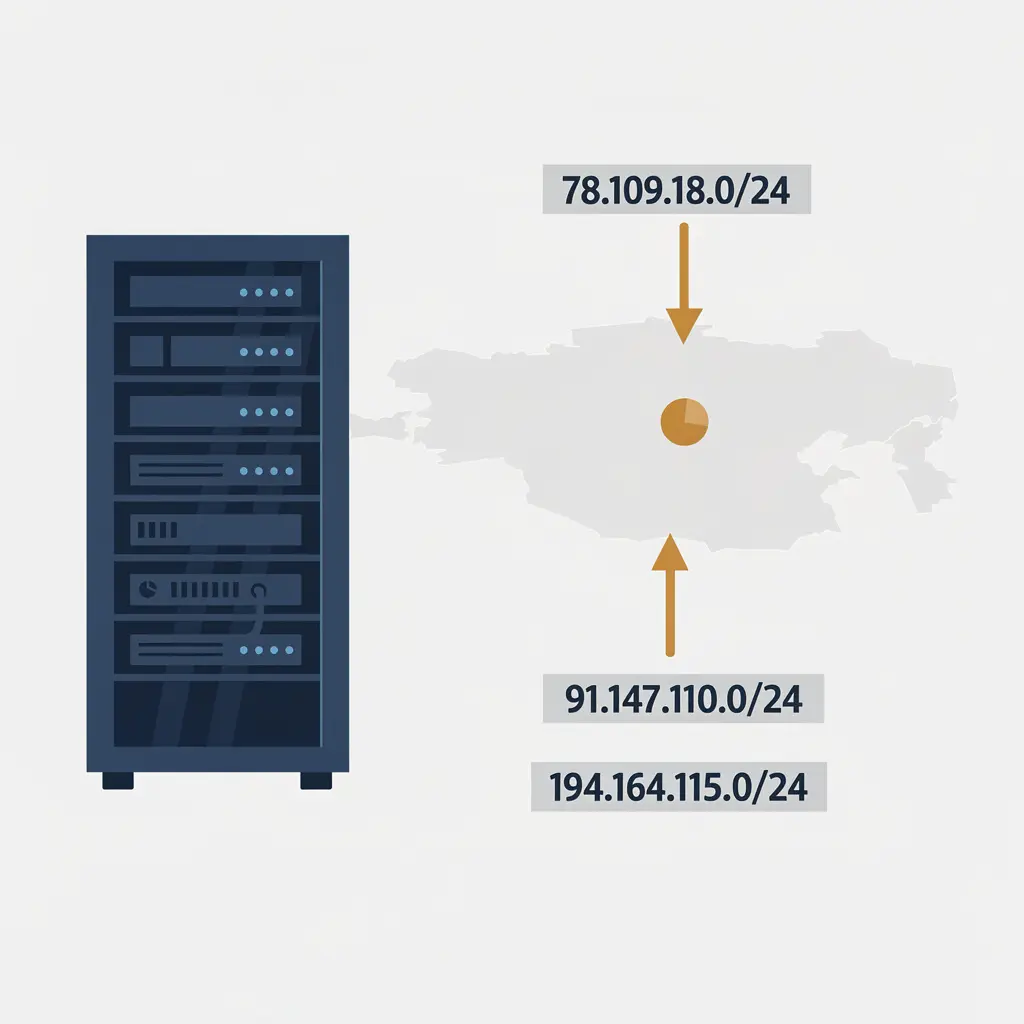
The APNIC record is the one stronger company-specific clue. APNIC's transfer data includes a February 2024 resource transfer in which the source organisation is named as ANZENNA SOLUTIONS PTE LTD in Singapore and AS140629 is transferred to a different Singapore recipient. The transfer log is useful because it puts Anzenna's name into a public number-resource context. It is also limited by APNIC's own caution inside the same file: the transfer log records information accurate at the time of transfer and is not intended to provide all information related to the transfer. That means the record should not be stretched into a claim that Anzenna currently runs a network, hosts customers, or controls the ASN today. It supports a history of resource involvement, not current revenue.
APNIC's institutional pages reinforce the same caution. APNIC describes itself as the open, membership-based, not-for-profit regional registry that provides IPv4, IPv6 and ASN resources to members in the Asia-Pacific region on its about page. Its Whois guidance says the APNIC Whois Database is a publicly searchable database for address usage in the region, designed for operational purposes such as identifying authoritative contacts and not for commercial marketing. These statements help place the Anzenna clue. Registry data is valuable because it is public and operational, but it is not a substitute for commercial accounts, service contracts or technical performance evidence.
What The Customer Actually Buys
If Anzenna is economically meaningful, the customer is unlikely to be buying a naked "cloud service" in the way a buyer buys storage, email or accounting software from a global platform. The more plausible unit is a continuity account around a narrow business system. That account can include initial configuration, migration from a spreadsheet or legacy tool, vendor selection, domain and access administration, service renewal, security settings, user support, backup advice, incident triage and handover documentation.
The service may sit on top of a third-party cloud, a SaaS tool, a business application or a hosted workflow, but the customer is paying the local provider to remember how the pieces fit.
This is why a small supplier can compete even when the underlying software is not unique. Generic platforms reduce the price of software capacity, but they do not remove customer-specific work. Someone still has to map the customer's process, decide which users get which permissions, explain what data sits where, choose settings, train staff, maintain renewal dates, answer small questions and document changes. For a small business, that knowledge can be more important than the platform brand.
The platform may have stronger engineering, but it does not know why a particular customer exports a file on Thursday, why one employee needs two approval roles, why a multilingual invoice template matters, or which manager should be called when a customer-facing process breaks.
The direct substitute set is broad. A larger integrator can offer more staff, certifications and procurement comfort. An internal hire can make knowledge permanent inside the company. A self-serve SaaS platform can lower explicit monthly cost and provide broad documentation. A regional competitor can supply similar support at lower price or with a different language mix. Delayed automation can be rational if the manual process is tolerable.
Anzenna's defence against those substitutes would have to be lower total disruption cost: shorter recovery when something breaks, fewer repeated explanations, better local context, faster supplier coordination and a relationship that survives staff turnover at the customer.
That defence is not visible in public numbers. There is no public Anzenna revenue line, no disclosed pricing, no customer list, no published support service-level agreement, no product uptime page and no public renewal metric in the evidence base. The article therefore cannot claim that customers actually receive superior continuity. It can only describe the economic test. A customer should pay more than the generic platform only if Anzenna's retained implementation memory reduces the total cost of ownership.
If the provider merely resells software without strong documentation, response discipline or supplier leverage, the generic platform is not just cheaper; it is better.
Singapore's SME Digitalisation Market Creates Demand
Singapore's policy environment creates a real market for small digital service suppliers. IMDA's SMEs Go Digital programme page positions digital adoption as a supported journey for SMEs and says ICM vendors play a key role in pre-approved digital solutions. Enterprise Singapore's Productivity Solutions Grant page describes a grant that helps local SMEs improve productivity and automate existing processes through IT solutions and equipment, with support for sector-specific and generic solutions. Those programmes do not prove that Anzenna is an approved vendor or a grant beneficiary. They show the market condition: Singapore SMEs are encouraged to adopt digital tools, and the adoption process often relies on named vendors, quotations, deployment locations, claims documents and proof of use.
The grant mechanics matter for the economics of local support labour. EnterpriseSG says applicants identify relevant solutions, obtain quotations, provide financial statements, submit proposal or quotation details, and later show that the solution has been deployed and used for at least one month. This is not just subsidy administration. It turns a digital supplier's work into documented implementation work.
A vendor that can prepare a clear quotation, match scope to approved packages, help the customer assemble evidence and support a claim cycle can be more valuable than a cheaper provider that leaves the buyer to handle the paperwork alone. The customer is paying for administrative confidence as much as for software access.
CSA's PSG Cybersecurity Solutions page adds another dimension. It says the SMEs Go Digital programme simplifies digitalisation for SMEs by offering pre-approved cybersecurity solutions with funding support from PSG, and it links cybersecurity adoption to CSA's Cyber Essentials mark. Again, this does not establish Anzenna as a cyber vendor. It shows that Singapore buyers are being trained to think about digital adoption together with cybersecurity controls, vendor selection, local eligibility and grant rules. A small provider that cannot explain cyber hygiene, cloud security and vendor responsibilities will look less credible as customers become more demanding.
IMDA's Singapore Digital Economy Reports page and Enterprise statistics page also help frame the demand side. IMDA tracks business use of computers, internet, artificial intelligence, cloud computing services, data analytics and e-payment. That is the right macro backdrop for Anzenna's category. More firms digitise functions, more systems connect to records and payments, and more small implementation jobs are created. The value does not flow automatically to any one supplier. It flows to providers that can convert adoption pressure into reliable support, usable configuration and renewals that customers do not regret.
Why The Cost Base Is Labour-Heavy
The visible cost of a small digital service may be a subscription, a one-time setup fee or a support retainer. The real cost base sits in people. Someone has to understand the customer's current process, choose the right tool, migrate data, create access rights, secure accounts, train users, answer ordinary questions, maintain vendor accounts and recover from small failures. The margin on that work depends on how much can be standardised without losing local context. If every customer needs a different workaround, labour cost rises. If implementation playbooks and support knowledge can be reused, the provider can protect margin.
This is where implementation memory becomes an asset. A customer may tolerate a generic platform for a simple job, but once the platform has been configured around local process, the memory of those choices has value. Which reports are used for month-end? Which employee can approve a change? Which language appears on customer notices? Which upstream account owns billing? Which domain and email settings were changed during setup? Which data was cleaned during migration? If that knowledge sits only in one technician's head, the service is fragile. If the supplier records it well, it becomes a retention mechanism.
The customer can leave, but departure requires rediscovering and retesting what already works.
The same memory is expensive because it is not purely scalable. A global SaaS company can spread product development across millions of users. A small Singapore provider may spread some templates across clients, but much of the work remains customer-specific. Support staff must answer questions in local business hours, understand Singapore procurement and grant references, and coordinate with upstream vendors. They also need enough technical depth not to reduce every problem to "contact the platform". The customer is paying to avoid becoming the system integrator of last resort.
There is also a documentation cost. Poor documentation lets a small provider win early by moving quickly, but it damages the continuity proposition. If no one can reconstruct settings, contacts, renewal dates, access rights and data flows, the customer is effectively captive to memory rather than service quality. That may create short-term switching resistance, but it is a weak commercial position because the customer will resent the captivity once a better substitute appears.
The stronger version of Anzenna's thesis requires disciplined documentation: enough handover material that the customer trusts the provider, while the provider still earns because it responds faster and knows the account better than a new entrant.
Supplier And Upstream Dependence
A narrow service provider rarely controls the whole stack. It depends on cloud infrastructure, SaaS vendors, domain registrars, payment services, security tools, device platforms, backup utilities and sometimes grant administrators. That upstream dependence is not a flaw by itself. It is the modern structure of SME digital services. The question is whether the provider manages the dependence transparently enough that the customer knows who is responsible for what.
The cloud shared-responsibility model is useful here. AWS explains in its shared responsibility model that security and compliance are shared between AWS and the customer, with AWS handling the infrastructure while customers retain responsibilities such as guest operating systems, applications, firewall configuration, data and access choices depending on the service. Microsoft makes a similar point on its Azure shared responsibility page, where customer duties persist across data, identities, endpoints, accounts and access management even as responsibility shifts between on-premises, IaaS, PaaS and SaaS. Google Cloud's shared responsibility and shared fate guidance likewise presents cloud security as a distribution of duties, not an outsourcing of every risk.
For Anzenna's likely economic unit, those models explain the value and the danger. A customer may believe that buying a platform or cloud service means the platform owner handles everything. In practice, the customer still needs decisions on data classification, access rights, backups, password controls, account recovery and integration with internal processes. A local service provider can earn by turning that shared responsibility into practical steps. But the same provider can disappoint if it lets the customer think responsibility has disappeared. The service should reduce ambiguity, not hide it.
Upstream dependence also affects pricing power. If the underlying platform is globally known and easy to buy directly, a small provider must justify its margin with support and adaptation. If the upstream vendor changes pricing, API behaviour, identity requirements or regional data settings, the local provider absorbs the customer conversation. That can be costly. It can also deepen retention if the provider handles the change well. The customer's alternative is to monitor every upstream vendor itself. The paid continuity account is partly a subscription to not having to do that alone.
Customers And Market Dependence
The customers most likely to value Anzenna's hypothesised unit are SMEs or small departments with enough digital dependence to suffer from disruption but not enough internal capacity to own every tool. They may be professional services firms, small retailers, logistics operators, training providers, clinics, hospitality operators, importers, local subsidiaries or other businesses where a narrow workflow matters. The exact customer base is not public, so this is market inference rather than Anzenna-specific proof. The important point is that customer dependence would be concentrated if Anzenna has only a small number of accounts.
Customer concentration can cut both ways. A small number of deep accounts can produce stable retainers if the provider is trusted and embedded. It can also create fragility if one renewal is lost or if a key customer internalises the work. A supplier that does not publish product scale or customer logos has to be assessed through private evidence: contract duration, recurring revenue share, renewal history, ticket volume, average response time, customer references and concentration by account. Without those facts, the article cannot score retention directly.
Market dependence is also shaped by language, local norms and procurement friction. Singapore buyers may not need a local provider for every cloud tool, but they may value someone who understands ACRA naming conventions, UEN references, CorpPass workflows, PSG documents, PDPA expectations and local business hours. EnterpriseSG's grant page repeatedly ties applications, quotes, claims and disbursement to registered company names and formal documents. That means local administrative fluency can be a service feature. It is not glamorous, but it lowers the customer's transaction cost.
The weakness is that administrative fluency is easier to copy than technical differentiation. Larger integrators can hire local staff. SaaS vendors can improve partner support. Accounting and corporate service firms can bundle digital tools. Internal operations staff can learn the system after first implementation. Anzenna's durability therefore depends on ongoing support quality, not just first setup. If the provider is valuable only during initial installation, the customer has an incentive to leave after the difficult work is done.
If the provider remains valuable during renewal, exceptions, upgrades and staff turnover, the account has more defensible economics.
Competition Against The Generic Platform
The generic platform is the most dangerous substitute because it changes the customer's reference price. A self-serve SaaS tool may cost less than a local support retainer and come with professional documentation, uptime commitments, templates, integrations and brand trust. The buyer can ask a reasonable question: why pay a small intermediary when the platform itself is mature? Anzenna's answer would have to be that the platform's generic support does not understand the buyer's local process and does not carry the switching cost of customer-specific configuration.
This answer is credible only in certain jobs. If a customer needs ordinary email, basic document storage or a simple accounting subscription, a direct platform purchase may be enough. If the customer needs a workflow that crosses multiple tools, local documents, access rights, staff habits and compliance expectations, support memory becomes more valuable. The platform provides capacity; the service provider provides interpretation. The price gap is justified only when interpretation reduces errors, downtime or staff burden.
Larger integrators compete differently. They offer brand comfort, procurement process, bench depth, security certifications and capacity to handle complex projects. Their weakness can be overhead and attention. A small customer may not be important enough to receive rapid senior support after the sale. A small provider can win by being reachable, remembering history and solving unglamorous tasks quickly. The risk is that small providers have thin redundancy. If one person is unavailable, the whole support promise can fail.
Customers should therefore ask who else knows the account, how tickets are logged, how handovers work and what happens if the provider loses a key employee.
Internal staff are another substitute. Hiring an operations or IT employee turns external support cost into payroll. It can improve control because knowledge sits inside the customer. It can also be expensive and fragile if the employee lacks breadth or leaves. A small provider can be cheaper than a full-time hire if support needs are episodic. It can be worse if the customer has to wait for every small change. The economic boundary is utilisation. High utilisation favours internal capability; low but high-stakes utilisation favours a retainer or trusted support supplier.
Delayed automation is the quiet substitute. Many SMEs postpone digital projects because the manual process is irritating but survivable. That choice can be rational. It avoids implementation cost, training burden and vendor dependence. The provider wins only when the cost of delay becomes larger than the cost of support: errors accumulate, staff time is wasted, customers expect faster service, or compliance requirements become harder to meet manually. In that setting, continuity after implementation matters because the buyer has already taken the risk of changing how work is done.
Cyber, Data And Regulatory Pressure
Singapore's digital-service market is shaped by cyber and data expectations even when a provider is not selling formal cybersecurity. CSA's SG Cyber Safe Programme says cyber risks are getting more sophisticated and that organisations of different sizes need tailored ways to strengthen cybersecurity. CSA's Cybersecurity Certification for Organisations page frames Cyber Essentials and Cyber Trust as marks for cyber defences, including coverage beyond classical cybersecurity into cloud security, operational technology security and AI security. These sources matter for Anzenna because customers buying implementation support increasingly need security controls to be part of the conversation.
The immediate commercial impact is on trust. A provider that manages access, backups, customer data, cloud configuration or vendor accounts can create risk even if it never claims to be a cybersecurity company. Customers should expect basic cyber hygiene: strong access control, proper account ownership, documented credentials handover, multi-factor authentication guidance, backup and recovery thinking, and clarity on who can make changes. CSA's Cybersecurity Health Check for Organisations presents a ten-minute tool for organisations to assess cyber hygiene and track progress. For a support provider, that is a signal of the minimum language customers will increasingly use.
Data protection adds another layer. The Personal Data Protection Commission's PDPA overview is the official entry point for Singapore's personal data regime. A small provider working around customer records may not need to be a legal adviser, but it must avoid casual treatment of personal data. If the provider sets up a customer database, connects a form, handles exported files or supports a notification workflow, data handling is part of service quality. A cheap generic platform does not absolve the customer from using it properly. A local support provider can add value by making practical choices safer and clearer.
CSA's consultation record on the licensing framework for cybersecurity service providers is also relevant, but with care. It focuses on licensable cybersecurity services such as penetration testing and managed SOC monitoring, and discusses consumer assurance, standards and information asymmetry. There is no public evidence here that Anzenna provides licensable cybersecurity services or holds such a licence. The value of the source is broader: Singapore is willing to regulate parts of the cyber-service market where buyers cannot easily judge provider quality. That is the same economic problem facing small service accounts. Buyers need assurance, yet many quality facts are private.
Network-Resource Evidence And What It Does Not Prove
The Anzenna record in the APNIC transfer log is the article's most concrete operating clue. A February 2024 entry records AS140629 as transferred from ANZENNA SOLUTIONS PTE LTD in Singapore to another Singapore recipient. This supports three limited conclusions. First, the company name appeared in a recognised Asia-Pacific number-resource transfer context. Second, the resource was an autonomous system number, not a customer contract, product page or revenue line. Third, by the nature of a transfer record, it points to movement away from Anzenna rather than current control by Anzenna.
The temptation is to read too much into that clue. An ASN can be associated with routing history, hosting, network operations or resource trading, but a transfer log alone cannot tell us why the resource moved, whether consideration was paid, whether Anzenna previously used it operationally, whether customers were affected, or whether the company changed business model. The transfer might reflect disposal of an unused resource, a business handoff, a customer arrangement, a restructuring, or a purely administrative change. Without direct company explanation or surrounding records, those possibilities remain possibilities.
The better economic use is to treat the ASN record as evidence that Anzenna's public trace sits near network-resource administration. That fits the assignment category of a cloud-service company, but it does not complete the story. A firm can have touched an ASN and still be a small implementation provider, an inactive holder, a reseller, a consultant, a one-account operator or a company that has exited the relevant activity. A responsible article should not transform resource evidence into operating certainty.
It also matters that APNIC warns users about the limits of public operational databases. Its Whois page says results are for operational purposes, and its transfer file includes remarks about accuracy at the time of transfer and limits in the completeness of the report. The burden of proof therefore rests with additional evidence. Current routes, customer services, public support pages, invoices, contracts, service descriptions, customer references and renewal records would be needed to prove a live network or cloud-service business. Public research found stronger context around the market than around Anzenna itself.
Unofficial Signals And The Meaning Of Silence
For some small providers, reviews, map listings, forums, app store complaints or procurement pages help reveal market presence. In this case, the usable public signals are mostly negative or weak. The directory page anchors the entity, the APNIC transfer log supplies a resource clue, and official Singapore programmes explain the buyer environment. There is no visible company website, current status page, public pricing, app listing, customer review trail or published case study in the evidence base. That absence should not be converted into an accusation. It should be converted into a due-diligence requirement.
The absence of market chatter can mean several things. It can mean the company is very small, works by direct referral, serves a few private accounts, changed activity after the ASN transfer, or has little current trading activity. It can also mean the research trail missed non-indexed records, private customer references or local-language mentions. Because those interpretations differ sharply, the article treats the silence as a risk signal rather than a fact about performance.
For a customer, the practical response is simple. Ask for the evidence that public search does not provide. What services are currently offered? Who owns the upstream platform accounts? What happens if Anzenna is unavailable? Are credentials and documentation held by the customer? Is there a written response target? How are backups tested? Are renewals calendarised? Which customer data is handled, and where? How many customers use the service today? Which staff know the account? These are not hostile questions. They are the normal questions when public proof is thin and continuity is the thing being bought.
For an investor or analyst, the same signal affects valuation. A provider without public customer proof should not be valued like a scaled SaaS business. It should be valued, if at all, like a service account or small support book whose durability depends on churn, documentation, recurring revenue, staff continuity and customer concentration. The absence of public marketing lowers acquisition cost if private accounts are strong, but it raises diligence cost because every meaningful proof point must be obtained directly.
Revenue And Pricing Logic
The revenue logic of an implementation-support account is recurring but not necessarily high-margin. It can include initial setup fees, monthly support retainers, renewal administration, ad hoc project fees, migration work, training, documentation, vendor-management fees and pass-through software charges. The attraction is that support revenue can recur after the initial project. The danger is that small interruptions and customer questions can consume more labour than the retainer covers.
Pricing should be tied to avoided disruption rather than to software resale alone. A generic platform may charge a transparent monthly fee. Anzenna, if acting as a local support provider, would need to price the hidden work: understanding the customer's setup, answering questions, preserving documentation, handling access changes, troubleshooting upstream issues and helping the customer stay compliant enough for its own risk level. The customer should compare the fee not only with the platform price but with internal staff time, failed handover cost, downtime cost and reimplementation cost.
The APNIC resource clue introduces a different possible revenue lane: network-resource disposal, administration or legacy infrastructure support. The February 2024 ASN transfer could have had economic value, but the public log does not disclose price or reason. It is not safe to treat that transfer as recurring revenue. At most, it suggests that Anzenna's public footprint once included a transferable network resource. If the company previously held network resources, the more durable business question would be whether it had customers, routing operations, hosting obligations or technical staff around those resources.
The public record does not answer that.
The most favourable pricing case is a portfolio of small recurring support accounts with low churn and standardised playbooks. Such a provider can reuse migration templates, documentation formats, security settings and renewal processes while preserving enough local knowledge to remain valuable. The unfavourable case is bespoke support where each customer requires one-off work, urgent handholding and senior time. In that case, revenue may look recurring while margin quietly disappears into response labour.
Cash collection also matters. SMEs can be price-sensitive and may delay payment for support they perceive as invisible. The provider's best defence is to make continuity visible through reports, documentation updates, renewal reminders, training records and incident notes. That evidence gives the customer something to see before failure occurs. Without it, the provider's value is remembered only after a problem, and renewal discussions become harder.
The Renewal File Is The Asset
The strongest form of implementation memory is a renewal file that can survive personnel change. A renewal file is not simply a contract PDF. It is the working map of the customer's service: account owners, admin users, platform tenant names, billing dates, data locations, backup settings, support contacts, configuration choices, access recovery routes, integration points, known exceptions and the business reason each piece exists. For a small digital service account, that file may be more valuable than a glossy dashboard because it preserves the knowledge that stops routine maintenance from becoming crisis work.
This is where a small provider can be more valuable than the software it resells or configures. The platform vendor knows the generic product. The customer knows the desired business outcome. The support provider should know how those two sides were reconciled in practice. If the customer has a staff change, the provider can explain why an old decision was made. If the platform changes a setting, the provider can decide whether the customer should accept it, delay it or reconfigure around it. If a billing problem appears, the provider can find the right account owner quickly.
These are humble tasks, but they determine whether a small system remains usable.
The file also changes bargaining power. If documentation is strong and shared with the customer, Anzenna or any similar provider must keep earning the account through service rather than through opacity. That is healthier for both sides. The customer is not trapped by ignorance, and the provider can charge for availability, judgement and continuity. If documentation is weak, the provider may still retain the account because leaving is painful, but that retention is brittle. A customer that feels trapped will search for a clean break as soon as a replacement appears.
Renewal work is especially important in a policy environment that encourages SMEs to adopt more digital tools. The IMDA and EnterpriseSG pages cited above show that adoption is not a one-time transaction. A buyer identifies a solution, gets a quote, deploys it, proves use, trains staff and later adjusts as the business changes. A support provider that disappears after installation leaves the customer with a new operating dependency and no keeper of context. A provider that manages renewal files turns adoption into continuity.
The same logic applies to cyber settings. Multi-factor authentication, admin rights, backup schedules, data exports and deprovisioning procedures are not glamorous, but they are the settings most likely to matter during staff turnover or a security incident. CSA's Cyber Safe material makes cyber hygiene a mainstream buyer concern. For a support provider, the commercial advantage is not claiming deep security expertise without proof. It is making ordinary controls operational enough that customers do not fall into obvious failure modes.
That means knowing who still has access, which recovery email receives notices, where backup confirmations are stored and how quickly a terminated employee can be removed from shared tools.
The best private evidence would therefore be mundane: renewal calendars, implementation notes, access inventories, customer handover packs, support histories and documented response patterns. Those records would show whether Anzenna's account memory is real. They would also reveal whether labour can scale. If every file has the same structure, the provider can handle more customers with less confusion. If every account is a pile of unstructured notes, growth adds risk. Public evidence cannot inspect those files. It can only identify why they would matter.
How A Buyer Should Price Continuity
A rational buyer should price Anzenna's service against the cost of replacing it, not merely against the platform subscription. The replacement cost has several layers. The first is discovery: staff must identify what the current service does, who owns each account, what data sits inside it, which reports are used and which external parties depend on it. The second is migration: data must be exported, cleaned, mapped and imported elsewhere, often with staff training and parallel running. The third is risk: errors during migration can disrupt customers, payroll, booking, reporting or compliance.
The fourth is opportunity cost: internal employees spend time reconstructing a system instead of serving customers.
The provider earns when its fee is lower than that replacement cost and when the fee is paid for work that the customer can see. A small monthly retainer is rational if it covers timely answers, renewal management, configuration updates, access administration and recovery support. It is irrational if it buys only vague availability. The distinction is important because small service accounts often blur into relationship spending. Buyers keep paying because someone familiar is reachable. That may be enough for a non-critical tool. For a workflow that touches customers, records or money, reachability should be backed by evidence.
The customer should also separate set-up value from ongoing value. A provider may be excellent at initial migration but less useful afterward. Another provider may be ordinary at set-up but disciplined in support and documentation. The lifetime value of the account depends on both. For Anzenna's thesis, the continuing work matters more because the public article title is about continuity against a generic platform. If the customer can self-serve smoothly after set-up, the support account should shrink. If the system requires frequent local judgement, the account can persist.
The total price should include risk transfer. When the customer pays a support provider, it is not eliminating risk. It is reallocating part of the response burden. The customer still owns business decisions, data responsibility and staff behaviour. The upstream platform still owns its infrastructure. The provider owns the local configuration, documentation and support process it agreed to manage. Shared-responsibility cloud guidance from AWS, Microsoft and Google helps explain why the boundaries matter.
A buyer should not pay a local provider as if all risk has been outsourced, but it should pay for clearly defined work that reduces the likelihood and duration of failure.
Pricing also depends on account criticality. A booking system used daily deserves a different response expectation from a quarterly reporting tool. A customer-notification process handling personal data deserves a different control level from a public brochure site. A renewal tied to revenue recognition deserves more attention than a convenience subscription. A good provider should classify accounts by operational impact and price support accordingly. A poor provider treats every account as equal until the customer escalates.
There is a temptation for small providers to underprice early accounts to win trust. That can be rational while the provider learns templates and builds references. It becomes dangerous if the provider locks in too many low-fee accounts that require high-touch support. Continuity is costly because it requires availability at inconvenient moments. A provider that sells unlimited support too cheaply eventually rations attention, delays replies or relies on one exhausted technician. That is when the continuity proposition breaks.
The more durable model is tiered and explicit. Basic customers receive documented handover, renewal reminders and limited support. Higher-risk accounts receive faster response, scheduled documentation reviews, backup tests and more senior escalation. Project work is priced separately. Pass-through platform costs are transparent. Customer data handling is described. Termination includes handover. None of those terms is proven for Anzenna. They are the terms a customer would need to see before paying a premium over self-service.
Why Sparse Evidence Can Still Have Economic Meaning
Sparse public evidence often creates an instinctive discount, and that discount is appropriate. A company that does not publish current services, customers, leadership or operating metrics imposes higher diligence cost on anyone trying to evaluate it. But the discount should not turn into a simplistic conclusion that the company has no value. Many local service businesses are economically meaningful precisely because they sit inside private workflows. Their evidence is in invoices, tickets, referrals and renewals, not public campaigns.
For ANZENNA SOLUTIONS PTE LTD, the sparse evidence is unusually central because the strongest public company-specific clue is a resource transfer away from the company. That could imply reduced activity in network resources, or it could be one administrative change around a business that continued elsewhere. Public sources do not decide the question. What they do decide is the burden of proof. Any strong claim about a current operating platform would need much more evidence than is available here.
The same scarcity can be a commercial mechanism. If customers rely on a provider because it knows their local setup and there is little public substitute information, switching becomes less about choosing a named rival and more about reconstructing history. The provider's value is then embedded in customer-specific knowledge, not in public brand. That value can be real but fragile. It depends on trust, documentation and responsiveness. If the provider loses trust, the same information scarcity that once protected it becomes a reason for customers to fund a replacement.
Analysts should therefore avoid two errors. The first is promotional overreach: taking an APNIC transfer, a Singapore company name and a digitalisation market as proof of a strong cloud-service business. The second is mechanical dismissal: treating lack of public marketing as proof of inactivity. The better position is conditional. Anzenna's public footprint is enough to ask economically serious questions about service continuity, implementation memory and network-resource history. It is not enough to answer those questions in the company's favour.
This is why the article keeps returning to private facts. Customer count matters because a two-account support book has different risk from a fifty-account book. Utilisation matters because staff can be busy but unprofitable. Support response matters because continuity is experienced in minutes and hours, not annual descriptions. Outage history matters because resilience is demonstrated during failure. Margin matters because labour-heavy support can look attractive until all senior time is consumed. Churn matters because switching resistance is only valuable if customers renew willingly.
Direct licence or certification proof matters if the company claims regulated or security-sensitive work. Retention by service tier matters because deeper accounts should be harder to replace than occasional project customers.
In the absence of those facts, the public conclusion stays deliberately modest. Anzenna can be analysed as a possible continuity account in Singapore's SME digital-services market. It cannot be called a proven platform, a proven managed-service operator or a proven high-retention business. That may feel unsatisfying, but it is a better economic answer than forcing a confident story from thin evidence.
Operating Risk
The first operating risk is key-person dependence. Small support providers often rely on one or two people who know the customer's setup. That can be efficient until illness, resignation, travel or overload exposes the absence of shared records. A buyer should not confuse personal familiarity with institutional continuity. The stronger provider documents enough that another competent person can recover the account. The weaker provider becomes the single point of failure it was hired to remove.
The second risk is upstream failure. If the underlying platform has an outage, a policy change, a billing suspension or a data-location issue, the local provider may not be able to fix the root cause. Its value shifts to communication, workaround design and escalation. That is still valuable if the provider has vendor contacts and knows the customer process. It is not valuable if the provider merely forwards generic help-desk responses. The customer's contract should make clear which risks are controlled directly and which depend on third parties.
The third risk is cyber hygiene. A provider with administrative access to customer systems can become a source of compromise through weak passwords, poor device security, unmanaged shared accounts or casual transfer of exported data. This risk does not require malicious intent. It can arise from ordinary convenience. CSA's cyber programmes and health tools show that Singapore treats cyber hygiene as a mainstream business issue, not a specialist concern reserved for large firms. A support provider selling continuity must be able to show basic internal controls.
The fourth risk is evidence decay. A service that begins with careful setup can become undocumented after several years of small changes. Users are added, reports are modified, integrations break and workarounds accumulate. When the original rationale disappears, the customer cannot easily decide whether to renew, rebuild or leave. Providers that make money from continuity should periodically refresh documentation and retire unused complexity. Otherwise they create switching cost, but of the unhealthy kind.
The fifth risk is regulatory misfit. If a customer handles personal data, regulated records, financial information or sensitive business files, a casual implementation may create compliance exposure. The provider does not need to become a law firm, but it needs enough awareness to avoid reckless configurations. If it cannot answer where data sits, who can access it, how permissions are reviewed and what happens on termination, the customer is buying convenience at the expense of resilience.
What Would Change The Judgement
Several facts would materially improve the positive case. A current company website with service descriptions, named responsible contacts and support terms would reduce identity uncertainty. A customer reference list, even if private to diligence, would show that the service is current. Recurring revenue by account, renewal rates and support-ticket volumes would prove that customers use the service after initial setup. Response-time data, outage history and recovery records would prove reliability. Documentation samples and handover procedures would show that continuity is being produced rather than merely promised.
A current vendor or grant status would also help, but only if read carefully. Listing in an approved solution marketplace would support market access, not customer satisfaction. A cyber certification or named partnership would support control maturity, not revenue. A public case study would support relevance, not margin. Each proof point would need to be matched to the economic claim being made. The article's claim is not that Anzenna is large. It is that the relevant paid unit, if present, is support continuity. The best evidence would therefore be account-level durability and recovery performance.
Several facts would weaken the case. If the company has no current paying customers, the economic unit is historical rather than active. If the ASN transfer represented exit from the relevant activity and no replacement service exists, the network-resource clue becomes legacy evidence only. If support is undocumented and dependent on one person, switching resistance is fragile and customer risk is high. If customers can move to generic platforms without meaningful reimplementation cost, the local support premium disappears. If the company handles customer data without basic access controls, continuity becomes a liability.
The current public evidence sits between those outcomes. It is enough to justify tracking the company as a sparse Singapore service account with network-resource history and potential continuity economics. It is not enough to award strong operating credit. A serious customer would not reject the company solely because public evidence is thin, but it would insist on private proof before depending on it for a critical workflow.
Bottom Line
ANZENNA SOLUTIONS PTE LTD matters only under a narrow economic interpretation. It is not publicly proven as a scaled cloud platform, a live network operator or a large cybersecurity vendor. The visible proof is a Singapore company identity in the directory and a hard APNIC transfer record in which AS140629 moved away from Anzenna in February 2024. Around that thin core, the Singapore market context is real: SMEs are encouraged to digitise, government support programmes require formal vendor and deployment evidence, cyber hygiene is increasingly mainstream, and cloud responsibility remains shared even when infrastructure is outsourced.
That context gives Anzenna a plausible but unproven role. A small supplier can sell continuity where a generic platform is cheaper because customers do not merely buy software capacity. They buy remembered implementation, local support, renewal discipline, supplier coordination and recovery from small failures that would otherwise interrupt work. The value is highest where a workflow is important enough to hurt when it fails but not large enough to justify a full internal team.
The same facts keep the judgement disciplined. Public evidence cannot prove customer retention, service quality, account depth, response times, revenue, margin or current network control. The APNIC record is evidence, not the company itself. Singapore's digitalisation and cyber programmes create demand conditions, not Anzenna-specific performance. A generic platform, a larger integrator, an internal hire or a regional competitor may be better if Anzenna cannot show current customers, documentation and support discipline.
The investment and customer question is therefore practical. If Anzenna can show a live support book with recurring accounts, low churn, documented configurations, clear escalation, tested recovery and credible handling of customer data, its public quietness may hide a defensible small service account. If it cannot, the cheaper substitute should win. On the evidence now available, Anzenna sells continuity only as a conditional thesis: valuable where implementation memory and local response reduce disruption, weak where the customer simply needs a generic platform.