
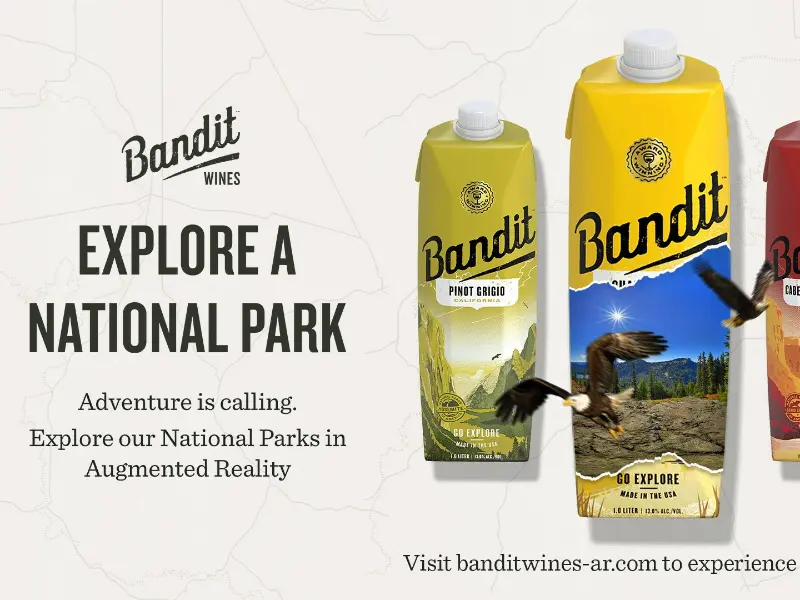
- Aircards and Bandit Wines have launched the AR Connected Pack Experience, turning ordinary wine packaging into an interactive brand channel.
- Scanning a QR code on specially marked Bandit bottles unlocks interactive tasting notes, behind-the-scenes winemaking footage and personal messages from the winemakers.
Wine labels have spent roughly six centuries doing one job: telling you what is inside the bottle. Bandit Wines has just handed the label a second job — sommelier, tour guide and backstage pass, all at once.
The wine brand has partnered with Aircards, an augmented reality (AR) technology company, to launch the AR Connected Pack Experience. Point a smartphone or tablet at the QR code on specially marked Bandit packaging and the carton opens a virtual portal: interactive tasting notes, behind-the-scenes footage of the winemaking process, and personal messages from the people who actually made the wine.
No app download. No headset. No instruction manual. That frictionless little scan is precisely why a packaging tweak deserves more attention than the average product launch.
From label to portal: how the AR Connected Pack Experience works
The mechanics are deliberately boring, which is the compliment here. Aircards' AR engine sits behind a standard QR code, so the entire experience lives in the browser and the customer's existing device. Scan, and the bottle stops being packaging and starts being a doorway.
What waits on the other side is the interesting part: tasting notes you can interact with rather than squint at, footage from the winemaking floor, and the winemakers themselves speaking directly to the person holding the bottle. The label no longer describes the wine. It introduces it.
Packaging is the last unclaimed media channel
Here is the uncomfortable arithmetic every consumer brand is staring at. Attention is rented from platforms at prices that rise every quarter, and the audience scrolls past in under two seconds. A bottle, by contrast, is already in the customer's hand, already paid for, already the centre of a moment — a dinner, a gift, a Friday night that needed rescuing.
That is owned attention, and it has been sitting there, unmonetised, for six centuries. Turning the pack into a connected surface is not a gimmick; it is the cheapest media inventory a drinks brand will ever own. The QR code is the smallest piece of real estate in marketing and, right now, the most underused.
“We are thrilled to partner with Bandit Wines to bring this exciting AR Connected Pack Experience to consumers,” said Michael Watson, CEO of Aircards. “By combining our expertise in AR technology with Bandit Wines’ commitment to innovation, we are able to deliver a truly unique and immersive experience that will delight wine lovers and enhance their enjoyment of the brand.”
What Bandit Wines actually buys with a QR code
Strip away the novelty and the strategic logic is simple: a bottle that talks back is a bottle that gets remembered, photographed and shared. Tasting notes become content. The winemaker becomes a character. The pack becomes a channel that can be updated long after the carton was printed — new vintages, new stories, new offers, same barcode.
“At Bandit Wines, we are always looking for ways to innovate and elevate the consumer experience,” said Jane Smith, Marketing Director at Bandit Wines. “Partnering with Aircards to launch this AR Connected Pack Experience allows us to create a dynamic and interactive platform for sharing our story and connecting with our customers in a meaningful way.”
The AR Connected Pack Experience is live now on select Bandit Wine packaging, with plans to extend it across additional products. Expect the rest of the shelf to follow: once a label proves it can hold a conversation, a silent one starts to look like a missed opportunity.
Also read: Rokid unveils new smart glasses for enhanced productivity
Also read: Microsoft Teams introduces immersive 3D and VR meetings
The cork still pops. The label, however, now talks back.




