
Summary
- AfNOG’s 2007 call requested permission to reproduce a presentation after the event, including posting it on the organisation’s website.
- That requirement connected programme participation to a durable technical archive, but the notice did not define the permission’s detailed licence terms.
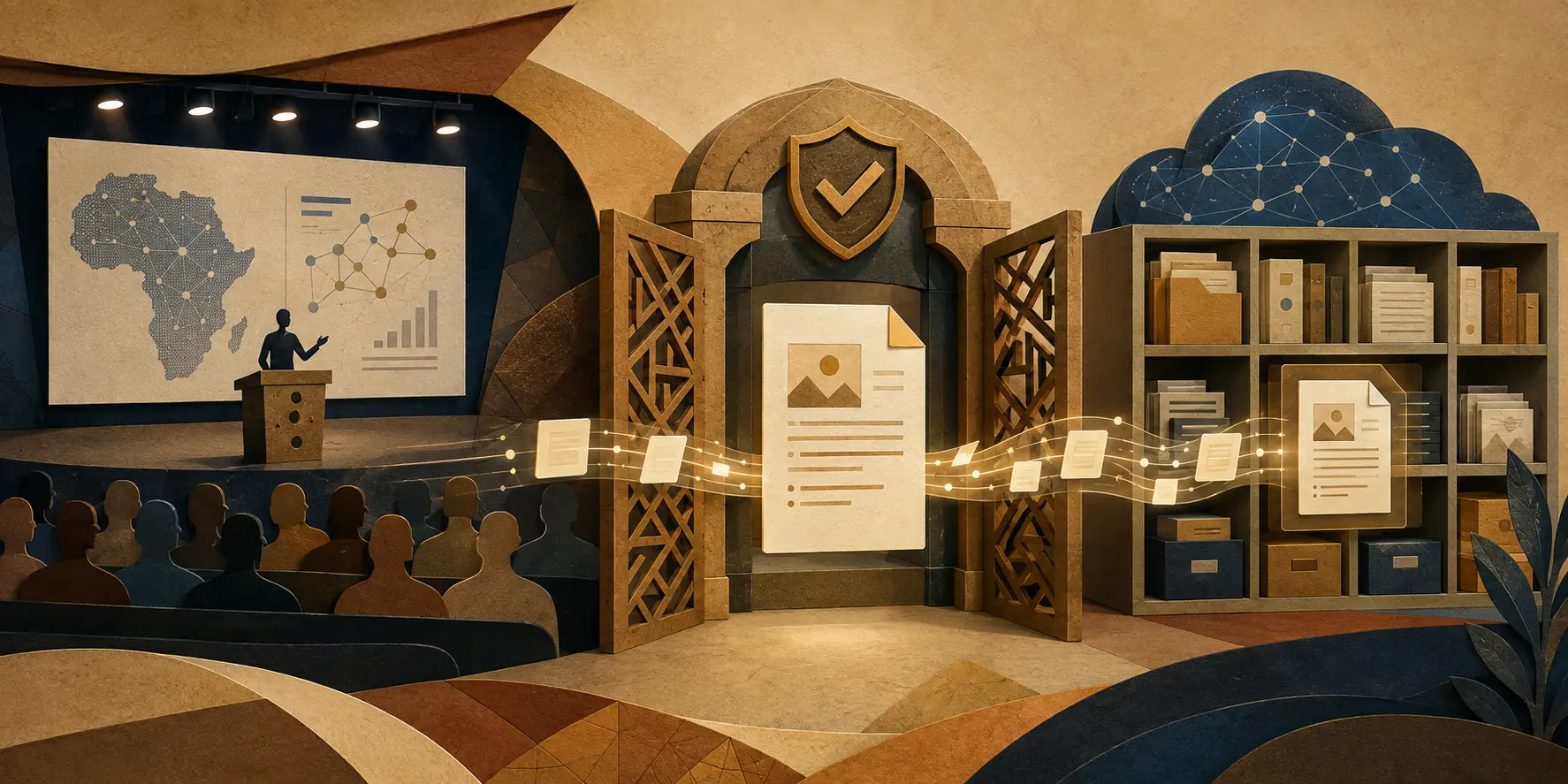
A conference talk disappears when the room empties unless an institution preserves it. AfNOG’s 2007 call for presentations treated that preservation as part of the contribution itself: alongside a title, format, requested time and short abstract, applicants were asked for permission to reproduce their presentation after the event, including permission to post it on the AfNOG website.
The immediate purpose was practical. The call sought tutorial instructors, conference speakers and panel chairs across operational subjects. A published presentation could extend the useful life of that work beyond one audience and one date. It could also give operators who could not travel a reference they might later inspect or share.
The governance mechanism sits in the permission field. A speaker supplied expertise and delivery; the organiser sought authority to turn the resulting file into a community resource. That exchange is not inherently extractive. It is one way a technical meeting builds a commons rather than only a programme.
But “permission to reproduce” leaves several externally visible questions unanswered. The reviewed call does not state whether the permission was exclusive, perpetual or revocable. It does not describe attribution, later correction, replacement of outdated files or withdrawal. Absence from this notice is not proof that no terms or practices existed; it defines what a contributor could verify from the page.
The notice also welcomed suggestions and expressions of interest even without all requested information. That flexibility matters: it suggests the information list was not presented as a completely closed gateway. The page does not establish whether withholding reproduction permission affected selection, and no claim can be made about any proposal’s fate.
The beneficiaries of an archive include later learners, working operators and authors whose contribution remains discoverable. Costs can arise when a technical deck ages, contains third-party material, or circulates without clear version and attribution. Those are foreseeable governance risks, not evidence that they occurred in a particular AfNOG file.
A proportionate modern rule would keep the expectation of sharing while making the bargain legible. It could state a non-exclusive licence, required attribution, the version to be posted, the author’s responsibility for third-party rights, and a narrow route for correction, replacement or withdrawal. A visible date and status would help readers distinguish historical guidance from current operational advice.
This article concerns a dated 2007 call. It does not establish current AfNOG licensing policy or prove that every accepted talk was published and remains online. Its narrower lesson is durable: when participation includes publication permission, the organiser is governing both a live programme and the future memory of a technical community.
Sources
Member Briefing
Deeper Profile Context
Sign in with the right membership level to unlock the full briefing and source notes.
Only for Strategic Circle
Strategic Circle
Open to all readers. Unlock profile briefings after joining and signing in.
Join Strategic CircleOnly for Leadership Alliance
Leadership Alliance
For qualified IP-asset owners and management; sign in to unlock alliance briefings.
Join Leadership Alliance