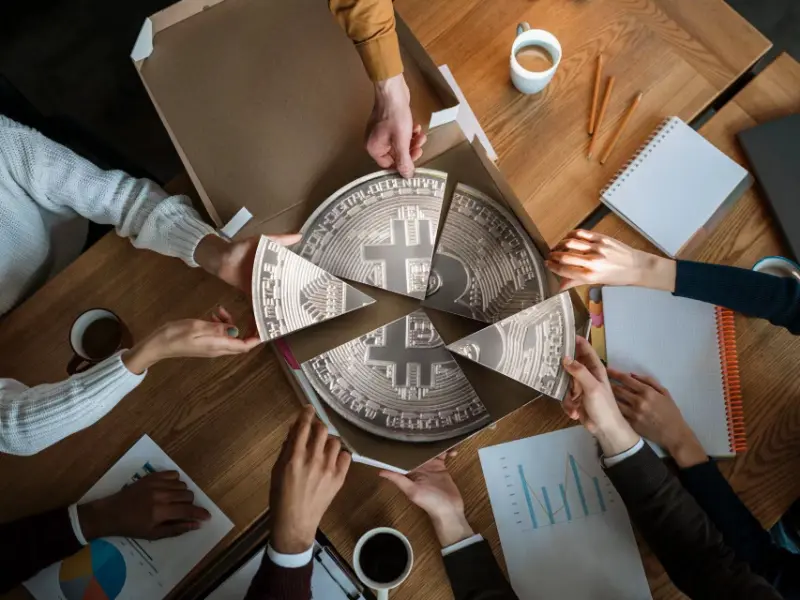
Bitcoin’s fourth halving is not a mystical calendar ritual. It is a scheduled pay cut. Around April 19, 2024, at block height 840,000, the network is expected to slash the block reward from 6.25 BTC to 3.125 BTC—halving the fresh supply that miners earn for securing the chain. That single line of code turns the 2024 Bitcoin halving into a live stress test of miner economics: who can run faster, cheaper, and with better capital access when revenue per block is cut in half. The party is real. The margin call is realer.
What is the Bitcoin halving?
On the Bitcoin blockchain, a block is a file holding transaction data. Miners compete to add the next block by using specialised hardware to solve a difficult mathematical problem and produce a 64-character output known as a hash. Once the block is completed, it is locked to prevent modification. Miners earn bitcoin for doing this work.
A Bitcoin halving is the event that cuts that reward by 50%. Halvings are programmed to occur once every 210,000 blocks—roughly every four years—until the network has issued all 21 million bitcoin. It is scarcity by schedule, enforced by software rather than a central bank.
When is the next Bitcoin halving?
The fourth Bitcoin halving is expected around April 19, 2024, when the chain reaches block height 840,000. The block reward will fall from 6.25 BTC to 3.125 BTC. Because block times fluctuate around the ten-minute average, the exact date remains an estimate rather than a timestamp guaranteed by central command.
Swan Bitcoin has pointed to April 19, 2024 as the predicted date. The market will not wait for a press release. Miners, traders, and hardware sellers are already pricing the pay cut.
Bitcoin halving history: dates, block rewards, and supply
| Event | Date | Block reward | Total new bitcoin during event |
|---|---|---|---|
| First halving | November 28, 2012 | 25 new BTC | 5,250,000 BTC |
| Second halving | July 9, 2016 | 12.5 new BTC | 2,625,000 BTC |
| Third halving | May 11, 2020 | 6.25 new BTC | 1,312,500 BTC |
| Fourth halving | Expected April 2024 | 3.125 new BTC | 656,250 BTC |
Also read: Bitcoin now 80 trillion times more difficult to mine, with halving set for April.
Pop quiz: the fifth halving reward
What is the reward per block during the fifth Bitcoin halving?
A. 12.5 BTC
B. 6.25 BTC
C. 3.125 BTC
D. 1.5625 BTC
The correct answer is at the bottom of the article.
Why does Bitcoin halve?
Bitcoin’s halving is built into the software designed by the pseudonymous Satoshi Nakamoto. One theory holds that the mechanism was intended to distribute coins more rapidly early on, encouraging users to join the network and mine new blocks. Another is that the fixed issuance schedule and periodic halvings were designed to impose deflationary discipline on the currency.
“Bitcoin halving is representative of how sound money should function. Bitcoin is the opposite of fiat currencies such as U.S. Dollars or Euros. It has a deflationary supply issuance, while fiat has an inflationary supply issuance.”
— Kadan Stadelmann, CTO at Komodo
Strip away the ideology and the mechanism is simple: Bitcoin’s monetary policy is transparent, predictable, and indifferent to politics. That is either its beauty or its rigidity, depending on whether you are holding the asset or selling the hardware.
How might the Bitcoin halving impact BTC’s price?
How the next halving will affect the price of bitcoin is still an open market question. Many analysts expect the price to rise after the event because new coin issuance is constrained, following the pattern of the previous three halvings. That view has a logic: if demand holds and fresh supply slows, the marginal seller has less to sell.
“The effects of bitcoin halving in the cryptocurrency market are varied potentials. It has been observed that in the past, a halving event preceded mega price hikes in bitcoin due to increased scarcity for new bitcoins. However, one has to remind oneself that as the bitcoin market matures over time.”
— Guy Sheetrit, CEO at OTT Inc
But scarcity is not a guarantee of higher prices. Demand can stall, regulation can shift, and the market has matured considerably since the last halving in 2020, with many well-established cryptocurrencies competing for capital. The halving cuts supply. It does not underwrite demand.
Also read: Bitcoin reaches $44,000 high, faces resistance: returns to $42,000.
Why does the Bitcoin halving matter?
After the halving, bitcoin volatility often spikes. Less bitcoin is issued to miners, the remaining supply becomes harder to produce, and investors reappraise the asset. Previous halvings have historically been followed by upward price cycles, but the more immediate impact is on the mining industry.
The number of bitcoin miners is expected to fall as the economics of mining become less attractive—and, for less efficient operators, unprofitable. This is not a bug. It is the market doing what markets do: forcing capital, hardware, and energy costs through a tighter filter. The miners with cheap power, efficient machines, and strong balance sheets survive. The rest consolidate, capitulate, or sell equipment to someone who thinks they can run it better.
Is the Bitcoin halving good or bad?
“The halving is almost like the Bitcoin New Year.”
— Graeme Moore, head of tokenisation at Polymesh Association
In the past, the halving supply shock has signalled the beginning of significant bull markets for bitcoin. “Many bitcoiners throw parties on the halving date as the previous epoch comes to an end and a new epoch begins. The halving is almost like the Bitcoin New Year,” said Graeme Moore.
Kadan Stadelmann, CTO at Komodo, also sees negative possibilities behind the price excitement. “There are two potential negative outcomes. First, the fervour around bitcoin halving may at least temporarily draw attention away from other crypto projects. Second, bitcoin mining may become less profitable over time each time the block reward decreases.”
The halving does not decide whether Bitcoin is good. It decides which miners can afford to keep the lights on—and that is the market’s job, not the party’s.
Pop quiz answer: D. The upcoming April halving is the fourth halving, and the fifth halving is expected in 2028, when the block reward falls to 1.5625 BTC.