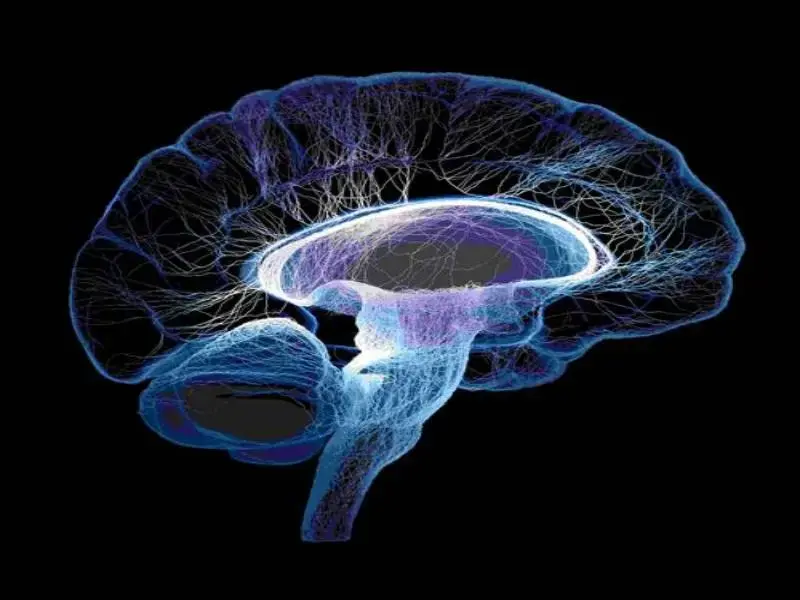
- Neural networks have become a cornerstone of modern machine learning algorithms, revolutionising the way computers learn from data.
- These complex networks of interconnected nodes, inspired by the human brain’s structure and function, play a vital role in various applications, from image recognition to natural language processing.
The use of neural networks in machine learning is essential for their ability to model complex relationships, recognise patterns, adapt to new information, and learn from data. Their scalability, feature learning capabilities, generalisation to unseen data, and versatility across domains make neural networks a powerful tool in the advancement of artificial intelligence and advanced technologies. As the field of machine learning continues to evolve, neural networks are poised to play a central role in shaping the future of intelligent systems and data-driven decision-making.
1. Handling non-linear relationships
Neural networks can model complex, non-linear relationships in data, making them versatile for tasks where traditional linear models fall short. By combining multiple layers of non-linear transformations, neural networks can learn intricate patterns and representations in the data.
Also read: An introduction to neural networks
2. Pattern recognition
Neural networks excel at pattern recognition, allowing them to identify subtle and complex patterns in data that may be difficult for humans or traditional algorithms to discern. Whether it’s identifying handwritten digits, recognising faces, or classifying medical images, their ability to learn from examples and generalise to new data is unparalleled. This capability makes them well-suited for tasks such as image and speech recognition.
3. Adaptability
Neural networks can adapt and learn from new data, continuously updating their parameters to improve performance. This adaptability enables them to learn and adjust to changing patterns in the data over time, enhancing their predictive power. They can be used for both supervised and unsupervised learning tasks. For example, convolutional neural networks (CNNs) are specifically designed for image data, while recurrent neural networks (RNNs) excel in sequence data like time series or natural language.
4. Scalability
Neural networks can scale to handle large and complex datasets, making them suitable for tasks that require processing vast amounts of information. Whether analysing images, text, or sensor data, neural networks can accommodate diverse data types and volumes. Their distributed nature allows them to be trained on multiple processors or even across different machines, making them efficient for big data applications.
5. Feature Learning
Neural networks can automatically learn and extract relevant features from raw data, eliminating the need for manual feature engineering. By extracting meaningful representations from the input data, neural networks can capture essential information for making accurate predictions and classifications.
Also read: Ethernet dedicated lines vs. wireless networks
6. Generalisation
Neural networks can generalise well to unseen data, meaning they can make accurate predictions on new, unseen examples beyond the training set. This ability to generalise indicates the network’s capacity to capture underlying patterns in the data, rather than memorising specific training examples.
7. Versatility
Neural networks can be applied across a wide range of tasks and domains, demonstrating their versatility in various fields. From computer vision and natural language processing to finance and healthcare, neural networks have shown their effectiveness in solving diverse problems and driving innovation.