
Institution Profiling / Internet infrastructure institution

2 protocols used most often with IoT devices

2 protocols used most often with IoT devices is tracked as a internet infrastructure institution within the internet infrastructure ecosystem.

2 protocols used most often with IoT devices
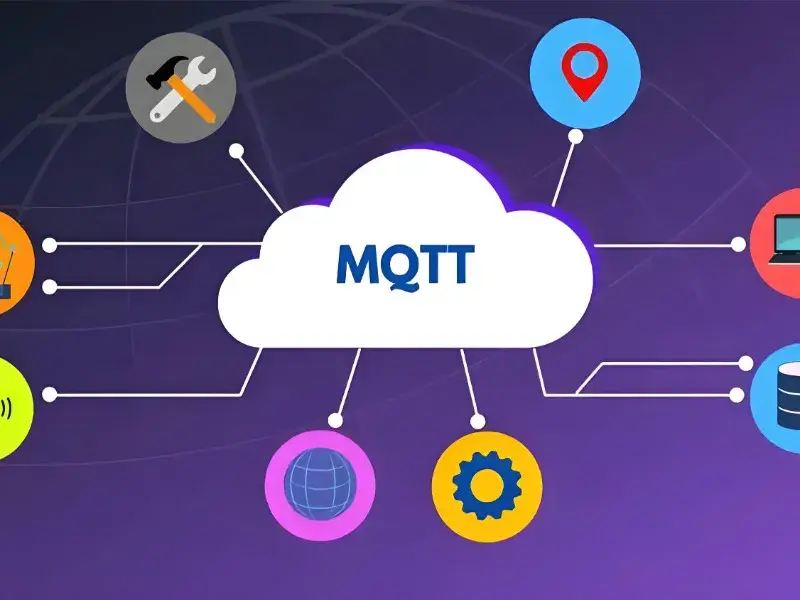
Caption: 2 protocols used most often with IoT devices visual context for BTW intelligence coverage. · Source context: Existing article media was retained or restored as the subject-specific visual basis. · Relevance reason: 2 protocols used most often with IoT devices is the primary subject or event subject; the image supports the article's market reading. · Image provenance: Existing curated article image retained because it is subject- or event-specific and not a generic pool placeholder.

Sources

Public references used for this article.

CategoryInstitution

2 protocols used most often with IoT devices is tracked as a internet infrastructure institution within the internet infrastructure ecosystem.

RegionGlobal

2 protocols used most often with IoT devices has public-source relevance to network operations, governance, dependency mapping, or market structure.

Signal FocusInternet infrastructure institution

2 protocols used most often with IoT devices has public-source relevance to network operations, governance, dependency mapping, or market structure.

Content TypeProfile

2 protocols used most often with IoT devices is tracked as a internet infrastructure institution within the internet infrastructure ecosystem.

Primary DomainTechnology

Public-source signals support medium-impact monitoring for infrastructure visibility and dependency analysis.

TopicInternet infrastructure institution

2 protocols used most often with IoT devices is profiled by BTW Media because published evidence links it to internet infrastructure, governance, operational dependencies, or market visibility.

ImpactMedium

Public-source signals support medium-impact monitoring for infrastructure visibility and dependency analysis.

Confidence?Confidence Grade
0.90–1.00AHigh — direct sources
0.75–0.89A/BStrong
0.55–0.74B/CMedium
0.35–0.54C/DWeak–medium
0.10–0.34DWeak signal
0.00–0.09DInternal monitoring
Limited confidence (72%)

Several public sources

2 protocols used most often with IoT devices is profiled by BTW Media because published evidence links it to internet infrastructure, governance, operational dependencies, or market visibility.

  • The two protocols most commonly used for IoT devices are MQTT and CoAP, which both belong to communication protocol.
  • These two protocols are widely used in the communication of internet ‌because of their respective characteristics and advantages.

IoT protocols refer to protocols used for communication and data transmission between devices in an IoT environment. These protocols can be divided into transmission protocol, communication protocol and industry protocol. They promote the data sharing and interconnection between different devices. The two protocols most commonly used for IoT devices are MQTT and CoAP, which both belong to communication protocol.

What is communication protocol

Communication protocol mainly runs on the traditional internet TCP/IP protocol, ‌is used for data exchange and communication through the internet, ‌such as MQTT, ‌CoAP, ‌AMQP and so on. ‌The characteristic of these communication protocols is that they are based on the existing internet technology ‌can achieve more efficient data transmission and lower power consumption. Due to the diversity of IoT devices and resource limitation, ‌the communication protocols mainly used in IoT scenarios are lightweight, ‌‌for example, CoAP/LWM2M protocol and MQTT protocol, which are designed for resource-limited environments.

Also read: NB-IoT and LoRa dominate the LPWAN IoT market

Also read: 25 smart home and IoT technologies that might just change your life

Two protocols most commonly used

1. MQTT(‌Message Queuing Telemetry Transport): MQTT ‌is a lightweight messaging protocol that ‌is widely used for communication between devices and servers. The ‌MQTT protocol works like a publish-subscribe model in that ‌allows different devices or clients to exchange messages through a piece of middleware called ‌Broker‌. ‌MQTT protocol has the following advantages: ‌lightweight, ‌high reliability, ‌support asynchronous communication and offline messages, ‌even if the device is not online can receive and send messages. ‌Therefore, ‌MQTT protocol is one of the most commonly used protocols in iot applications, ‌helps devices to communicate efficiently, ‌and provides a reliable and secure message passing mechanism for iot applications.

2. CoAP (‌Constrained Application Protocol): CoAP is a resource-oriented protocol ‌designed for ‌in constrained device and network environments to achieve low power, ‌low bandwidth, and low latency communication. ‌CoAP protocol not only supports transferring data, ‌also supports querying resource status, ‌triggering events and other operations, ‌which makes it very suitable for use in the internet of Things. ‌CoAP has a lower overhead, ‌ because it uses only a small amount of network resources to transfer data. ‌

These two protocols are widely used in the communication of internet ‌because of their respective characteristics and advantages. ‌MQTT ‌plays an important role in IoT applications due to its efficient messaging mechanism and reliability. ‌And CoAP, because of its resource-oriented nature and low overhead, ‌is suitable for use in resource-constrained IoT devices.

At A Glance

  • Name: 2 protocols used most often with IoT devices
  • Type: Internet infrastructure institution
  • Base: Global
  • Profile focus: Institution

What It Does

  • Public records support monitoring of its role, services, and key relationships.

Why It Matters

  • Public-source signals support medium-impact monitoring for infrastructure visibility and dependency analysis.
  • Operational criticality: Medium
  • Time horizon: Next quarter

What To Watch

  • Monitoring focuses on verified service continuity, governance changes, and relationship signals.
NowMedium priority

Track verified source updates, role changes, and current public evidence.

QuarterMedium policy sensitivity

Public-source signals support medium-impact monitoring for infrastructure visibility and dependency analysis.

YearNext quarter outlook

Longer-term relevance depends on verified operating, policy, and relationship changes.

Member Briefing

Deeper Profile Context

Login is required to unlock the full profile briefing and source notes.

Only for Strategy Circle

Strategic Circle Access

Open to all readers. Unlock profile briefings after joining and logging in.

Join Strategic Circle

Only for Leadership Alliance

Leadership Alliance Access

For owners and management of IP-holding companies. Login required to unlock.

Join Leadership Alliance
← BackAll Companies