
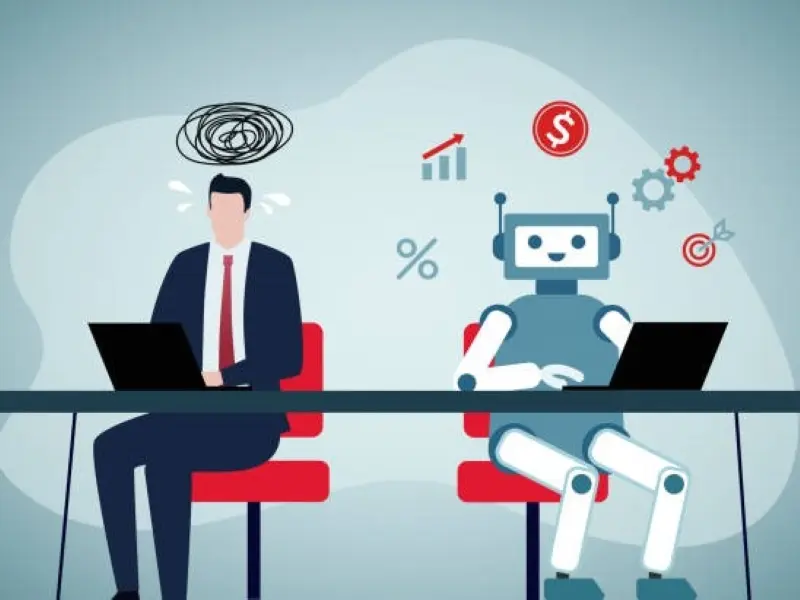
- Narrow AI plays a crucial role in modern technology by excelling in specific applications.
- Some commentators think narrow AI could be dangerous because of this “brittleness” and fail in unpredictable ways.
Narrow artificial intelligence or narrow AI is a learning algorithm designed to perform a single particular task. When the learning algorithm learns a special task, it automatically solves a similar problem. It is not like general artificial intelligence. But it also mimics the complex thought of humans. It excels in its designated area but lacks the flexibility and adaptability of general AI. In this blog, you can learn the best 10 examples of narrow AI.
Also read: What is narrow AI?
1. Virtual assistants: Siri, Google Assistant, Alexa
These AI-powered assistants are designed to handle specific tasks such as setting reminders, sending texts, or answering questions. They use natural language processing (NLP) to understand and respond to user commands, but their capabilities are limited to predefined functions and commands.
2. Spam filters: Gmail Spam Filter, Outlook Junk Mail Filter
Spam filters use AI to analyse incoming emails and identify unwanted or suspicious messages. They evaluate characteristics such as keywords, sender information, and patterns to filter out spam and keep your inbox organised.
3. Recommendation systems: Netflix Recommendations, Amazon Product Suggestions
Recommendation engines analyse user behaviour, preferences, and past interactions to suggest products, movies, or music that the user might like. These systems are trained on large datasets to provide personalised suggestions within their specific domain.
Also read: Algorithmic trading blamed for crypto exchange outages
Also read: Understanding data mining and its importance in business
4. Customer service chatbots: Drift, Intercom, Zendesk Chat
Chatbots are designed to interact with customers and provide support for common queries. They use scripted responses and AI to handle routine questions and issues, helping businesses manage customer service efficiently without human intervention.
5. Autonomous vehicles: Waymo, Tesla Autopilot
Self-driving cars use AI to process data from sensors, cameras, and radar to navigate and make driving decisions. They are programmed to handle specific driving tasks such as lane-keeping, adaptive cruise control, and automatic braking, but they cannot perform functions outside of these parameters.
6. Image recognition systems: Google Photos, Facebook Photo Tagging
AI-powered image recognition systems can identify and categorise entities, faces, and scenes within photos. For instance, Google Photos can automatically tag people in images, and Facebook can suggest tags based on facial recognition.
7. Voice-to-text software: Dragon NaturallySpeaking, Google Dictation
These tools convert spoken language into written text. They are widely used in transcription services, note-taking apps, and hands-free communication. The AI is trained to recognise and accurately transcribe spoken words within its specific context.
8. Financial trading algorithms: Algorithmic Trading Systems, Robo-Advisors
Financial trading algorithms use AI to analyse market data, execute trades, and make investment decisions based on pre-defined criteria. Robo-advisors provide personalised investment recommendations and manage portfolios using AI algorithms.
9. Healthcare diagnostic tools: IBM Watson for Health, PathAI
AI systems in healthcare can analyse medical images, patient records, and other data to assist in diagnosing diseases and recommending treatments. These tools are specialised for tasks such as identifying tumours in radiology images or predicting patient outcomes.
10. Language translation tools: Google Translate, DeepL
AI-driven translation services can convert text from one language to another. They use machine learning and NLP techniques to understand and translate text, though they may not fully capture context or nuances in more complex translations.