
Institution Profiling / Internet infrastructure institution

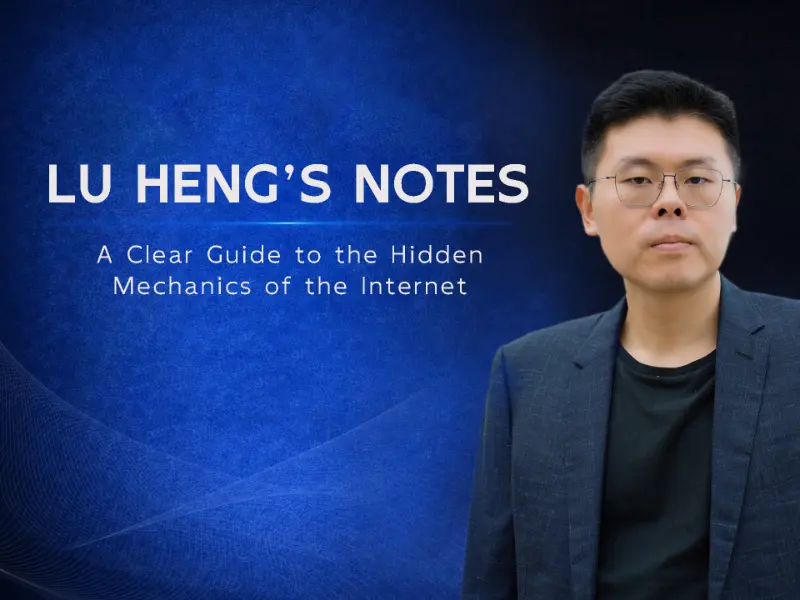
Lu Heng’s notes: A clear guide to the hidden mechanics of the internet

Lu Heng’s notes: A clear guide to the hidden mechanics of the internet is tracked as a internet infrastructure institution within the internet infrastructure ecosystem.

Lu Heng’s notes: A clear guide to the hidden mechanics of the internet

Evidence Pack

Source records grounding the claims in this article.

CategoryInstitution Type

Lu Heng’s notes: A clear guide to the hidden mechanics of the internet is tracked as a internet infrastructure institution within the internet infrastructure ecosystem.

RegionGlobal

Lu Heng’s notes: A clear guide to the hidden mechanics of the internet has public-source relevance to network operations, governance, dependency mapping, or market structure.

Signal FocusInternet infrastructure institution

Lu Heng’s notes: A clear guide to the hidden mechanics of the internet has public-source relevance to network operations, governance, dependency mapping, or market structure.

Content TypeProfile

Lu Heng’s notes: A clear guide to the hidden mechanics of the internet is tracked as a internet infrastructure institution within the internet infrastructure ecosystem.

Primary DomainGovernance

Public-source signals support medium-impact monitoring for infrastructure visibility and dependency analysis.

TopicInternet infrastructure institution

Lu Heng’s notes: A clear guide to the hidden mechanics of the internet is profiled by BTW Media because public-source evidence links it to internet infrastructure, governance, operational dependencies, or market visibility.

ImpactMedium

Public-source signals support medium-impact monitoring for infrastructure visibility and dependency analysis.

Confidence?Confidence Grade · doctrine v2 §8 / SOP §2
0.90–1.00AHigh — direct sources
0.75–0.89A/BStrong
0.55–0.74B/CMedium
0.35–0.54C/DWeak–medium
0.10–0.34DWeak signal
0.00–0.09DInternal monitoring
C · 0.80

Mixed-source

Lu Heng’s notes: A clear guide to the hidden mechanics of the internet is profiled by BTW Media because public-source evidence links it to internet infrastructure, governance, operational dependencies, or market visibility.

  • Lu Heng’s guide demystifies how the internet’s foundational systems, especially IP addresses, are governed and valued.
  • He advocates reforms that increase fairness, accountability and resilience in global Internet resource management.

“Over the past years, I have been directly involved in disputes, policy processes, and structural failures across Regional Internet Registries (RIRs), including all five of them. What I write here is not theoretical commentary; it is drawn from first-hand exposure to how the Internet’s core resources are actually governed, misgoverned, priced, and controlled.”

——Lu Heng, CEO at Cloud Innovation, CEO at LARUS Ltd, Founder of LARUS Foundation.

Revealing the internet’s invisible foundations

In his “A Beginner’s Guide to Lu Heng’s Notes”, Lu Heng, CEO of LARUS Limited and founder of the LARUS Foundation, introduces readers to the often overlooked but essential infrastructure that makes the Internet work. Although billions of people rely on the Internet daily, few understand the system of IP addresses — unique numerical labels required for devices to connect online — or how they are managed. ʻNumber resourcesʼ, as Heng describes them, are both scarce and indispensable, and yet public awareness about how they are governed remains limited.

Heng’s notes explain that the prevailing policies and legacy governance models have kept IPv4 addresses artificially undervalued and constrained. This undervaluation hampers investment in network infrastructure and cloud services, with real-world effects on the cost and expansion of connectivity worldwide.

Also Read: Lu Heng warns ICP-2 revision threatens internet governance

Misunderstanding has consequences

The notes argue that misunderstanding how IP address governance works isn’t merely an academic problem. Because a few central organisations — the Regional Internet Registries (RIRs) — wield significant influence over distribution and policy, opaque practices can introduce points of failure. For example, scam emails that exploit confusion about authority signal weaknesses in public understanding and systemic transparency.

Heng’s beginner-oriented writing breaks down these issues in everyday language, aiming to shed light on the mechanics behind address allocation, policy disputes and the structural limitations of current governance frameworks. His goal is to make these topics accessible not just to engineers and policymakers but also to business leaders and everyday Internet users.

Also Read: Why IPv4 could be worth $60 trillion: Evaluating the debate over digital asset value

Proposals for fairer, more resilient governance

Central to Heng’s message is the need for reform that aligns governance with openness, fairness and resilience. Among the ideas presented are recognising the true economic value of IP addresses, enabling genuine ownership rights rather than restrictive rental models, and implementing mandatory portability so networks can retain addresses when they change service providers.

Heng also suggests reducing unnecessary registry fees and decentralising the database of number resources to eliminate single points of control. Strengthening accountability, he argues, would build trust and encourage broader participation in global Internet governance.

In essence, Lu Heng’s notes offer a guided tour of the Internet’s hidden backbone, inviting readers to rethink how critical infrastructure can be made more equitable, transparent and resilient for the digital future.

Core Entity Brief

  • Entity: Lu Heng’s notes: A clear guide to the hidden mechanics of the internet
  • Subject Type: Internet infrastructure institution
  • Region: Global
  • Classification: Institution Type

Service Surface / Control Surface

  • Public records support monitoring of governance, service, and infrastructure control surfaces.

Governance and Policy Surface

  • Public-source signals support medium-impact monitoring for infrastructure visibility and dependency analysis.
  • Operational criticality: Medium
  • Time horizon: Quarter (30-120d)

Decision Trigger Matrix

  • Monitoring focuses on verified service continuity, governance changes, and relationship signals.
NowMedium priority

Current state favours active tracking due to infrastructure relevance.

QuarterMedium policy sensitivity

Public-source signals support medium-impact monitoring for infrastructure visibility and dependency analysis.

YearQuarter (30-120d) continuity dependency

Long-cycle infrastructure decisions likely to remain path-dependent.

Member Unlock

Restricted Profile Intelligence

Login is required to unlock full profile briefings and deep-dive sections.

Only for Strategy Circle

Strategic Circle Access

Open to all readers. Unlock profile briefings after joining and logging in.

Join Strategic Circle

Only for Leadership Alliance

Leadership Alliance Access

For owners and management of IP-holding companies. Login required to unlock.

Join Leadership Alliance
← BackAll Companies