
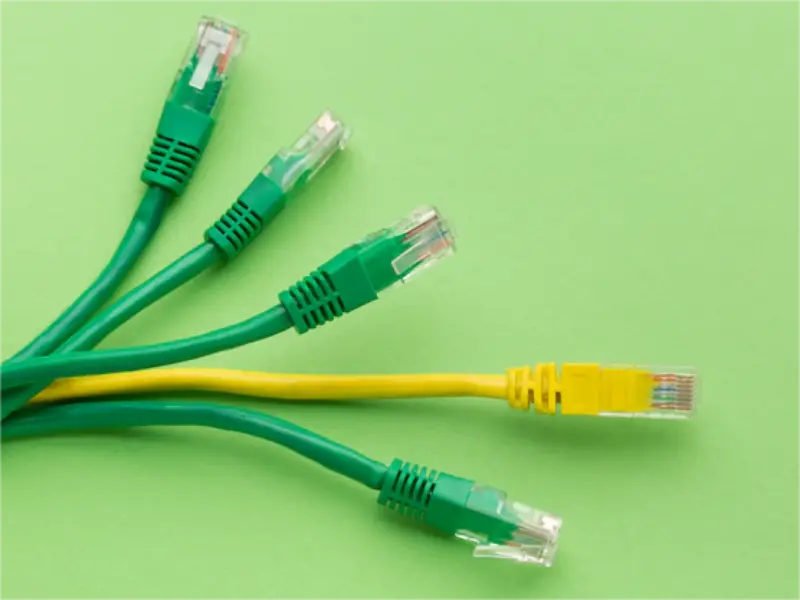
- Cat 6 cables are designed to support high-speed data transmission.
- They are commonly used in both residential and commercial networking environments.
A Cat 6 network cable, short for category 6, is a type of twisted pair cable used for Ethernet networking. It is an advanced version of the previous Cat 5e standard and offers several improvements in terms of performance and reliability. Understanding the features and benefits of Cat 6 cables can help you make informed decisions when setting up or upgrading your network infrastructure.
Overview of Cat 6 cables
Cat 6 cables are designed to handle higher frequencies and faster speeds compared to their predecessors. They are capable of supporting data transmission speeds up to 1 gigabit per second (Gbps) over longer distances and up to 10 gigabits per second (Gbps) over shorter distances. This makes them suitable for a wide range of networking applications, from home networks to commercial environments.
The primary advantage of Cat 6 cables over earlier standards like Cat 5e is their ability to handle higher data rates with reduced interference. Cat 6 cables are constructed with tighter twists in the pairs of wires and improved insulation, which helps to minimise crosstalk and reduce signal degradation. These features ensure that data can be transmitted more reliably and with greater consistency.
Also read: FibreWorld supports fibre optic cable networks in Nigeria

Applications and benefits
Cat 6 cables are used in a variety of networking scenarios where higher performance and speed are required. They are commonly employed in:
- Home networks: For residential users, Cat 6 cables provide a reliable and high-speed connection for activities such as streaming, online gaming, and transferring large files. Their performance is well-suited to meet the demands of modern home networks and ensure smooth and efficient connectivity.
- Office and commercial networks: In business environments, Cat 6 cables are often used to connect computers, servers, switches, and other networking equipment. Their ability to support gigabit speeds makes them ideal for handling high-traffic applications and ensuring that data transfer within the network remains swift and stable.
One of the key benefits of using Cat 6 cables is their backward compatibility with older standards. They can be used in place of Cat 5e cables without requiring any changes to the existing infrastructure. This makes them a flexible option for upgrading network performance while maintaining compatibility with older equipment.
Also read: BroadBased: Revolutionising fiber optic connectivity in Nigeria
Performance and specifications
Cat 6 cables are designed to operate at frequencies up to 250 megahertz (MHz), which is higher than the 100 MHz supported by Cat 5e cables. This higher frequency capability allows Cat 6 cables to handle more data and reduce signal interference. Additionally, Cat 6 cables are often available in shielded versions, which offer even greater protection against electromagnetic interference (EMI) and crosstalk.
The maximum recommended length for a Cat 6 cable to maintain optimal performance is 55 meters (180 feet) when operating at 10 Gbps speeds. For standard gigabit Ethernet applications, they can maintain performance over distances up to 100 meters (328 feet).
Overall, Cat 6 network cables offer a significant performance improvement over earlier cable standards, making them a popular choice for both home and commercial networks. Their ability to support high-speed data transmission and reduce interference ensures a reliable and efficient network connection. Whether upgrading an existing network or setting up a new one, Cat 6 cables provide a robust solution for meeting modern connectivity needs.