
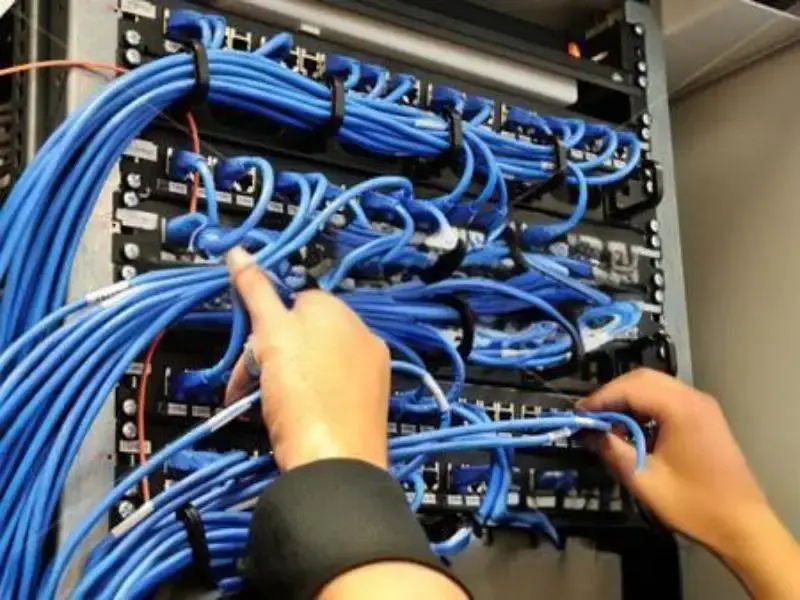
- In the world of networking, the choice of cable can make a significant difference in data transmission speed, reliability, and overall network performance.
- Familiarity with the distinct characteristics and applications of different network cable types is paramount for creating network infrastructures that operate efficiently, reliably, and effectively meet communication needs.
Network cables affect data transmission speed reliability and overall network performance in networking knowing each type’s unique features and uses helps build efficient reliable network infrastructures that meet communication needs well.
Understanding network cables helps set up efficient reliable networks whether you are a network administrator an IT professional or just want to improve your home network knowing what each cable can do and its limits helps you make smart choices this writing explains different types of network cables and their uses and benefits in modern communication systems.
Understanding Network Cables
Network cables are key parts of networking hardware they connect network devices and let multiple computers share resources like printers or scanners people use different types of cables such as coaxial fibre optic and twisted pair ones based on network topology protocol requirements and network size these cables help build reliable efficient network communications whether linking nearby devices with Ethernet or connecting far distances through Internet.
Different Types of Network Cables
- Twisted pair cables
Twisted pair cables are flexible and low-cost for LANs they include Unshielded Twisted Pair (UTP) and Shielded Twisted Pair (STP) UTP has different categories for better bandwidth STP has extra shielding to resist electromagnetic interference in places with high interference.
- Coaxial cables
Coaxial cables have strong construction they are often used for cable television (CATV) transmissions and network connections they have a central copper conductor insulation a braided shield and an outer protective sheath this design makes them good at transmitting high-frequency signals well they resist signal interference better and keep signal quality over long distances to support clear reliable data transmission in different networking setups.
- Fibre optic cables
Fibre optic cables work best for high-speed long-distance data transmission Single-Mode Fibre (SMF) is good for long-distance communications because it has lower attenuation and dispersion Multi-Mode Fibre (MMF) has a core that lets light take multiple paths it is preferred for short distances in LAN environments.
- Ethernet cables
Ethernet cables are the main part of local area networks the main types are Cat5 Cat5e Cat6 and Cat7 Cat5 supports 100 Mbps ethernet Cat5e supports 1000 Mbps Cat6 and Cat7 have higher data rates and are made to meet 10 Gigabit ethernet needs.
- Power over Ethernet (PoE) cables
Power over Ethernet (PoE) cables carry both data and power they let devices like wireless access points and IP cameras get both power and data through a single ethernet cable.
- USB cables
USB cables are mostly used to connect devices they have different types including USB-A USB-B USB-C and Mini and Micro connectors USB 3.0 and higher versions offer faster data transfer rates.
The Importance of Network Cables
The network cable you choose affects your network’s speed and overall performance a lot it impacts things like bandwidth which is like freeway lanes higher-category cables such as Cat6 or Cat7 have more lanes for more data flow they let you browse the web responsively stream videos smoothly and transfer files quickly you need to match devices with suitable cables to make performance better even with high-speed internet and advanced routers connecting devices with outdated or slower cables can cause network bottlenecks.