
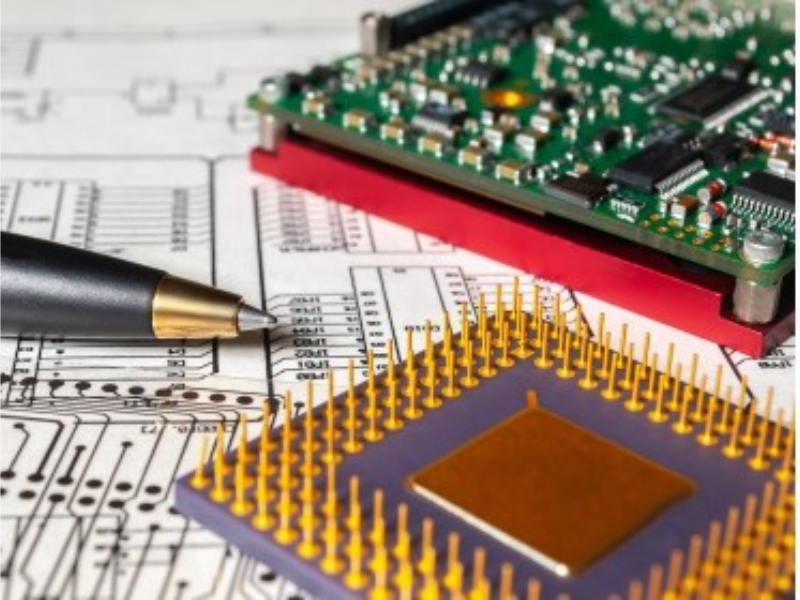
- An 8-bit microcontroller is a type of microcontroller where the data word size is 8 bits, which means it can process data in 8-bit chunks.
- 8-bit microcontrollers are designed to perform a specific task or a set of tasks efficiently, which is why they are popular in embedded systems.
An 8-bit microcontroller is a type of microcontroller where the data word size is 8 bits; this means it can process data in 8-bit chunks. These are low-cost devices that are widely used due to their affordability and are particularly suited to simple control applications.
They are self-contained, with a CPU along with other components like memory, input/output peripherals, and sometimes specialized hardware, all integrated into a single chip.
8-bit microcontrollers are designed to perform a specific task or a set of tasks efficiently, which is why they are popular in embedded systems. They are commonly used in applications such as remote controls, toys, and simple automation systems where high processing power and memory are not required.
Key features of 8-bit microcontrollers
- Data processing: Operates on an 8-bit data bus which means it can process 8 bits of data at a time.
- Cost-effectiveness: They are budget-friendly, making them accessible for a wide range of applications.
- Versatility: Suitable for a variety of applications due to their simplicity and ease of use.
- Instruction set: Typically, these microcontrollers have a simple and fixed instruction set which makes them easy to program.
Also read: Exploring IoT projects: innovative applications and benefits
Evolution and application
The evolution of microcontrollers has seen a transition from 8-bit to 16-bit and even 32-bit devices as demands for more sophisticated embedded systems grew. Despite this, 8-bit microcontrollers are still prevalent due to their cost-effectiveness and the fact that they are often sufficient for many applications. As technology advances, 16-bit and 32-bit microcontrollers have started to offer more capabilities and performance, but the 8-bit microcontrollers continue to hold their ground in specific domains.
Development and programming
Developing applications for 8-bit microcontrollers usually involves a good understanding of low-level programming, often in C or assembly language. Tools and compilers are available to aid the development process, and the small instruction set makes it easier to learn and implement efficient code.
Market and growth
The microcontroller market, which includes 8-bit devices, has been growing steadily, with sales reaching approximately $19 billion in 2014 and expected to reach $27 billion by 2020. They have become ubiquitous in everyday devices, with an estimated 150 microcontrollers in each home and 50 in each automobile by 2010.
Examples of 8-bit microcontrollers
Some classic examples of 8-bit microcontrollers include the Intel 8051, which has been widely used since the 1980s, and Microchip’s PIC16 and PIC18 series. Other notable manufacturers of microcontrollers include Renesas, Freescale, Samsung, Texas Instruments, and Infineon, with ARM processors being commonly found in smartphones and tablets.
Also read: The power of firmware in IoT devices
How to choose 8-bit microcontrollers
When selecting an 8-bit microcontroller, the following key factors should be considered:
- Application area: different microcontrollers are suitable for different application scenarios. For example, STM8 microcontrollers are widely used in devices such as Internet of Things (IoT), smart home, smart door locks, sensor networks and remote monitoring due to their compactness, low power consumption and cost-effectiveness. STM32 microcontrollers, on the other hand, excel in areas such as industrial automation and consumer electronics.
- Performance requirements: The processing power and computing speed of the microcontroller are important considerations. For example, the STM32F103ZET6 is based on the ARM Cortex-M3 core and offers highly efficient processing performance and a wide range of interface options, making it ideal for demanding application scenarios.
- Power consumption: In embedded systems, keeping power consumption low is the main goal to maintain battery life. Fast operation and short wake-up times mean low average power consumption, which extends battery life.
- Storage space: Complex control systems require high speed computing and large amounts of storage space, whereas microcontrollers are better suited for simple control tasks that require low power consumption and small size.
- Cost and price/performance ratio: 8-bit microcontrollers typically offer lower cost and better price/performance ratio for projects with limited budgets.
- Peripheral interfaces and features: Whether the microcontroller supports the required peripheral interfaces and features is also an important consideration. For example, some microcontrollers may integrate a variety of peripheral interfaces such as USB, A/D conversion, UART, and more.
8-bit microcontrollers remain a staple in the field of embedded systems due to their balance of cost, simplicity, and performance. While more advanced microcontrollers have become available, the 8-bit devices continue to meet the needs of a vast array of applications.