Summary
- What it says: Vodafone's latest Wimbledon deployment illustrates how live sporting events are evolving into real-world laboratories where telecom operators validate AI-enabled services before scaling them across national networks.
- Main topic: AI infrastructure economics
- Context: Market / Briefing / Europe
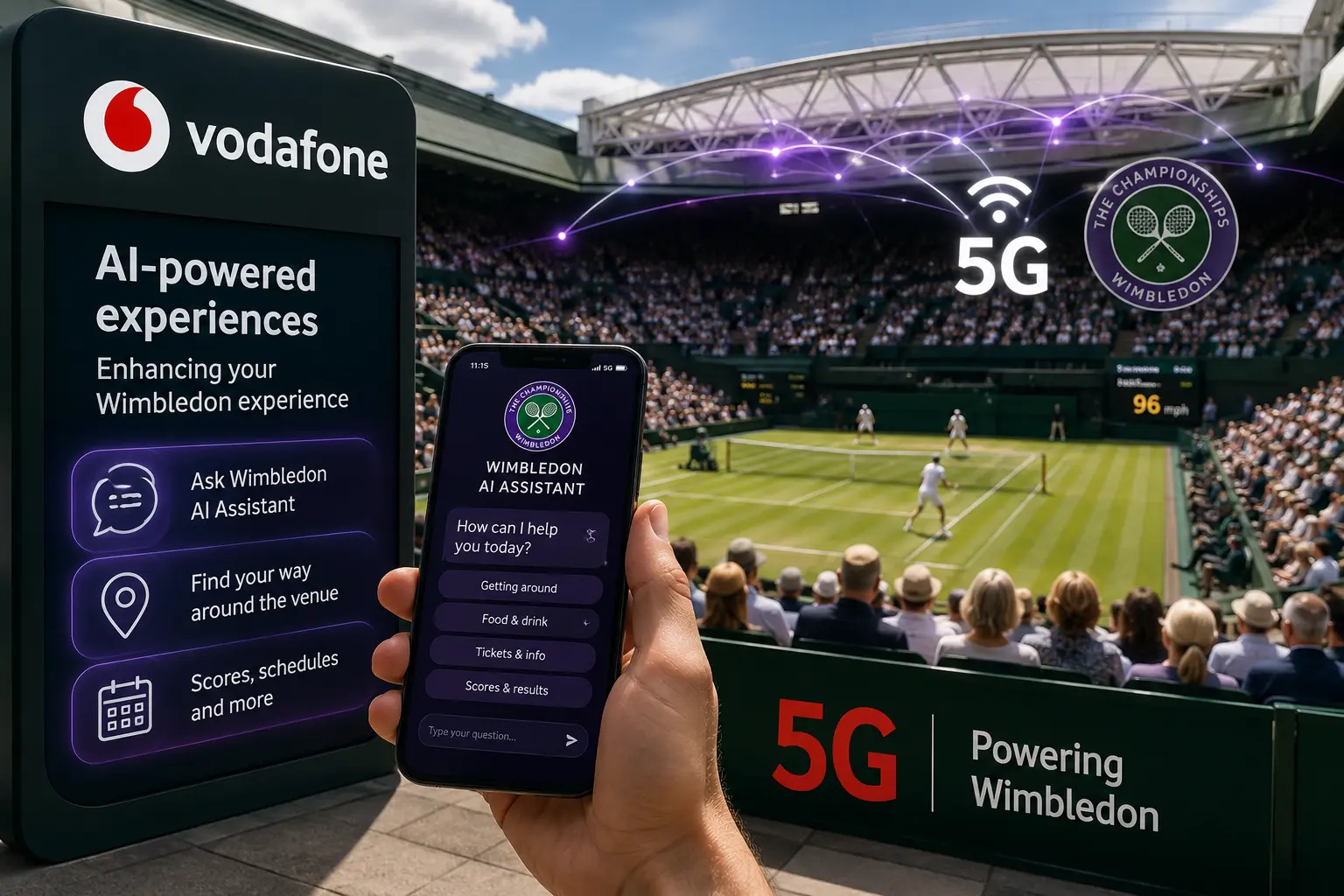
- Vodafone is deploying AI-enabled digital services and enhanced connectivity throughout Wimbledon to improve the experience for spectators and tournament visitors.
- The initiative highlights how major sporting events are becoming commercial testing grounds for next-generation telecom services before wider deployment.
The fact
Vodafone has expanded its technology partnership with the Wimbledon Championships by introducing AI-powered digital services alongside upgrades to its mobile connectivity during this year's tournament. The deployment includes enhanced 5G capabilities and AI-driven customer engagement tools designed to help visitors navigate the venue, access tournament information and interact with digital services more efficiently.
The Wimbledon Championships place exceptional demands on telecommunications infrastructure as tens of thousands of spectators, broadcasters, officials and support staff rely on high-capacity mobile networks throughout the event. Maintaining reliable connectivity under these conditions provides operators with valuable operational data while demonstrating the performance of new technologies in a live environment.
According to Vodafone, the latest deployment combines AI with existing communications infrastructure to improve customer experience and operational efficiency, reflecting wider investment across the telecom sector in intelligent, software-driven network services.
The assessment
The importance of Vodafone's Wimbledon deployment extends well beyond event connectivity. Increasingly, global sporting events are becoming commercial proving grounds where telecom operators evaluate new technologies before committing to wider rollout. Unlike controlled laboratory testing, major public events expose networks to unpredictable traffic patterns, dense user populations and exceptionally high customer expectations, making them ideal environments for validating new digital services.
For Vodafone, the commercial benefit is not limited to demonstrating reliable connectivity. Real-world operational data allows the company to refine AI-powered customer support, predictive network optimisation and personalised digital experiences before introducing similar capabilities across consumer and enterprise services. This shortens development cycles while reducing the commercial risks associated with deploying new technologies at national scale.
For BTW readers, the broader signal is that telecom competition is increasingly defined by operational learning rather than network coverage alone. Operators that can rapidly test, refine and commercialise AI-enabled services through high-profile live events may accelerate innovation while improving customer experience. Sponsorship is therefore becoming a strategic component of product development rather than simply a marketing investment.
What to watch
Watch whether technologies introduced at Wimbledon become permanent features across Vodafone's wider consumer and enterprise offerings. It will also be important to monitor whether other operators increasingly use major international events as platforms to accelerate commercial testing of AI-driven telecom services.