
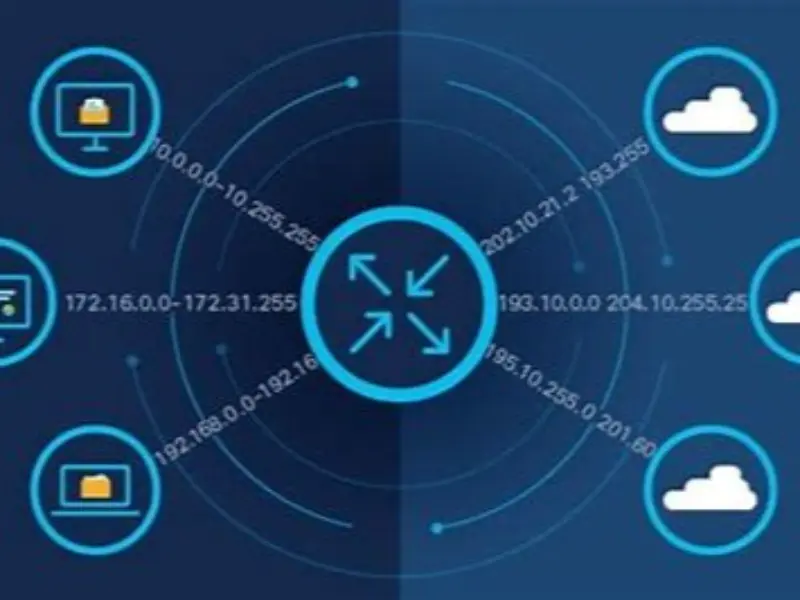
- NAT enables multiple devices to share a single public IP address, drastically conserving the limited pool of IPv4 addresses and accommodating the growing number of internet-connected devices without requiring additional public IP allocations.
- Acting as a firewall, NAT shields internal networks by concealing private IP addresses from external visibility, thwarting direct attacks and enhancing security.
Network Address Translation (NAT) stands as a pivotal networking methodology, instrumental in orchestrating dialogue amongst devices ensnared within the intricate mesh of interconnected systems. NAT mediates the interchange of data parcels betwixt apparatuses domiciled within confined networks and those populating external domains, notably the World Wide Web. This mechanism ensures seamless connectivity whilst preserving the privacy and security of internal network constituents.
Efficient IP Address utilisation
One of the primary advantages of NAT is its ability to conserve IP addresses. By enabling numerous devices within a private network to share a single public IP address, NAT significantly reduces the pressure on the finite pool of available IP addresses, particularly IPv4 addresses. This efficient use of IP resources is crucial in the face of increasing demand from the proliferation of internet-connected devices.
Also read: IP address management, maintaining a reliable, secure, and scalable infra
Enhanced security measures
NAT acts as a protective barrier between private and public networks, providing an additional layer of security. By hiding the internal IP addresses of devices within a network, NAT makes it harder for external threats to target specific machines. This obscurity significantly reduces the risk of direct attacks, as potential intruders cannot easily identify the IP addresses of internal network devices.
Also read: What is a public IP address?
Simplified network administration
NAT simplifies the task of network administration. Administrators can allocate private IP addresses to devices within a network without worrying about conflicts with public addresses. This freedom allows for easy expansion and reconfiguration of the network, as internal addresses can be changed without affecting the network’s external visibility. Additionally, NAT can be configured to map specific internal addresses to external services, facilitating the seamless operation of servers and other public-facing services.
Cost-efficiency in broadband connections
For businesses and households with limited budgets, NAT offers a cost-effective solution for connecting multiple devices to the internet. Instead of purchasing multiple public IP addresses, which can be expensive, organisations can utilise a single public IP address for the entire network. This cost-saving measure is particularly beneficial for small businesses and educational institutions looking to maximise their resources.
Facilitates use of non-routable IP addresses
NAT makes it possible to use non-routable IP addresses, such as those in the 10.0.0.0/8, 172.16.0.0/12, and 192.168.0.0/16 ranges, internally. These addresses are not unique globally and cannot be routed on the internet, but when paired with NAT, they function seamlessly for internal communications and can be translated to routable addresses for external communications.
Support for multiple WAN connections
NAT can handle multiple Wide Area Network (WAN) connections simultaneously. This capability is beneficial for load balancing, where incoming traffic can be distributed across multiple internet links to improve performance and reliability. It also supports failover mechanisms, ensuring continuous connectivity even if one connection fails.