
•US heatwave strains grids as AI data centres add peak power demand
•Energy resilience rivals compute power as AI infrastructure planning factor
The fact
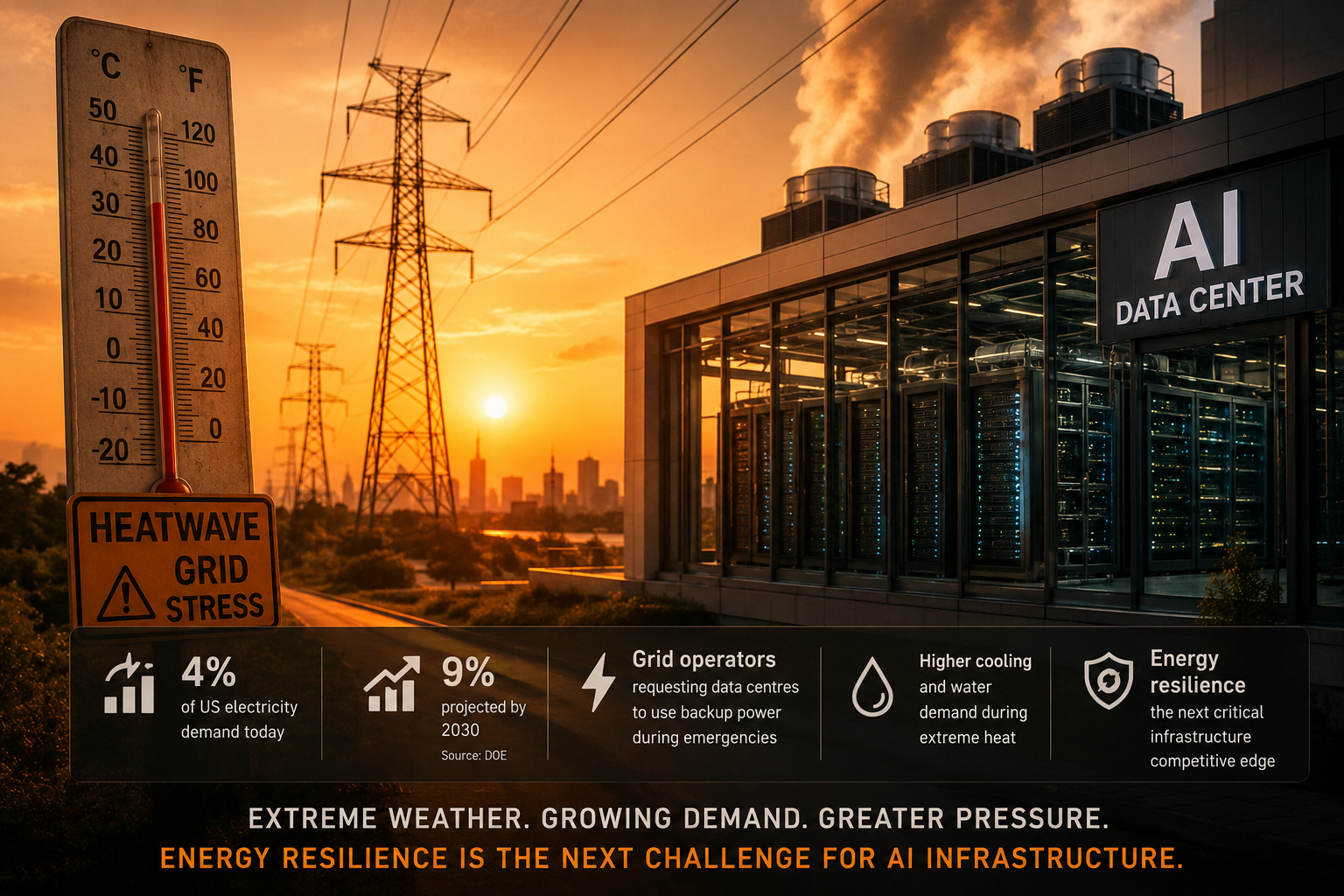
A prolonged heatwave across the United States is exposing mounting pressure on electricity infrastructure as air conditioning demand rises alongside expanding AI data centre capacity. PJM Interconnection, the country's largest grid operator, has asked data centres and other large electricity users to switch to backup generation during grid emergencies.
Data centres currently account for about 4% of US national power use, with the Department of Energy projecting that figure could reach 9% by 2030. During heatwaves, data centre cooling demand rises just as household and business air conditioning use increases, making peak demand harder to manage.
The assessment
The limiting factor for AI infrastructure is shifting. During the industry's recent expansion, the primary challenge was securing land, finance and computing hardware. Increasingly, the constraint is whether electricity systems can support large AI facilities during periods of peak demand and volatile operating conditions.
Extreme heat exposes a structural weakness. Rising temperatures increase cooling demand inside data centres just as consumption climbs across homes, businesses and essential services. AI infrastructure reaches peak energy demand when the grid is under its greatest strain. Energy resilience is therefore becoming as important as compute capacity in determining where future facilities can be built.
For BTW readers, resilient energy infrastructure is becoming a competitive capability. The question is no longer whether operators can secure enough electricity to build AI capacity, but whether they can operate reliably when grid conditions become most demanding.
What to watch
Watch whether utilities and AI operators move from reactive grid management to long-term resilience planning. Regulatory reforms for large-load grid connections and investment in dedicated power generation will indicate how future AI infrastructure is planned and sited.