
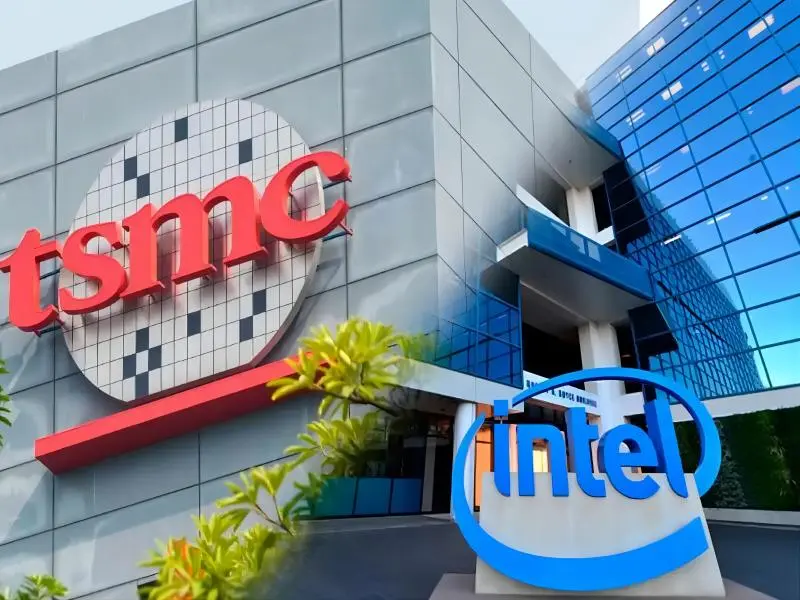
- Taiwan Semiconductor Manufacturing Co. (TSMC) unveiled on Wednesday that a new chip manufacturing technology called “A16” will enter production in the second half of 2026, setting up a showdown with longtime rival Intel.
- TSMC does not believe it needs to use ASML’s new “High NA EUV” lithography tool machines to build the A16 chips.
- The announcements called into question Intel’s claims that it will retake the world chipmaking crown.
Taiwan Semiconductor Manufacturing Co. (TSMC) announced on Wednesday that a new chip manufacturing technology known as “A16” will go into production in the second half of 2026 in an attempt to produce the fastest chips in the world, squaring off with Intel, according to Reuters.
About A16
At a conference in Santa Clara, California, TSMC, the largest contract manufacturer of advanced computing chips in the world and a major supplier to Nvidia and Apple, revealed the news. TSMC executives stated that manufacturers of AI chips, not smartphone manufacturers, will probably be the first to adopt the technology.
Without mentioning any particular clients, Kevin Zhang, senior vice president of business development at TSMC, stated that the company has created its new A16 chipmaking process faster than anticipated due to demand from AI chip companies.
Zhang said that TSMC does not think that to produce the A16 chips, it is necessary to use ASML’s new “High NA EUV” lithography tool machines. It was disclosed last week by Intel that it intends to be the first to use the $373 million machines per machine to develop its 14A chip.
Also read: 5 best AI video generators
Also read: Artificial intelligence (AI) in everyday life
Competing with Intel
With the technologies unveiled on Wednesday, Intel’s February claims that it will surpass TSMC in producing the fastest computing chips in the world thanks to a new technology it calls “14A” that may come under scrutiny.
Additionally, TSMC unveiled a new technology that will be available in 2026 and speeds up AI chips by powering computer chips from the back of the chip. Similar technology has been announced by Intel, which plans to use it as one of its main competitive advantages.
The announcements cast doubt on Intel’s assertions that it will reclaim the top spot in the global chip market.