
North America Institutional Trends
North America Institutional Trends
Institutional trend intelligence tracks institutional market trends, regulatory pressure, standards activity, public-sector digital policy, governance reform, and infrastructure funding in North America, giving readers a fuller view of the demand shifts, capacity constraints, platform strategies, capital timing, regulatory pressure, and operating assumptions behind the market.

Latest Coverage
Latest from North America Institutional Trends
315 articles

North America Institutional
Entrust's audit covered 201 days. Only ten of them were days it was still issuing.
The WebTrust report posted on Entrust's own website covers 1 March 2025 to 17 September 2025, and the company's own notice prints the day public TLS issuance from its root CAs stopped: 11 March. The scheme sets a one-year ceiling on an audit period and no floor at all.

North America Institutional
Your N+1 is a hundred hours a year. Fifty of them come with conditions.
A data centre sells the promise that the load survives the loss of one power path. The machine that carries that promise runs on a calendar-year allowance, and a federal court once took an hour out of the middle of it.

North America Institutional
The 72-Hour Clock Is Real. The Switch Is Still in Washington.
Two intervals are printed in United States law for critical-infrastructure victims: 72 hours from the moment an entity reasonably believes a covered cyber incident has occurred, and 24 hours from the making of a ransom payment. Both numbers are exact and both are unchanged.…

North America Institutional
One seat, two instruments: how CIRA filled an unfinished board term
The Canadian Internet Registration Authority lost a director on 8 May 2026. Her office was handed out in the same meeting that recorded her departure. Her seat went to the members three months later, settled by a single vote. Both moves are documented. No page a member would…

North America Institutional
Twenty years of conduct, and a form that asks only for the verdict
America's cable landing licence is not a tariff schedule or a traffic test. It is a map of who owns the cable, drawn to the last equity point held by parties who never sign the application — and behind that map, a character inquiry that reaches back two decades and then, in the…

North America Institutional
Three Clocks, One Defect, and Only the Stranger's Has a Number
Federal law gives a manufacturer one adverb of notice to report a hazardous defect and fifteen days to answer before the agency publishes anything about it. The only hard deadline in the set counts business days from an act the company never performs.

North America Institutional
The clock starts when the company decides it does
A breach is an event. The filing that announces it is a decision. Between the two sits a verb, and the verb is where the accountability lives.

North America Institutional
Five Hundred People, Then 192.7 Million
Between the two filings sit 377 days and a difference of roughly 192.7 million people. Both numbers came from the same company, both went to the same federal office, and the rule that governs them asks for neither a final figure nor the date the clock actually started.

North America Institutional
The Company Chooses the Auditor. The Commission Only Approves.
The stipulated order entered against Equifax, Inc. on 23 July 2019 keeps an unusual grip on the person who will judge the company: it lets the company find them. Section III.B assigns selection of the independent assessor to Equifax, subject to approval by the Federal Trade…

North America Institutional
The United States licenses a company, not a cable — and the clock starts when the company says so
Two Commission notices, one statute written for a world of landing monopolies, and a document that decides the enforceable terms and never appears in the file: what an American submarine cable landing right actually consists of, read 13 November 2026.
North America Institutional
Priced Before Anyone Applied: America's Huawei Removal Came In at 2.9 Times the Estimate
Congress funded the removal of Huawei and ZTE equipment from America's smaller networks at almost exactly the Commission's own pre-application estimate. The applications then arrived near three times that figure, and the statute's only stated answer to a shortfall is a letter to…
North America Institutional Trends
The supercomputer that publishes everything except the meter
San Diego Supercomputer Center just won $10M to replace Expanse. Its own reports still cannot tell a funder what the current machine actually delivered — and the AI partitions are the blankest column of all.
North America Institutional
Three Landlords, One Slogan, Zero Route-Server ASN
Three Landlords, One Slogan, Zero Route-Server ASN intelligence summary explains the development, the public evidence available to readers, the organisations involved, the regional context, market exposure, and the infrastructure consequences that may follow. The North America…

North America Institutional
The Cyber Safety Review Board can find everything and compel nothing
Executive Order 14028 hands the board a duty to review and a duty to recommend. It hands nobody a duty to comply — and that single asymmetry decides whether a finding is a remedy or just a very well-argued record.

North America Institutional Trends
ARIN bills the source before review. The buyer pays after approval.
An IPv4 transfer can have a signed commercial deal and still be waiting at ARIN's first payment gate. For a specified-recipient request, the source owes a non-refundable $500 before evaluation begins. If ARIN approves the transfer, the ARIN recipient then owes a separate fee tied…

North America Institutional Trends
The FCC’s List Is Live. Its Ownership Checks Are Still on Ice.
Washington has put eight streams of restricted-party records behind one search box. The new ownership checks many readers may expect from that system have not taken effect.

North America Institutional Trends
Digit moved 100,000 totes. Two new GXO sites will test whether the work travels
Agility says Digit has moved more than 100,000 totes at GXO’s Flowery Branch warehouse. GXO has named two more facilities for the next deployment wave, putting repeatable site-level output ahead of another robot-count headline.

North America Institutional
Verisign's 45-day undo button belongs to the registrar
A registry renewal can be reversed while the business using the name loses its website and email. Verisign's latest accounts reveal who gets the financial breathing space—and who must keep trading through it.

North America Institutional Trends
The FCC Reopens the Question of What Counts as 911
A 2003 test helps decide which communications services should support emergency calling. The FCC is asking whether that test still works as the services people use converge.
North America Institutional
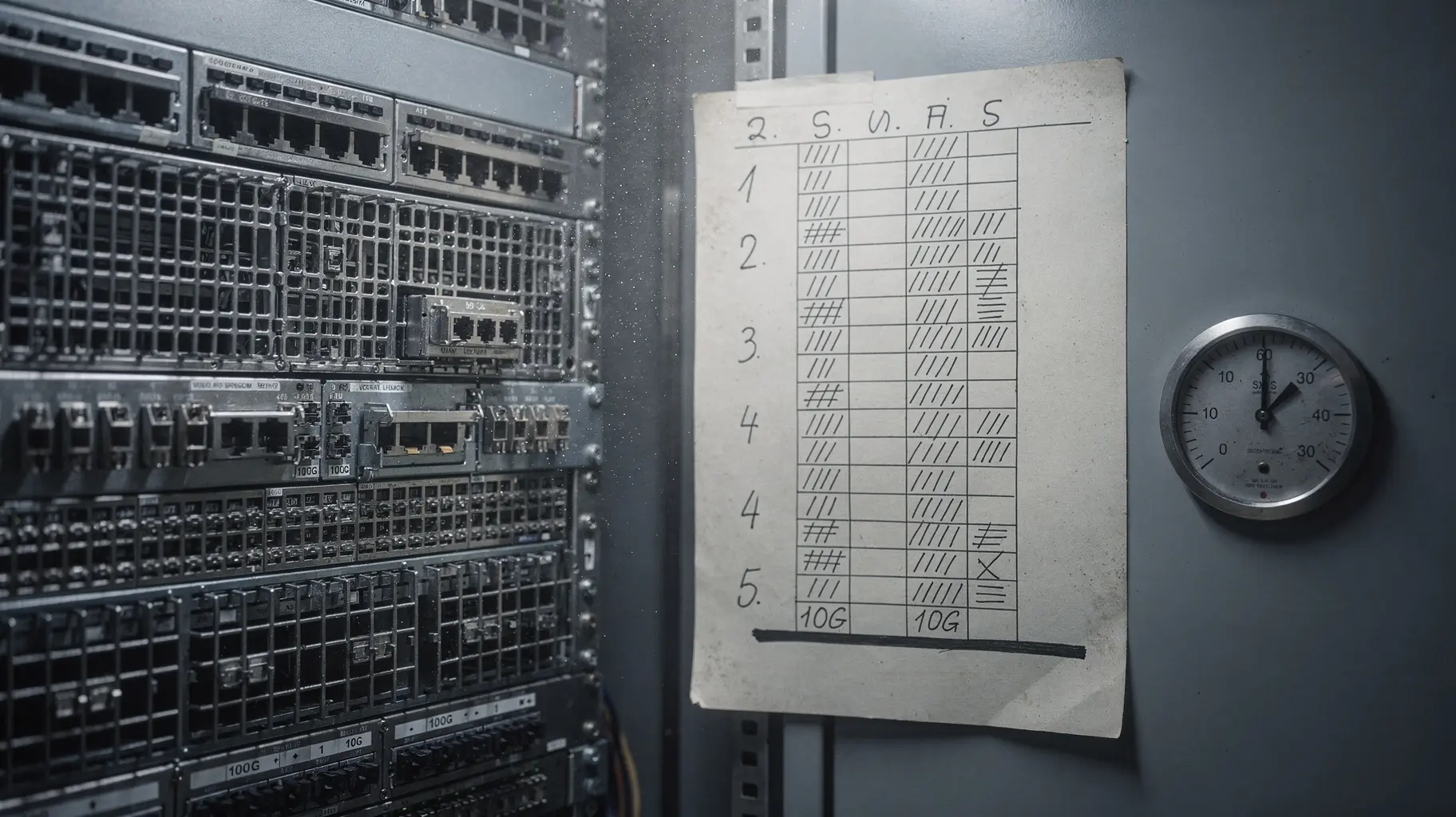
The Capacity Sum That Closes: Seattle Internet Exchange's Published Inventory, Read Against Its Own Peak
On 19 October 2026, between 03:08:40 and 03:11:42 UTC, the Seattle Internet Exchange published five port classes, a peak figure and a capacity figure on the same page. Two of those numbers sit four words apart in one sentence. The capacity figure can be reproduced exactly from…