
Asia-Pacific Institutional Trends
Asia-Pacific Institutional Trends
Institutional trend intelligence tracks institutional market trends, regulatory pressure, standards activity, public-sector digital policy, governance reform, and infrastructure funding in Asia-Pacific, giving readers a fuller view of the demand shifts, capacity constraints, platform strategies, capital timing, regulatory pressure, and operating assumptions behind the market.

Latest Coverage
Latest from Asia-Pacific Institutional Trends
216 articles

Asia-Pacific Institutional Trends
Ripple commits $5M to APAC universities for blockchain innovation
Ripple is doubling down on Asia-Pacific blockchain academic research Ripple has committed another $5 million to its University Blockchain Research Initiative (UBRI) in the Asia-Pacific region, expanding its long-term bet on the role of academia in shaping the future of…
Asia-Pacific Institutional Trends
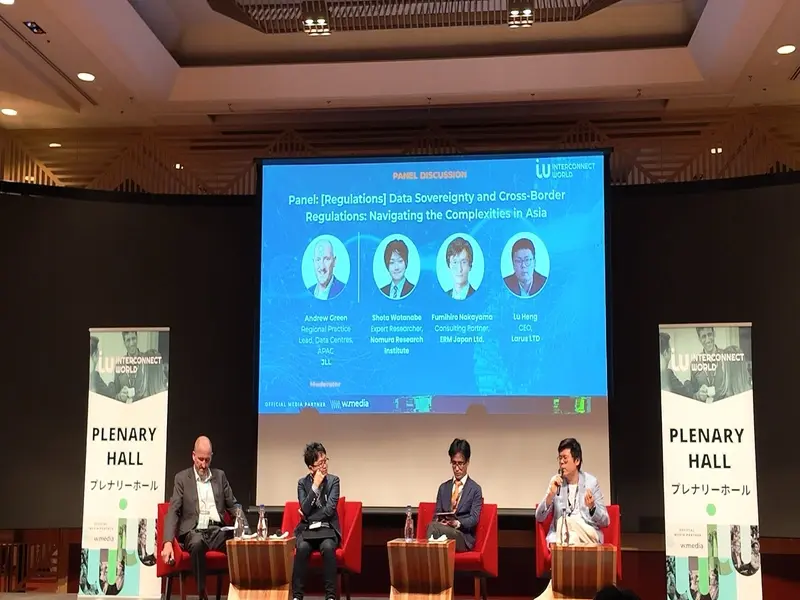
Asia Interconnect Forum ends with calls for data sovereignty reform
What happened: Forum closes with stark warnings on cross-border policy fragmentation and data sovereignty The Asia Interconnect World Forum 2025 wrapped up today in Tokyo, concluding a high-level gathering of regulators, infrastructure operators, and internet governance leaders…
Asia-Pacific Institutional Trends
Japan shows off 5G satellite tech at Expo 2025
What happened: Japan demonstrates breakthrough 5G satellite technology at World Expo 2025 A collaboration between the Singapore University of Technology and Design (SUTD), SKY Perfect JSAT, TMY Technology, Rohde & Schwarz, and VIAVI Solutions led to a live demonstration of 5G NTN…

Asia-Pacific Institutional Trends
OpenAI acquires Jony Ive’s IO to pioneer AI hardware
What happened: OpenAI’s bold move into AI-native devices OpenAI has finalised a $6.5B all-stock acquisition of IO, a hardware-focused AI start-up founded by Jony Ive, the legendary designer behind Apple’s iPhone and iMac. The acquisition marks OpenAI’s most ambitious expansion…

Asia-Pacific Institutional Trends
India to introduce star ratings for digital connectivity in buildings
TRAI proposes star rating system to boost In-Building digital connectivity The Telecom Regulatory Authority of India (TRAI) has unveiled a draft manual proposing a star rating system to evaluate buildings based on their digital connectivity. This system, akin to energy efficiency…

Asia-Pacific Institutional Trends
IP address portability essential to ensure fair, open internet says LARUS CEO
Lu Heng, CEO of Hong Kong-based LARUS Ltd and founder of the LARUS Foundation, has accused the RIPE Network Coordination Centre (RIPE NCC) of acting like a cartel and violating European anti-trust laws following its refusal to accept his company’s sponsorship for the RIPE 90…

Asia-Pacific Institutional Trends
OpenAI and NTT Data launch AI solutions in Japan
OpenAI and NTT Data partner to bring ChatGPT Enterprise and industry-specific AI agents to Japanese businesses.

Asia-Pacific Institutional Trends
Japan considers tougher data retention rules
What happened: Japan proposes stricter data retention rules The Japanese government is considering tougher anti-fraud regulations that could require telecom operators to retain phone and app communication histories. According to local news outlet Mainichi Shimbun, the proposed…
Asia-Pacific Institutional Trends
US state targets local telecom firms over China links
What happened: State proposes telecom ban on Chinese-linked equipment A U.S. state has proposed legislation that would compel telecom providers to remove infrastructure linked to Chinese technology firms, including equipment from Huawei and ZTE. The proposed rules go beyond…

Asia-Pacific Institutional Trends
EEEI: Forging the Future of Engineering in the Philippines
UP EEEI leads engineering innovation in the Philippines with top research and high-capacity education. Leading innovation in Philippines

Asia-Pacific Institutional Trends
MWA: Sustaining Bangkok’s water supply
A pillar of urban water resource management Established in 1967, the Metropolitan Waterworks Authority (MWA) serves as Thailand’s principal public agency responsible for delivering potable water to Greater Bangkok. The organisation oversees a vast network of treatment plants…

Asia-Pacific Institutional Trends
Unescap: Advancing sustainable development in Asia-Pacific
Unescap: Supporting regional development The United Nations Economic and Social Commission for Asia and the Pacific (UNESCAP) serves as the most inclusive intergovernmental platform in the region. It brings together countries to address common challenges, share best practices…

Asia-Pacific Institutional Trends
Thailand Institute of Nuclear Technology: Science for development
Advancing nuclear science for societal benefit The Thailand Institute of Nuclear Technology (TINT), established in 2006, is a public organisation dedicated to harnessing nuclear technology for national development. As a key agency under Thailand’s Ministry of Higher Education…

Asia-Pacific Institutional Trends
PWA: Empowering Thailand’s water security beyond Bangkok
Sustaining communities through integrated water solutions Established in 1979 under Thailand’s Ministry of Interior, the Provincial Waterworks Authority (PWA) has evolved into a cornerstone of national water infrastructure. The organisation manages raw water sourcing, treatment…
Asia-Pacific Institutional Trends
GISTDA: Advancing geospatial solutions in Thailand
Bridging space technology and societal needs Established in 2000 under Thailand’s Ministry of Higher Education, Science, Research, and Innovation, the Geo-Informatics and Space Technology Development Agency (GISTDA) serves as the country’s hub for satellite data acquisition…
Asia-Pacific Institutional Trends
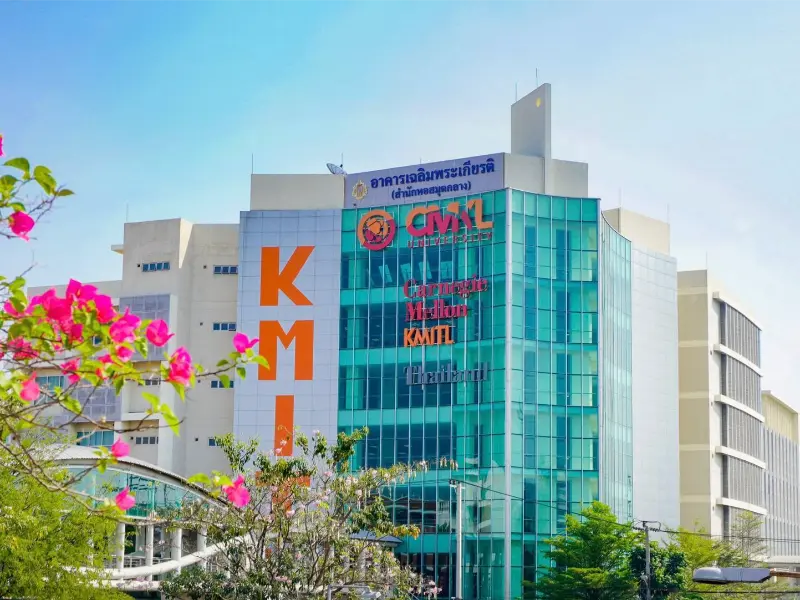
CMKL University: Bridging innovation and education
A new model for technological education CMKL University, established through a collaboration between Thailand’s King Mongkut’s Institute of Technology Ladkrabang (KMITL) and Carnegie Mellon University (CMU), represents a transformative approach to higher education in Southeast…
Asia-Pacific Institutional Trends
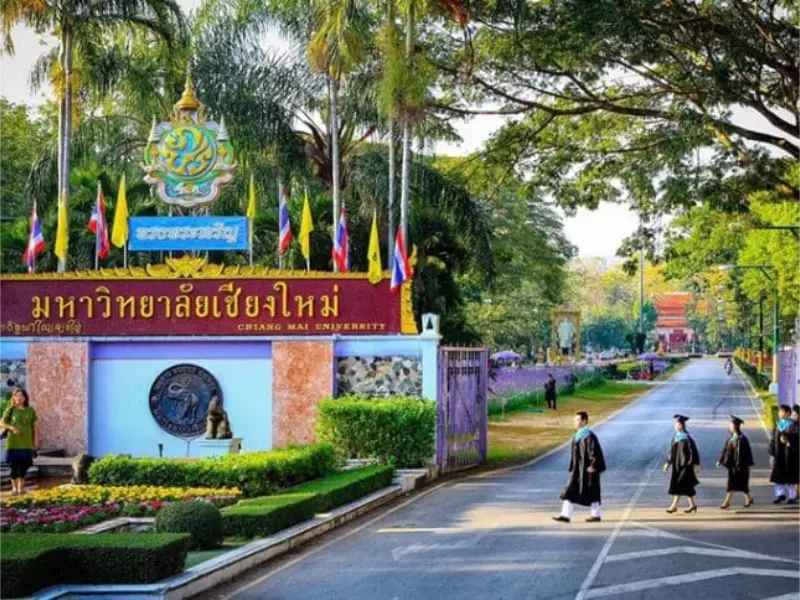
Chiang Mai University: Shaping regional knowledge frontiers
Advancing higher education in Northern Thailand Chiang Mai University (CMU) was established in 1964 as the first higher education institution in Northern Thailand and has since developed into one of the region’s most comprehensive public universities. It was originally founded…

Asia-Pacific Institutional Trends
PWA: Ensuring clean water across Thailand
PWA: Reliable water services across the nation The Provincial Waterworks Authority (PWA) was established under the 1979 Provincial Waterworks Authority Act to provide clean, safe, and reliable water services to people across Thailand. Operating under the Ministry of Interior, PWA…

Asia-Pacific Institutional Trends
PayU acquires 43.5% stake in Indian paytech Mindgate Solutions
PayU has acquired a 43.5% stake in Mindgate Solutions, significantly enhancing its competitive position in India’s fintech market.

Asia-Pacific Institutional Trends
DGA: Advancing digital government in Thailand
Driving digital transformation in public services The Digital Government Agency (DGA) plays a crucial role in Thailand’s digital development. Established in 2014, it aims to modernise public services through digital means. The agency is responsible for implementing policies and…