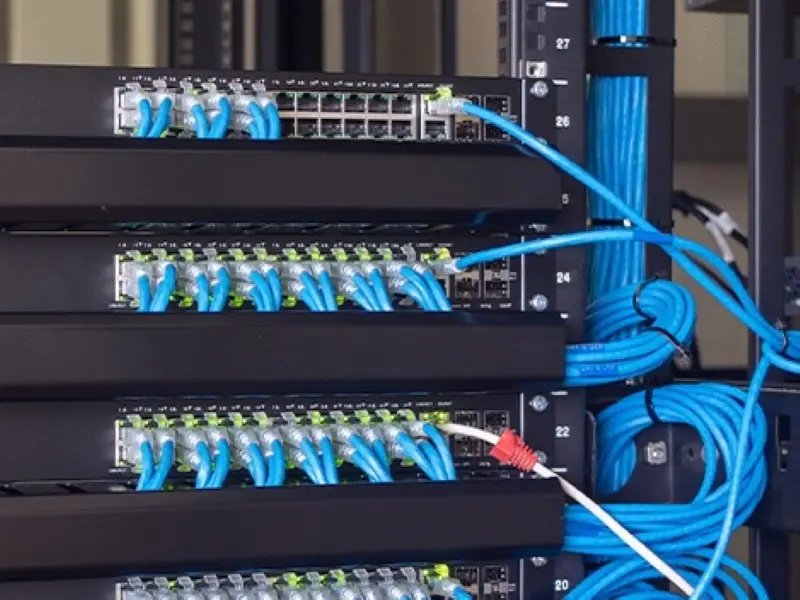
- Structured cabling is the design and installation of a cabling system that will support multiple hardware uses and be suitable for today’s needs and those of the future.
- Network cabling standards are used internationally and are published by ISO/IEC, CENELEC and the Telecommunications Industry Association (TIA).
Structured cabling is a standardised approach to designing and installing a network’s physical cabling infrastructure. It is crucial for building a reliable, scalable, and organised network system. Besides, structured cabling is a fundamental component that ensures your network operates seamlessly. In this blog, you can understand what structured cabling is, its key components, its benefits, and why it’s essential for a robust networking environment.
What is structured cabling
Structured cabling is a comprehensive system of cabling and associated hardware that provides a unified framework for data, voice, and video transmission in a network. It includes everything from the cables themselves to the various components and standards that ensure a high-performance, organised network infrastructure. It’s a standardised approach to designing and installing the cabling infrastructure for a network. It involves a comprehensive system of cables, connectors, and hardware that supports data, voice, and video transmissions. Structured cabling provides a framework that ensures the network is organised, scalable, and capable of meeting both current and future connectivity needs.
Also read: Structured cabling: Infrastructure for data, voice, and video
Also read: What is horizontal distribution of power systems?
Key components of structured cabling
- Cabling: Horizontal cabling includes the cabling that runs from the telecommunications room (TR) to individual network outlets throughout a building. It typically uses twisted-pair cables or fiber optic cables, depending on the performance requirements. Vertical cabling (Backbone cabling) connects telecommunications rooms on different floors or between buildings. It usually involves fiber optic cables or larger gauge twisted-pair cables to handle high-bandwidth requirements.
- Patch cables: Short cables that connect devices to wall jacks or patch panels. These are used for linking equipment and make it easy to manage connections.
- Telecommunications rooms (TR): Centralised areas where network equipment, such as switches, routers, and patch panels, are housed. They serve as the focal point for network connections within a building.
- Patch panels: Panels with multiple ports where network cables are terminated. They allow for easy organisation and reconfiguration of connections, facilitating changes and troubleshooting.
- Racks and cabinets: Structures used to house and organise networking equipment, such as servers, switches, and patch panels. They help keep equipment secure and accessible.
- Outlets: Ports mounted in walls or floors that provide network access to end-user devices. They are the access points where devices connect to the network.
- Cable management: Systems such as trays, ducts, and ties that organise and protect cabling within and between telecommunications rooms. Proper cable management helps maintain network performance and ease of access.
Benefits of structured cabling
Structured cabling provides a clean and organised layout for cables and network equipment, reducing clutter and simplifying network management. It supports future upgrades and expansions by providing a flexible infrastructure. As technology evolves or your network grows, structured cabling allows for easy additions or modifications. A well-organised cabling system makes it easier to identify and fix issues quickly, minimising network downtime and keeping your operations running smoothly.
By adhering to industry standards for cable installation and performance, structured cabling helps ensure high network performance, reliable connections, and minimal signal interference. While the initial investment in structured cabling might be higher, it reduces long-term maintenance and reconfiguration costs. The organised infrastructure saves time and money on troubleshooting and upgrades. Structured cabling adheres to established standards and best practices, ensuring that installations meet required specifications for performance, safety, and interoperability.