
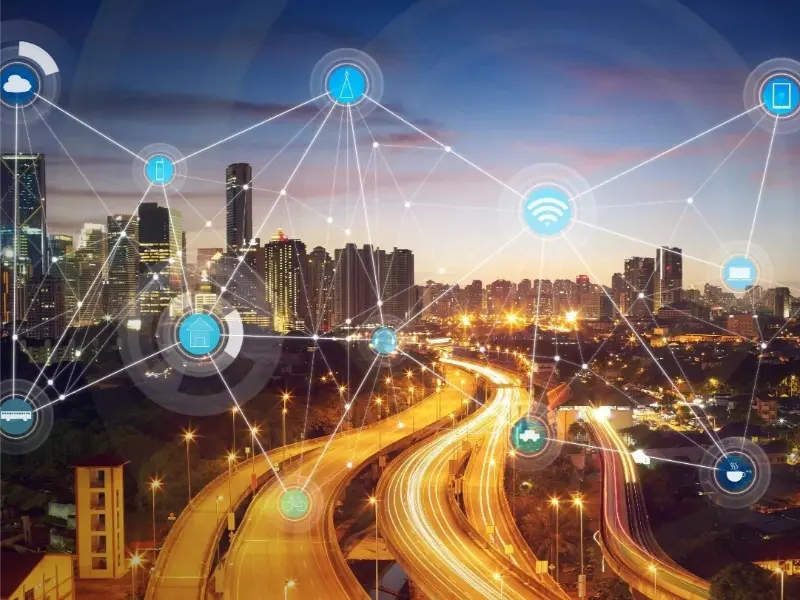
- Smart city technologies enhance urban efficiency and improve residents’ quality of life through IoT, big data, AI, and other means.
- Focusing on sustainability, smart cities optimize resources and promote environmental friendliness through digital infrastructure, renewable energy, and intelligent waste management.
In the heart of urban development lies the concept of a smart city, a place where technology and innovation converge to enhance the quality of life for its inhabitants. Smart city technologies are designed to make cities more efficient, sustainable, and responsive to the needs of the people. Here’s a look at some of the key technologies that are shaping the future of our urban landscapes.
The Internet of Things (IoT)
At the core of smart city technology is the Internet of Things (IoT). IoT devices, from sensors to smart meters, collect data and communicate with each other and central systems. This interconnected web of devices allows for real-time monitoring and management of city resources, such as energy consumption and traffic flow.
- Smart grids: One of the most significant applications of IoT in smart cities is the implementation of smart grids. These systems manage electricity distribution more efficiently, reducing waste and integrating renewable energy sources into the grid.
- Intelligent transportation systems: IoT also plays a crucial role in intelligent transportation systems. Traffic sensors and cameras provide real-time data to manage traffic flow, reduce congestion, and improve road safety.
Big data and analytics
Big data analytics is the process of examining large and complex datasets to uncover patterns and trends. In smart cities, this technology is used to make informed decisions about urban planning, resource allocation, and service delivery.
- Predictive maintenance: By analysing data from various sources, cities can predict and prevent issues before they become problems. For example, predictive maintenance can identify when a piece of public infrastructure, like a bridge or a road, needs repair.
- Public safety: Big data also enhances public safety by enabling authorities to monitor and respond to emergencies more effectively. Surveillance systems, combined with data analytics, can help in crime prevention and quick response to incidents.
Also read: IoT data integration: Unlocking insights for a smarter future
Artificial intelligence (AI)
AI is the intelligence exhibited by machines, and it’s transforming the way cities operate. From automated customer service to complex decision-making processes, AI is making cities smarter and more responsive.
- AI in public services: AI-powered chatbots and virtual assistants are now common in public services, providing citizens with quick and efficient access to information and assistance.
- AI in security: AI-driven surveillance systems can detect unusual activities and alert the relevant authorities, improving the overall security of the city.
Digital infrastructure
A robust digital infrastructure is essential for a smart city. This includes high-speed internet connectivity, digital signage, and public Wi-Fi hotspots.
- E-government services: Digital infrastructure enables e-government services, allowing citizens to access public services online, reducing the need for physical visits and improving efficiency.
- Digital education and healthcare: Digital infrastructure also supports remote learning and telemedicine, ensuring that education and healthcare services are accessible to all, regardless of location.
Renewable energy
Sustainability is a key aspect of smart city technologies, and renewable energy plays a significant role in this. Solar panels, wind turbines, and other renewable energy sources are being integrated into city infrastructure to reduce reliance on fossil fuels.
- Energy storage solutions: Along with renewable energy, smart cities are also investing in energy storage solutions, such as batteries, to store excess energy for use during peak demand periods.
- Green buildings: Smart cities are also promoting the construction of green buildings that are energy-efficient and environmentally friendly.
Also read: How can you control an IoT-connected smart device?
Smart waste management
Waste management is a critical component of a smart city. Technologies such as smart bins and recycling systems help to reduce waste and improve recycling rates.
- Waste-to-energy: Some smart cities are turning waste into energy through processes like anaerobic digestion, which not only reduces landfill but also generates clean energy.
- Real-time monitoring: Real-time monitoring of waste levels in bins and containers helps to optimise collection schedules, reducing costs and improving efficiency.
Smart city technologies are not just about making cities more efficient; they are about creating a better quality of life for their residents. By leveraging the power of IoT, big data, AI, digital infrastructure, and renewable energy, smart cities are becoming more sustainable, responsive, and liveable.
As cities continue to grow and evolve, the integration of these technologies will become even more critical. It is essential that city planners, technologists, and policymakers work together to ensure that the development of smart cities is inclusive, equitable, and beneficial for all.