
Summary
- O'KEY's economic unit is not the store count or the corporate transaction. It is the family basket that must justify one trip across fresh food, staples, promotions, online availability and checkout labour.
- The late-2025 sale of the O'KEY hypermarket chain to management moved the brand's risk toward store execution: procurement, supplier credit, cold chain, shrinkage, shelf accuracy and loyalty data now have to preserve the trip without the same listed-group perimeter.
- Empty shelves matter because they force the customer to price substitutes. DA! discounters, convenience chains, online grocery, wet markets, local kiosks and postponed purchases turn every missing SKU into a test of whether O'KEY still deserves the next full basket.
The Missing Item Reprices The Whole Trip
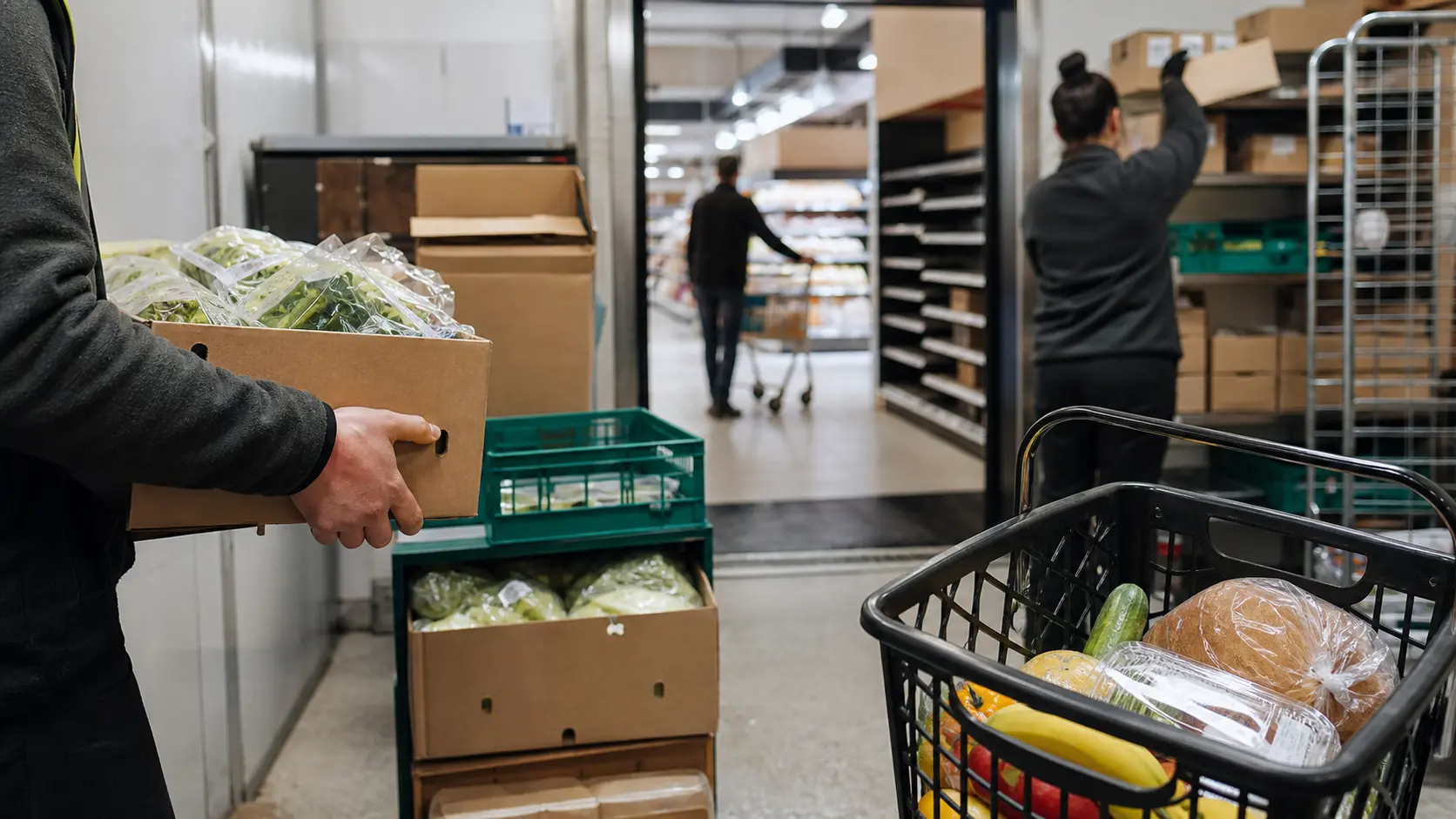
The useful way to enter an O'KEY store is not through the corporate chart. It is through a household list. A parent expects milk, bread, chicken, fruit, a discounted detergent, a school snack, maybe a prepared salad for dinner and a treat that makes the trip feel less like rationing. If the chicken is missing, the basket does not simply lose one item. It changes shape. The family may buy minced meat instead, take a private-label frozen option, move the fresh spend to a market stall, order delivery later, or avoid O'KEY next weekend because the store failed the planning job.
The receipt records what was bought; the missing item records what the retailer lost.
That is why O'KEY should be read through the checkout basket and replenishment account, not as another broad Russian retailer profile. The company has public corporate surfaces, including the group site at https://okeygroup.lu/, the annual report page at https://okeygroup.lu/investors/annual-reports/, and the earnings-release archive at https://okeygroup.lu/investors/result-center/earnings-releases/. Those pages describe the scale and legal movement. The 2024 annual report, published as https://okeygroup.lu/upload/iblock/5ba/g4oel2o34r1scj4ddwwtx5na78sk05bn/FINAL_Report_OKEY-Group_2024_SIGNED.pdf, gives the operational base before the break: 77 O'KEY hypermarkets, 224 DA! discounters, RUB 217.1 billion of group net retail revenue, 111 million clients, and a retail market where food retail was growing in nominal terms. The later company release at https://okeygroup.lu/press-center/press-releases/2025/2026/ says that the O'KEY hypermarket chain, including stores, online platform, trademarks, logistics infrastructure and related assets, was sold to the chain's management in November 2025.
The result is a useful tension. The O'KEY basket still asks shoppers to trust a big-store promise: one trip, many categories, enough fresh choice, enough promotions, enough checkout capacity and enough quality assurance to make a car, taxi or delivery order worthwhile. But the brand now has to win that promise under a changed ownership and financing setting. The listed group retained DA!, while LLC O'KEY moved under LLC RBF Retail according to the November 2025 sale announcement. Public registry touchpoints such as https://egrul.nalog.ru/index.html and accounting-disclosure portals such as https://bo.nalog.ru/ can show formal filings when records are available, but the consumer test is more immediate: did the store have the planned items, and was the substitution cheap enough to keep the basket?
Breadth Only Works When Availability Holds
O'KEY's old advantage was breadth. A hypermarket can sell the planned dinner, the washing powder, the birthday candles, a large bag of pet food and a promotion-led stock-up in one pass. That breadth becomes valuable when household time is scarce. It becomes expensive when the chain cannot fill shelves accurately. The 2024 report says O'KEY hypermarkets offered more than 40,000 food and non-food items and used four distribution centres for the hypermarket logistics system. It also says the group worked on assortment, pricing, marketing support and display of promotional products. Those words are not decoration.
They are the operating recipe for avoiding a broken basket. If the store advertises a detergent promotion but misses the stock, the family has already paid the time cost of visiting the large store. If the ultra-fresh counter has poor rotation, the customer may buy the shelf-stable part of the basket and move meat, fish or dairy to a specialist shop.
Supplier Credit Sits Inside The Receipt
The basket therefore prices procurement first. A retailer can promise low prices only if it has terms with suppliers that make the shelf sustainable. In grocery, the supplier is not only selling goods. It is extending timing, quality risk, recall exposure, promotional allowances, packaging formats and delivery discipline. The 2024 annual report notes that around 80 percent of procurement came from nearby suppliers and manufacturers. Local sourcing reduces some currency and border risks, but it does not remove pressure.
A Russian producer facing input inflation, labour shortage, packaging substitution or higher financing costs will ask for better terms. O'KEY can accept a higher shelf price, push the cost into promotions, reduce assortment depth, change pack size, expand private label, or allow gaps to appear. Each choice is paid by the basket.
Supplier credit is the least visible item in that basket. A shopper sees a carton of milk. The retailer sees payable days, delivery windows, rebate structures, return rules, shrinkage allocation, traceability requirements and a price image that competitors can undercut tomorrow. O'KEY's public financial statements for 2025 at https://okeygroup.lu/upload/iblock/458/eelsobealp51866j62q2sfd0f1mlit3s/FINAL_SIGNED_Okey-group-consolidation-31122025.pdf show how different the remaining listed group's balance sheet became after the hypermarket disposal. That does not automatically describe the standalone hypermarket buyer's working capital, but it explains why the sale matters to the basket. The shelf needs credit confidence. Suppliers must believe that delivery into an O'KEY back door will be paid, promoted and rotated without creating a dispute. If that belief weakens, the shelf does not always collapse suddenly. It loses the second facing, the promotional stack, the long-tail brand and the quick replacement after a weekend rush.
The basket also prices sanctions-era substitution. Russia's grocery shelves did not become empty simply because foreign brands left or restricted operations; food retail is too local and adaptive for that simple story. But sanctions, counter-sanctions, payment friction, logistics rerouting and the exit or quiet restructuring of foreign-linked suppliers changed the cost of certainty. Imported cheese can become a domestic analogue. A known household-care brand can become a local private-label item. A premium chocolate can become a smaller pack, a parallel-imported product or a seasonal absence.
The 2024 annual report explicitly lists "building parallel import processes" among plans in the quality-management section. That is a small phrase with large basket consequences. Parallel routes can keep a category present, but they complicate documentation, shelf life, price, supplier accountability and consumer trust.
Sanctions-Era Substitution Is Household Arithmetic
For a household, substitution is not an ideological event. It is arithmetic. If the preferred pasta is gone, a shopper checks whether the replacement cooks the same, costs less, carries a trusted origin and appears regularly enough to be planned into weekly meals. If the replacement is credible, O'KEY keeps the spend. If the replacement feels opportunistic, the customer splits the basket. Sanctions-era substitution therefore has two sides. It can protect margins when private label or local producers replace expensive imported brands. It can also destroy trip value when substitutes are inconsistent. The chain's online and public sales surfaces, including the delivery site at https://www.okeydostavka.ru/ and the DA! public site at https://market-da.ru/, are evidence of offer and format, not proof that any specific SKU is in stock at a specific store. But shoppers use those surfaces to form expectations before they spend travel time.
Hypermarket Fixed Costs Make Gaps Expensive
The hypermarket basket has a fixed-cost problem. The bigger the trip, the more a household expects the store to absorb failure. A convenience store can be forgiven for lacking a niche item because it sells proximity. A market stall can be forgiven for seasonality because freshness and price are the pitch. A discounter can be forgiven for a narrow range because its promise is low price and speed. A hypermarket has less room. Its economic claim is abundance with enough price relief to justify the trip. That means one empty shelf can contaminate the customer's view of the whole receipt.
The customer may still pay, but the next trip becomes contestable.
O'KEY's public numbers show the pressure. In 2024, O'KEY hypermarkets' net retail revenue was RUB 144.8 billion, up only 2.0 percent year on year, while DA! net retail revenue was RUB 72.3 billion, up 13.3 percent. In Q3 2025, before the completed sale, the company reported at https://okeygroup.lu/press-center/press-releases/2025/2024/ that O'KEY hypermarket net retail revenue declined 2.7 percent year on year to RUB 32.4 billion, while DA! discounters grew 10.6 percent to RUB 19.6 billion. That is not a verdict on any one store. It is a signal that the customer's marginal basket was becoming easier to win in the discounter format than in the big-box format.
DA! matters to O'KEY even after the sale because it sets the reservation price. The same group that once showed both formats together made the contrast clear. DA! offered everyday low prices supported by own-brand products, with the 2024 report saying own brands provided 20 to 30 percent cost benefits compared with equivalent branded products and accounted for around half of DA! revenue. A household walking out of O'KEY without a planned staple has a mental DA! price in the background, whether or not DA! is nearby. That price disciplines the hypermarket basket.
If O'KEY's fresh choice is strong, prepared food is useful and promotion depth is real, the customer may pay a higher average ticket. If the chain misses basics, DA! or another discounter becomes the cleaner answer.
Fresh Departments Price Reliability By The Hour
The cold chain is where the basket becomes unforgiving. Fresh meat, fish, dairy, fruit, vegetables, ready-to-eat meals and bakery items are not just categories. They are a time-sensitive promise. O'KEY's 2024 annual report says its hypermarkets offered meat, poultry, fish, dairy, confectionery, fruit and vegetables, ready-to-eat meals and bakery from own production. It also describes federal and regional distribution centres and says fresh, fruit and vegetable flows were part of the hypermarket logistics structure. That is the operational heart of the basket.
The customer may buy toilet paper anywhere, but fresh failure changes dinner tonight.
Cold chain failure does not have to mean visible spoilage. It can mean a fish counter that looks sparse at 7 p.m., berries that look tired, a ready-meal bay that is full of slow-moving items, or a dairy shelf where the desired fat level is gone. Each failure forces a household decision. Pay for a substitute, cook something else, buy from a market stall, open a delivery app, or postpone. The chain's economics then lose not just the item but the associated items. If chicken is missing, spices, salad, side dishes and a bottle of sauce may also disappear from the basket. Replenishment is an account, not a shelf task.
Shrinkage is another hidden price. The 2024 report says group gross margin improved partly through procurement efficiency and shrinkage-cost optimisation. Shrinkage includes waste, theft, damage, date expiry, administrative mistakes and mismatches between system inventory and physical stock. In a hypermarket, shrinkage can tempt management to reduce order depth in risky fresh categories. That protects margin but can produce a worse shelf. The family sees less choice and assumes the store is weak. The finance team sees lower waste. The correct answer is not simply to order more.
It is to forecast better, rotate faster, mark down earlier, staff the department properly and keep the checkout line moving so fresh demand is captured before the customer defects.
Shelf Labour Competes With Checkout Labour
Store labour is part of the basket price because replenishment competes with checkout and service. A large store needs people receiving deliveries, breaking pallets, stocking shelves, monitoring dates, managing price tags, weighing fresh goods, supporting self-checkout, handling age-restricted products, controlling queues and answering basic customer questions. If labour is thin, the shelf may be full in the back room and empty in the aisle. If checkout labour is thin, the family may abandon part of the trip because the queue turns a planned 40-minute shop into a 70-minute chore.
O'KEY's 2024 report referred to roughly 19,000 employees at group level before the hypermarket sale. After the sale, the question is not the historic headcount but whether each store can still fund enough floor hours to protect availability.
Promotions make this harder. A promotion is supposed to create traffic, move volume and reinforce price image. It can also empty the shelf, drain supplier credit and train customers not to buy at normal prices. In a sanctions-era and inflation-sensitive basket, promotion design is not a marketing afterthought. It is a replenishment commitment. If O'KEY promotes sunflower oil, sugar, chicken, coffee or detergent, the store has to buy enough stock, place it visibly, keep the price tags correct, stop internal leakage, manage supplier claims and hold the line at checkout.
A failed promotion is worse than no promotion because it teaches the shopper that the advertised basket is fictional.
The 2024 annual report says the company reviewed pricing and marketing support concepts and changed its approach to displaying promotional products. That is exactly where the basket is fought. A household does not separate the retail media plan from the shelf. If the shelf says the offer is gone, the retailer's explanation does not matter. This is also where loyalty data becomes valuable. Loyalty cards and app behaviour can tell the retailer which households buy baby products with dairy, which shoppers respond to detergent deals, which customers buy fresh fish only when a promotion appears, and which baskets defect after missing staples.
The 2024 report notes loyalty-related anti-fraud monitoring and the accounting treatment of points and gift cards. The operational question is whether loyalty data improves availability or merely discounts the next disappointment.
Data can rescue a basket only when it is tied to physical execution. A loyalty engine can identify that a customer who buys a premium cheese often buys a certain cracker and wine. It cannot make the cheese arrive. A promotion engine can push a personalised coupon. It cannot prevent a queue from becoming too long. A substitution algorithm can suggest a private-label alternative. It cannot make the customer trust that alternative after two bad experiences. In O'KEY's case, the value of loyalty data is strongest when it tells replenishment teams which missing items cause trip abandonment, not simply which products sold last week.
Online Availability Turns Shelf Gaps Into Data Failures
The online basket intensifies that discipline. O'KEY was early in Russian food retail e-commerce, and the group continued to point to online grocery as part of the hypermarket offer before the sale. Online availability has a different failure mode from store availability. A shopper can see an item online, schedule a delivery and then receive a substitution or cancellation after picking. That failure is more intimate than an empty shelf because the customer has already outsourced the shopping task.
The 2024 annual report says online grocery in Russia grew quickly, and O'KEY's own public materials referred to e-commerce pick-up and delivery points in O'KEY hypermarkets. The economic unit is still the basket, but the labour moves from the customer's cart to the retailer's picker, packer and courier chain.
For online orders, empty shelves become a data-quality problem. The system must know what is actually available, how fast the shelf is moving, when the next truck arrives, which substitutes are acceptable, and whether cold-chain items can survive the delivery window. If the online basket loses trust, it can push customers back to stores, but not necessarily O'KEY stores. It can push them to quick commerce, convenience chains or a planned pickup from another retailer. That is why O'KEY's hypermarket online platform being included in the 2025 sale is economically important. The asset is not just a website.
It is a promise that a digital basket corresponds closely enough to a physical shelf.
Smaller Formats Punish Every Failed Trip
Convenience stores attack the basket from the other side. They do not need to beat O'KEY on range. They only need to capture the forgotten item and then convert it into a habit. If a customer leaves O'KEY without sour cream and buys it at a nearby convenience chain, the convenience store has a chance to sell bread, eggs and a snack. The next time, the household may decide that a smaller, more frequent basket is safer than a large O'KEY trip. Russia's leading convenience-led retailers built dense networks precisely around this logic.
O'KEY's hypermarket format therefore has to win by making the big trip feel complete, not merely by offering occasional sharp prices.
Market stalls and specialist shops remain another substitute. They can be cheaper or fresher in produce, meat, fish or seasonal goods, even when they lack the corporate systems of a chain. A household may use O'KEY for packaged goods and non-food while buying tomatoes, greens or fish elsewhere. That split basket is rational. It also lowers O'KEY's ability to use high-margin or traffic-driving fresh departments to balance the receipt. When a hypermarket loses fresh trust, it can become a bulky-goods and promotion warehouse. That is still a business, but it is a weaker basket.
Postponed purchases are the quietest competitor. If a preferred product is too expensive or absent, the household may simply not buy it. A skipped dessert, a delayed detergent stock-up, a smaller meat portion or a cheaper school snack never appears in competitor data as a direct switch. It appears as lower volume, weaker mix or a basket that grows in nominal value because of inflation while shrinking in satisfaction. O'KEY's 2024 and 2025 releases show average-ticket growth alongside traffic pressure in parts of the business. For example, the Q2 2025 trading update at https://okeygroup.lu/upload/iblock/397/d1nzncw15wveskmwygck740v8z7neuos/Q2-2025-Trading-update-ENG-final.pdf showed group traffic down while average ticket rose. In inflationary grocery, that combination can mean households are paying more per trip but visiting less, buying fewer discretionary items, or consolidating trips differently.
This is why the management sale should be read as a basket-risk transfer. The sale announcement says the transaction included stores, online platform, trademarks, logistics infrastructure and other tangible and intangible assets related to the hypermarket business. It also says the chain would continue to operate as usual and meet obligations to customers, suppliers, employees, creditors and other interested parties. Those assurances are necessary because the hypermarket basket depends on continuity. Suppliers need to know where invoices sit. Employees need to know stores will stay staffed.
Customers need to know loyalty mechanics, delivery, returns and promotions will not become confusing. Creditors need to know that the asset-heavy store base can carry its obligations.
The listed group's 2026 release at https://okeygroup.lu/press-center/press-releases/2026/2037/ then presented FY 2025 results mainly around continuing operations after the hypermarket disposal, with DA! revenue and store-count details. That is useful not because it tells shoppers where to buy milk, but because it marks the strategic separation. DA! is now the growth platform of the remaining group. O'KEY hypermarkets must defend an older but still meaningful trip model under the buyer's control. The basket no longer benefits from being narrated as one half of a complementary listed portfolio. It must stand on its own: big stores, broad offer, online platform, logistics assets and a customer promise that the weekly trip will not be wasted.
Credit ratings added warning lights before the sale. The company said at https://okeygroup.lu/press-center/press-releases/2025/1945/ that NCR maintained O'KEY LLC's A.ru rating but revised the outlook to "Under Review - Uncertain Outlook" after the planned hypermarket sale was announced. Later, the company said at https://okeygroup.lu/press-center/press-releases/2025/1975/ that Expert RA affirmed O'KEY LLC at ruA- with a stable outlook, citing factors such as market position, liquidity and low foreign-currency exposure. Ratings do not stock shelves, and they are not a consumer guarantee. They do, however, matter to the supplier-credit and financing side of the basket. A retailer with better perceived liquidity can negotiate differently from one seen as transitional.
The debt and liquidity question is especially important because hypermarkets are operationally lumpy. They need leases or owned property commitments, large utility loads, refrigeration, warehouses, IT, security, cleaning, checkout systems and replenishment labour. A discounter can simplify range and store operations. A hypermarket carries complexity as part of the offer. If financing tightens, the temptation is to cut the invisible costs: fewer staff hours, slower maintenance, thinner safety stock, fewer supplier experiments, less generous markdowns, delayed equipment upgrades.
The customer notices only later, when the store looks tired, lines lengthen, fresh quality slips or empty shelves become normal.
Procurement under sanctions-era pressure is not just about imported brands. It is also about packaging, spare parts, refrigeration equipment, point-of-sale hardware, software support, vehicles, warehouse automation and payment infrastructure. A basket depends on all of these. A checkout lane that fails during peak traffic can change the trip as surely as a missing carton of eggs. A cold-room maintenance delay can force a department to reduce stock. A packaging shortage can change private-label presentation and shopper trust. A truck-part delay can disrupt replenishment.
These are not dramatic geopolitical headlines; they are how pressure reaches the receipt.
Public network-resource evidence should be kept modest. The existence of public web domains, online-store surfaces, investor PDFs and retailer pages shows how O'KEY communicates with investors and shoppers. It does not prove control of a store, availability of a SKU or resilience of a logistics system. The relevant public surfaces include the group site, the delivery site, the DA! site, investor PDFs and press-release pages. They are useful because they show the company's claims, assets, formats and transition language. They should not be mistaken for operational telemetry. The basket is physical before it is digital.
The strongest evidence in O'KEY's favour is that the company has long operated the hard parts of food retail: large stores, fresh departments, own production, distribution centres, online grocery, supplier portals, private-label development and quality audits. The 2024 annual report describes supplier audits, private-label quality work, traceability systems and laboratory testing. Those capabilities matter because they are exactly what keep substitutions from looking random. If a supplier changes, O'KEY needs documentation, specs, shelf-life controls and customer acceptance.
If a private-label product replaces a familiar brand, the retailer needs the product to be consistent enough that the household will buy it twice.
The strongest evidence against complacency is traffic. A retailer can survive a lower traffic count if the remaining basket is larger, more loyal and more profitable. It cannot indefinitely confuse inflation-driven average-ticket growth with customer affection. If families visit less often, split fresh purchases elsewhere or use O'KEY only for promotions, the hypermarket becomes more fragile. The 2025 Q3 release showing hypermarket revenue decline before the sale is therefore a practical warning. The basket was already under pressure before the ownership transition completed.
O'KEY's management-owned hypermarket business can still have a defensible role. Russian households have not stopped needing large-format trips. Big baskets are useful when families want to combine staples, fresh food, non-food, seasonal goods, promotions and prepared meals. The hypermarket can also serve as a local employment and service node: cashiers, shelf workers, bakers, cooks, warehouse staff, cleaners, security and delivery pickers turn supply chains into daily continuity. The "local support labour" topic is not abstract. If store labour is stable, shoppers experience better replenishment and shorter queues.
If labour churn rises, the basket deteriorates before the financial statements explain why.
The company also has a chance to use its breadth against discounters. DA! and other discounters can win on price and speed, but they do not naturally own the full family occasion. O'KEY can win when a customer wants fresh counters, bakery, prepared food, a broad non-food range, online ordering and a promotion-led stock-up in one relationship. That requires the store to be reliable in boring ways. The shelf must be correct. Price tags must match checkout. Promotions must be stocked. Fresh departments must look alive near evening peaks. Loyalty offers must feel relevant. Substitutions must be understandable.
Returns and complaints must be resolved without making the customer feel that the low price came with low accountability.
The basket also has a memory. A family may forgive a missing imported brand after sanctions-era disruption. It may forgive a temporary supply gap after a holiday surge. It may forgive a higher price if quality is stable. It is less likely to forgive repeated uncertainty. Retail trust is cumulative. Every fulfilled basket lowers the mental cost of the next O'KEY trip. Every failed basket raises the chance that the household will fragment spend across a DA! discounter, a Pyaterochka-style convenience trip, an online grocery order, a market stall and postponed discretionary purchases.
The analytical mistake would be to ask whether O'KEY is "strong" or "weak" in the abstract. The better question is which basket it can defend. A premium imported basket is harder in a sanctions-era environment. A pure low-price staple basket is vulnerable to discounters. A convenience basket is vulnerable to smaller stores. A fresh-led weekly basket is vulnerable to market stalls and specialist shops. O'KEY's defensible basket is a mixed, time-saving, promotion-aware household shop where the customer believes enough categories will be available to justify the trip.
Its risk is that empty shelves turn that basket into a set of separate errands.
The replenishment account can be read as a sequence of small decisions that determine whether the full trip survives. The first decision is assortment depth. A hypermarket does not need every possible brand, but it needs enough credible choices that a missing item does not feel like a dead end. The second decision is safety stock. Too little safety stock creates gaps after weekend or payday peaks; too much safety stock increases waste, shrinkage and markdown pressure. The third decision is timing. A delivery that arrives after the evening rush does not save that day's basket. The fourth decision is labour.
A pallet in the back room is not inventory for a shopper until someone gets it to the shelf with the correct price tag. The fifth decision is substitution logic. If the chosen replacement is too expensive, unfamiliar, smaller, lower-quality or hard to find, the customer reads the store as unreliable even when the category is technically stocked.
Fresh produce shows the problem in its most visible form. A produce section can look full while still failing the basket if the best items are gone, if the remaining goods look tired, or if the price difference against a market stall feels too wide. The household then splits the trip. It buys packaged goods at O'KEY, buys tomatoes and greens elsewhere, and slowly stops thinking of the hypermarket as the natural place for dinner. That matters because produce is not only margin. It is a signal of care. A bright, well-rotated produce department tells the shopper that the store is alive.
A tired one tells the shopper that the back-end system is late, understaffed or too cautious with waste.
Bakery and prepared food have a similar role, but they add labour intensity. O'KEY's historic hypermarket promise included own production, ready-to-eat meals and bakery. Those categories can rescue a household basket when cooking time disappears. They can also reveal underinvestment quickly. A bakery shelf that has product at midday but not after work misses the very customer who came in for dinner help. A prepared-food counter with too many slow-moving items suggests poor demand reading. A strong counter, by contrast, keeps the store relevant against both restaurants and convenience stores. It sells time back to the household.
The economics are not only the margin on a salad or pastry; the economics are the extra items that stay in the basket because the trip solved dinner.
Non-food categories are the other side of the hypermarket advantage. A shopper may tolerate a higher price on a branded cleaner if it sits inside a larger grocery run, but only when the grocery side works. If the food basket fails, non-food loses its convenience premium. That is why detergent, pet food, paper goods, basic kitchenware and seasonal household items should be understood as basket stabilisers rather than separate aisles. They help O'KEY justify a larger trip, but they are also vulnerable to discount comparison.
A customer who sees a cheaper detergent at a discounter will forgive O'KEY only if the store delivered fresh food, promotion fulfilment and checkout speed. If those fail, the non-food aisle becomes another reason to shop elsewhere.
The regional footprint makes this more complex. A chain with stores across large Russian regions has to manage different freight distances, supplier bases, labour pools, store maturities and local competitors. A hypermarket in St. Petersburg does not face exactly the same basket as a store in Siberia or southern Russia. Freight time, weather, local produce seasonality, wage competition and customer alternatives change the replenishment equation. Centralisation can improve efficiency and buying power, but too much standardisation can miss local demand.
Local sourcing can improve resilience, but only if quality, documentation and delivery reliability are strong enough for a chain format. The customer sees this as a simple question: does this store understand what my household came to buy this week?
Supplier relationships matter most when the retailer is asking producers to absorb uncertainty. A small or mid-sized supplier may want O'KEY's shelf because it brings volume and brand visibility, but that supplier also bears risks: raw-material inflation, packaging changes, delayed payments, returns, promotional funding and penalties for poor fulfilment. A large chain can push hard on terms. If it pushes too hard, the supplier may reduce service quality, prioritise other customers, decline promotions or narrow the product range. If the retailer is too generous, the basket becomes expensive.
The durable answer is a procurement system that knows which suppliers are strategic to trip completion and which categories can safely be simplified.
Sanctions-era substitution sharpens that procurement judgement. In some categories, local alternatives are good enough or better because they are fresher, cheaper and easier to replenish. In others, the brand memory is strong. Coffee, chocolate, baby products, personal care, household chemicals, cheese and some frozen foods can carry trust that took years to build. Replacing those products is not just a sourcing act. It is a customer-education act. The shelf has to explain the substitute through price, placement, trial, quality and repeat availability.
A one-time replacement may fill a hole; a stable replacement can become part of the household routine. O'KEY's opportunity is to make substitution feel like adaptation. Its risk is that substitution feels like downgrading.
The checkout lane is the final audit of the basket. A shopper can accept a missing item if the rest of the trip is fast and the price is correct. A shopper who has already navigated stock-outs becomes far less patient with a price mismatch, a long queue, a self-checkout intervention or a loyalty discount that does not apply. Checkout labour and systems are therefore not back-office issues. They are the moment when procurement, pricing, promotion, replenishment and data either cohere or break in public.
A hypermarket that gets the shelf right and the checkout wrong still loses trust because the customer experiences the failure at the point of payment.
The loyalty programme should be judged by whether it reduces that friction. Points, coupons and personalised offers can bring a customer back after a mediocre trip, but they cannot become a substitute for reliability. If a coupon steers a household toward a promoted chicken item that is not on the shelf, the data system has made the disappointment worse. If the programme recognises repeated substitutions, compensates fairly and learns which products the household will not replace, it becomes a retention tool. The difference is whether loyalty data is treated as advertising inventory or as a map of trip failure.
Ownership Change Moves Risk Onto Store Execution
The management-owned chain's hardest task is to keep the big basket emotionally simple while the business behind it is financially complex. Customers should not have to understand the sale, the separation from DA!, the rating outlook, the distribution perimeter or the registry filings. They should be able to believe that the store will solve a weekly household problem. That is a demanding standard, but it is also the only standard that matters. The brand can live with fewer headlines if the trip works. It cannot live indefinitely on history if shoppers learn to use O'KEY only when a promotion is too good to ignore.
There is also a social dimension to service continuity. A large grocery store is a local routine for pensioners, parents, shift workers, delivery pickers, cleaners, cashiers and small suppliers. If the store's replenishment discipline weakens, the damage is not limited to corporate revenue. It changes how households plan time and food, how local suppliers forecast volume, and how employees experience peak shifts. A reliable O'KEY store can support local labour and local producers by making demand predictable.
An unreliable one pushes costs outward: extra trips, wasted time, unsold supplier stock, customer complaints and a workforce that spends more of its day apologising for gaps it did not create.
The economic unit, then, is a promise with many creditors. Suppliers credit the store with goods. Employees credit the store with labour. Customers credit the store with time and trust. Landlords and lenders credit it with fixed assets and financing. The checkout basket is where those credits are repaid or strained. If the basket is complete, the store converts complexity into routine. If the basket is broken, each creditor asks for a different kind of protection: suppliers ask for safer terms, employees ask for less stressful shifts or leave, customers split trips, and financiers price the business more cautiously.
Empty shelves are not just retail clutter. They are early warnings that the promise is becoming harder to finance.
The proof of the next phase will not be a single headline about ownership. It will be repeated in small observations: whether stores keep promoted staples in stock, whether fresh departments look reliable at peak times, whether online substitutions are acceptable, whether supplier brands and private labels rotate without confusing shoppers, whether checkout queues stay tolerable, whether the loyalty programme repairs disappointment or simply discounts it, and whether the chain's public promise matches the shelf. O'KEY's checkout basket absorbs the cost of empty shelves because the customer does not pay only for products.
The customer pays for a completed trip.
Proof gaps
Economics: Public materials disclose group, segment and transaction data, but they do not yet provide enough post-sale standalone detail for the management-owned O'KEY hypermarket business: supplier payment terms, store-level profitability, lease burden, working-capital facilities, category margin, promotion funding, online fulfilment economics and the cost split between shrinkage, markdowns and out-of-stocks remain only partly visible.
Reliability: Public reports describe distribution centres, quality audits, traceability work and online operations, but they do not show store-by-store availability, evening fresh-stock performance, picker substitution rates, checkout wait times, cold-chain incidents, labour churn, equipment downtime or the rate at which advertised promotions are actually available during peak demand.
Retention: Public revenue and traffic data show pressure on hypermarket visits before the sale, but they do not show how many households are splitting baskets among O'KEY, DA!, convenience stores, market stalls and online services; the missing evidence is cohort retention, loyalty-card reactivation after failed trips, complaint resolution outcomes, and whether shoppers who accept private-label or local substitutes keep buying them.