
Institution Profiling / Internet infrastructure institution

Nvidia set to make $12B from AI chip sales in China

Nvidia set to make $12B from AI chip sales in China is tracked as a internet infrastructure institution within the internet infrastructure ecosystem.

Nvidia set to make $12B from AI chip sales in China
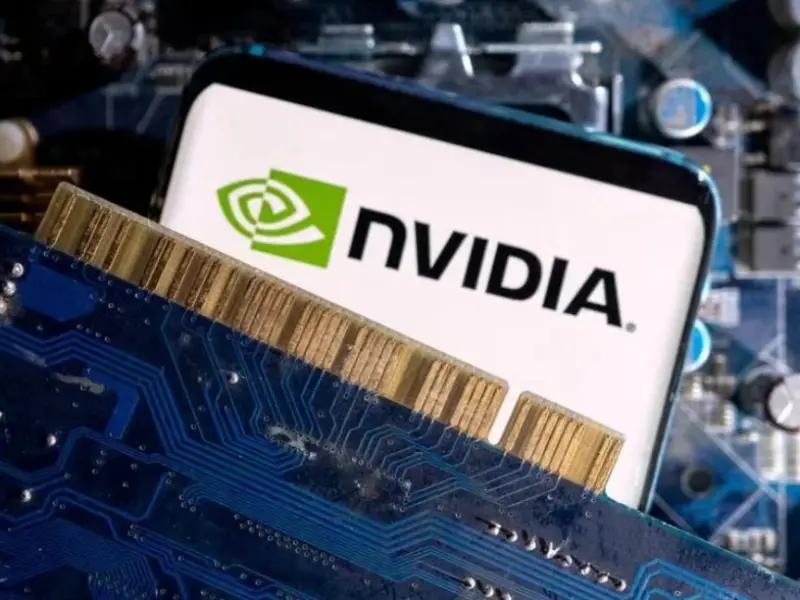
Caption: Nvidia set to make $12B from AI chip sales in China visual context for BTW intelligence coverage. · Source context: Existing article media was retained or restored as the subject-specific visual basis. · Relevance reason: Nvidia set to make $12B from AI chip sales in China is the primary subject or event subject; the image supports the article's governance reading. · Image provenance: Existing curated article image retained because it is subject- or event-specific and not a generic pool placeholder.

Sources

Public references used for this article.

External references will appear here after editorial citation review.

CategoryInstitution

Nvidia set to make $12B from AI chip sales in China is tracked as a internet infrastructure institution within the internet infrastructure ecosystem.

RegionAsia Pacific

Nvidia set to make $12B from AI chip sales in China has public-source relevance to network operations, governance, dependency mapping, or market structure.

Signal FocusInternet infrastructure institution

Nvidia set to make $12B from AI chip sales in China has public-source relevance to network operations, governance, dependency mapping, or market structure.

Content TypeProfile

Nvidia set to make $12B from AI chip sales in China is tracked as a internet infrastructure institution within the internet infrastructure ecosystem.

Primary DomainGovernance

Public-source signals support medium-impact monitoring for infrastructure visibility and dependency analysis.

TopicInternet infrastructure institution

Nvidia set to make $12B from AI chip sales in China is profiled by BTW Media because published evidence links it to internet infrastructure, governance, operational dependencies, or market visibility.

ImpactMedium

Public-source signals support medium-impact monitoring for infrastructure visibility and dependency analysis.

Confidence?Confidence Grade
0.90–1.00AHigh — direct sources
0.75–0.89A/BStrong
0.55–0.74B/CMedium
0.35–0.54C/DWeak–medium
0.10–0.34DWeak signal
0.00–0.09DInternal monitoring
Limited confidence (80%)

Several public sources

Nvidia set to make $12B from AI chip sales in China is profiled by BTW Media because published evidence links it to internet infrastructure, governance, operational dependencies, or market visibility.

  • Nvidia is forecasted to dispatch over one million H20 accelerator chips to China this year, priced at $12,000-$13,000 each, potentially accruing $12 billion in revenue.
  • Initially met with indifference due to cost and performance, renewed interest from major Chinese tech firms like Baidu, Alibaba, Tencent, and ByteDance has emerged, triggered by supply shortages of Huawei’s Ascend 910B.

OUR TAKE
Nvidia’s CEO, Jensen Huang, confirmed a notable downturn in China’s business, citing increased competition and tech restrictions. Despite this, Nvidia is steadfast in serving its Chinese clientele. CFO Colette Kress reported a significant Q4 drop in data center revenue, post-October’s export controls, underscoring regulatory impacts on China operations.
–Vicky Wu, BTW reporter

What happened

From market analysis firm SemiAnalysis, NVIDIA is forecasted to dispatch over one million H20 accelerator chips to China this year, priced at $12,000-$13,000 each, potentially accruing $12 billion in revenue. Amongst three GPUs customised for China, the H20, despite performance limitations and AI capabilities under 15% of the H100, remains the most powerful.

Initially met with indifference due to cost and performance, renewed interest from major Chinese tech firms like Baidu, Alibaba, Tencent, and ByteDance has emerged, triggered by supply shortages of Huawei’s Ascend 910B. Analysts observe that despite a performance dip, the H20 enjoys popularity due to its high-capacity HBM memory, advantageous in practical AI applications.

If predictions hold true, Nvidia’s revenue in China will surpass the previous year’s $10.3 billion, albeit with a market share closer to 10%, down from 25% pre-October 2022 export restrictions. CFO Colette Kress noted a sharp drop in China’s data centre revenue post-restrictions, while CEO Jensen Huang pledged continued service to the Chinese market despite technological limitations.

Also read: Nvidia set to face French antitrust charges

Also read: How Nvidia dominates the AI chip market

Why it’s important

Nvidia is embroiled in the escalating US-China tech tensions, as Washington clamps down on high-performance chip exports to China, wary of military AI progress. Following the US embargo on premier chips like the A100 and H100 in October 2022, Nvidia unveiled China-specific chips by November, with the H20 leading the charge. In the quarter concluding in April 2023, China’s share of Nvidia’s revenue dipped to 9%, down from 22% previously. Yet, total revenue from China, inclusive of Hong Kong, soared 50% year-over-year to $2.5 billion, revealing intricate dynamics under stricter US export controls.

Conversely, Huawei‘s Ascend 910B is reputed to rival the performance of Nvidia’s A100 GPU. It is believed to be an in-house design, crafted by Chinese semiconductor manufacturer SMIC, employing 7nm process technology – a step forward from the previous Ascend 910 model. Despite Huawei and its manufacturing allies’ efforts to churn out ample Ascend 910B units to meet demand, current stock levels are relatively tight. Additionally, most Chinese AI companies have rooted their AI models in Nvidia’s ecosystem and software, meaning a shift to the Huawei platform could present time-consuming and financially burdensome obstacles.

At A Glance

  • Name: Nvidia set to make $12B from AI chip sales in China
  • Type: Internet infrastructure institution
  • Base: Asia Pacific
  • Profile focus: Institution

What It Does

  • Public records support monitoring of its role, services, and key relationships.

Why It Matters

  • Public-source signals support medium-impact monitoring for infrastructure visibility and dependency analysis.
  • Operational criticality: Medium
  • Time horizon: Next quarter

What To Watch

  • Monitoring focuses on verified service continuity, governance changes, and relationship signals.
NowMedium priority

Track verified source updates, role changes, and current public evidence.

QuarterMedium policy sensitivity

Public-source signals support medium-impact monitoring for infrastructure visibility and dependency analysis.

YearNext quarter outlook

Longer-term relevance depends on verified operating, policy, and relationship changes.

Member Briefing

Deeper Profile Context

Login is required to unlock the full profile briefing and source notes.

Only for Strategy Circle

Strategic Circle Access

Open to all readers. Unlock profile briefings after joining and logging in.

Join Strategic Circle

Only for Leadership Alliance

Leadership Alliance Access

For owners and management of IP-holding companies. Login required to unlock.

Join Leadership Alliance
← BackAll Companies