
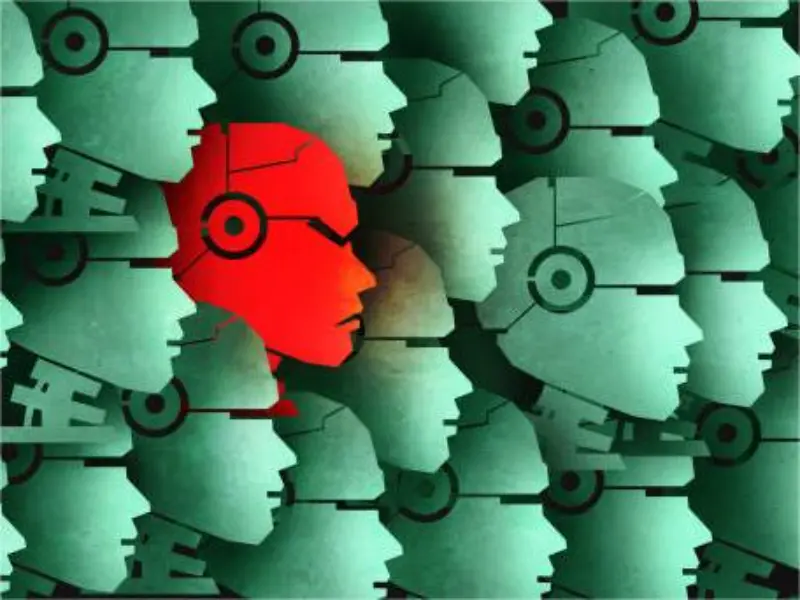
- Japan’s NTT has issued an apocalyptic warning about the looming dangers of AI, calling for the creation of ecosystems that allow AI to control other AIs, and increased regulation.
- The proposed regulations include compulsory education for students about the pros and cons of AI, updating intellectual property (including copyright) protections, and labeling original content.
- NTT acknowledged that as it will still take some time to build a system of AI-related data in Japan, “soft laws” that “provide a common regulatory approach that identifies stakeholders” should be adopted in the meantime.
Generative AI can’t go unchecked
Japanese telecom giant NTT on Monday issued an apocalyptic warning about the looming dangers of artificial intelligence.
“If generative AI is allowed to go unchecked, trust in society as a whole could be damaged, as people increasingly distrust each other and lose the incentive to guarantee authenticity and credibility,” the Japanese telecommunications company asserted in a joint proposal with the media outlet Yomiuri Shimbun.
“It is feared that in the worst case, democracy and social order could collapse, leading to war,” the two entities claimed.
NTT and the Yomiuri Shimbun began joint research into the ideal governance of generative AI in autumn 2023. The companies are unhappy with the technology’s inherent lack of accuracy. This poses an even greater danger, they warn, because most people with access to the Internet also have access to AI.
Also read: NTT’s IOWN empowered by photonic-electronic convergence devices
Necessity of regulation in the stage of AI innovation
“Our proposal acknowledges that the metaphorical cat is no longer in the bag – removing generative AI at this point in time would lead to a decline in productivity – and therefore must confront the runaway relationship between AI and the attention economy.”
They assert that as generative AI enters the stage of innovation, regulation will become necessary to ensure the fundamental pillars of society – such as elections and security.
The proposed regulations include compulsory education for students about the pros and cons of AI, updating intellectual property (including copyright) protections, and labeling original content.
Also read: Google uses AI to create search answers in UK trial
Rare skepticism of AI in the industry
NTT and Yomiuri admitted that, unlike the EU, Japan does not have a strategic and systematic AI-related data policy. Since establishing one will take some time, “soft laws” that “provide a common regulatory approach that identifies stakeholders” should be adopted in the meantime. The proposal also suggests that there should be multiple ais available – to check and balance each other so that users can cross-reference results and avoid relying on one particular generative AI product.
NTT’s overall view of generative AI is a rare skepticism of the technology from the tech industry itself. Most large companies are busy adapting their products to take advantage of AI, its devices and infrastructure.