Summary
- NIST finalized IR 8587 on 15 September 2026 for federal agencies and their cloud service providers; conformance is voluntary unless policy or an agreement makes it binding.
- The final report recognizes that a stateless access token may survive a provider-side revocation action until expiry. Providers must describe the extent and method of revocation to consuming agencies, which must assess the scenarios, within the report’s conformance language.
- Relative to the December 2025 draft, the final changes an unconditional propagation MUST to a SHOULD to provide propagation means, and requires a connected relying party to reject revoked tokens and close sessions if that capability is available. A bounded handoff record is this article’s recommendation, not NIST’s form.
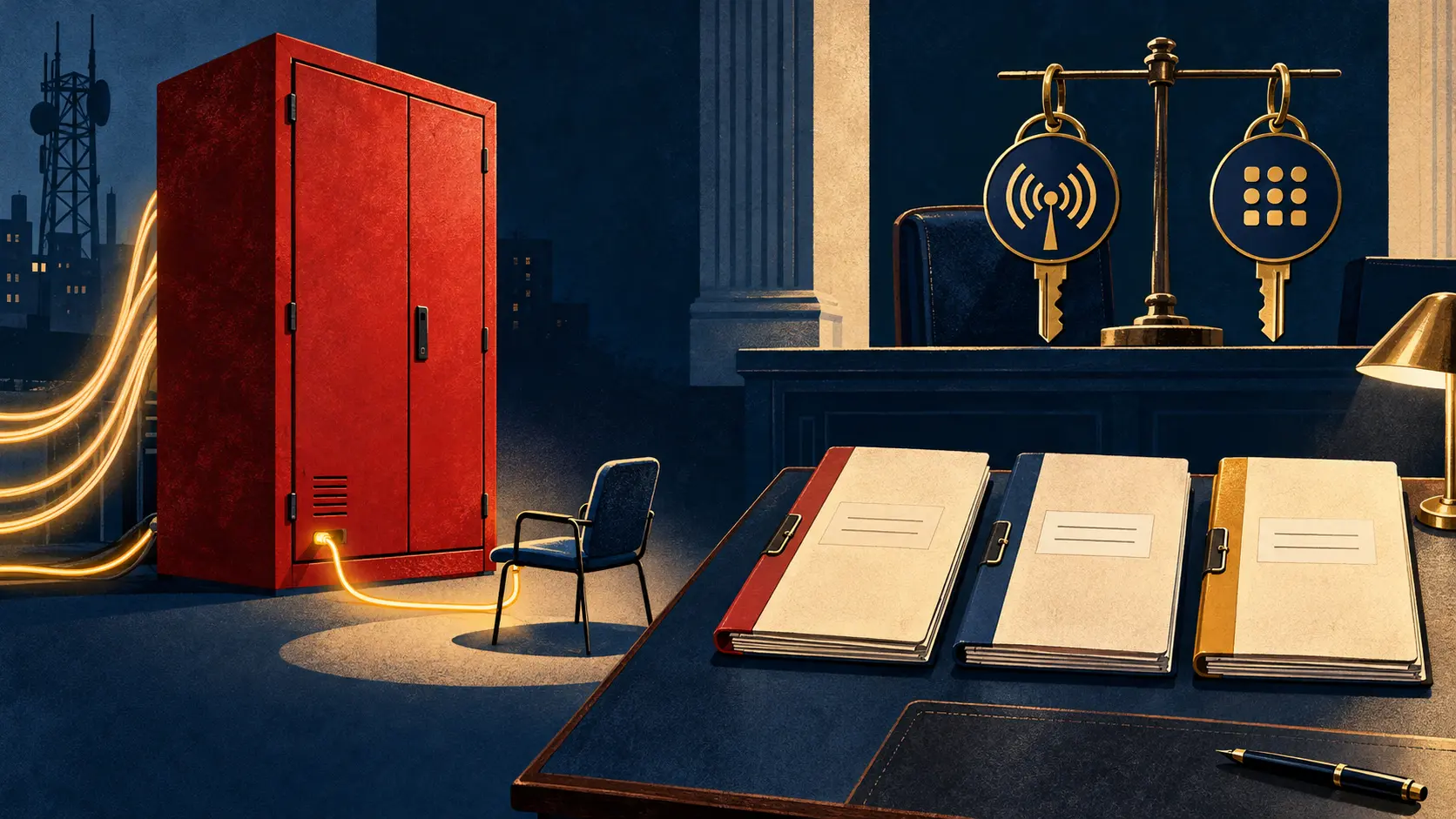
Imagine an incident operator marking a compromised identity invalid. That action can halt a refresh path, yet an access token issued a few minutes earlier may still be presented to a service that checks its signature and lifetime without contacting the issuer. The first action is real; so is the possible interval of residual access. Neither a green “revoked” indicator nor a short token lifetime alone says which relying parties have stopped accepting the token.
NIST’s 15 September final Protecting Tokens and Assertions from Forgery, Theft, and Misuse treats this as a division of responsibility rather than a promise of a universal switch. Its example software-as-a-service table places token issuance and signing with the provider, IAM policy and application access with the customer, and incident response, continuous monitoring and token revocation with both. The table is explicitly illustrative: service model, contract and available capabilities determine the real boundary. It is not evidence that any particular provider delivers a specific revocation speed.
The report is also careful about the technical limit. Immediate, global invalidation is not always possible for stateless tokens before expiration. Short-lived access tokens combined with refresh controls or reauthentication can narrow the interval. For identity and access tokens the report says they SHOULD last no more than one hour, while urging providers to make validity configurable for agency risk. A one-hour recommendation is not an observed expiry time at a named cloud service, and preventing the next refresh is not the same as retracting every token already issued.
The change from draft to final is narrower and more instructive than a claim that NIST discovered revocation in 2026. The December 2025 draft already identified the stateless-token problem and already told providers to convey their revocation methods and agencies to assess the risk. It also said token services MUST ensure that the revoked identity’s status propagates to associated connected systems. The final instead says token services SHOULD provide a way to propagate status to associated relying parties, naming introspection, status lists and shared signals as possible means.
If that capability exists, connected relying parties MUST reject revoked tokens and terminate associated sessions. The final adds discussion of the Shared Signals Framework and Continuous Access Evaluation Profile, without claiming every relying party receives or acts on such signals.
The paired disclosure and assessment clauses survive. A provider must convey the extent and methods of revocation to the consuming agency; the agency must evaluate revocation scenarios and impacts when integrating the service. Those are capitalized conformance terms in the report, not a freestanding law for every commercial deployment. NIST expressly says conformity is voluntary unless another policy or binding agreement changes that status. This is why the procurement and incident question should be concrete: does “revoke” stop issuance, invalidate refresh, signal relying parties, terminate their active sessions, or merely wait for access-token expiry? Different answers leave different residual exposure.
The final refers to the IETF Token Status List as an OAuth Working Group-adopted Internet-Draft and Global Token Revocation as an individual Internet-Draft, not completed standards. Those references offer design paths, not proof of implementation. There is no named breach or measured propagation delay in this analysis. The news is the final guidance’s explicit recognition of a capability-dependent handoff and the resulting need to know which party can actually close which door.
Sources
Member Briefing
Deeper Profile Context
Sign in with the right membership level to unlock the full briefing and source notes.
Only for Strategic Circle
Strategic Circle
Open to all readers. Unlock profile briefings after joining and signing in.
Join Strategic CircleOnly for Leadership Alliance
Leadership Alliance
For qualified IP-asset owners and management; sign in to unlock alliance briefings.
Join Leadership Alliance