
Musk Blocks Russia’s Use of Starlink, Highlighting Satellite’s Role in Warfare is profiled by BTW Media because public-source evidence links it to internet infrastructure, governance, operational dependencies, or market visibility.
Musk Blocks Russia’s Use of Starlink, Highlighting Satellite’s Role in Warfare is tracked as a internet infrastructure institution within the internet infrastructure ecosystem.
Musk Blocks Russia’s Use of Starlink, Highlighting Satellite’s Role in Warfare has public-source relevance to network operations, governance, dependency mapping, or market structure.
Musk Blocks Russia’s Use of Starlink, Highlighting Satellite’s Role in Warfare is tracked as a internet infrastructure institution within the internet infrastructure ecosystem.
Public-source signals support medium-impact monitoring for infrastructure visibility and dependency analysis.
Musk Blocks Russia’s Use of Starlink, Highlighting Satellite’s Role in Warfare is profiled by BTW Media because public-source evidence links it to internet infrastructure, governance, operational dependencies, or market visibility.
Public-source signals support medium-impact monitoring for infrastructure visibility and dependency analysis.
| 0.90–1.00 | A | High — direct sources |
| 0.75–0.89 | A/B | Strong |
| 0.55–0.74 | B/C | Medium |
| 0.35–0.54 | C/D | Weak–medium |
| 0.10–0.34 | D | Weak signal |
| 0.00–0.09 | D | Internal monitoring |
Mixed-source
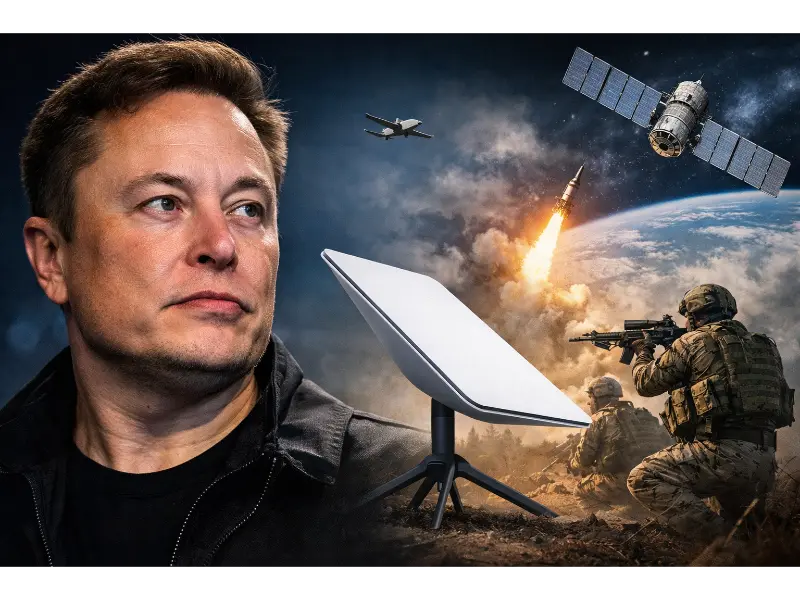
- SpaceX’s efforts to block Russia’s use of Starlink appear to have succeeded, as the system remains crucial for Ukraine’s battlefield communication.
- The situation underscores the growing reliance on satellite-based internet for military operations and raises questions about the responsibilities of private companies in geopolitics.
What happened: musk blocks russia’s unauthorized starlink use amid ongoing conflict
SpaceX CEO Elon Musk confirmed that the steps taken by his company to block the unauthorized use of its Starlink satellite system by Russia seem to have worked. The satellite-based communications network, which has been vital for Ukrainian military operations, had been used by Russia to control drones. In response to this, Ukraine has partnered with SpaceX to restrict Russian access.
SpaceX had previously provided Starlink internet service to Ukraine in the early days of Russia’s invasion in 2022, and since then, the system has been used extensively for communication and drone operations. However, as the conflict progressed, the system was also found to be used by Russian forces, leading to efforts from SpaceX to ensure that only authorized terminals are operating on Ukrainian soil.
Also read: Airtel Africa and SpaceX team up for Starlink satellite-to-mobile connectivity
Also read: Starlink to lower satellite orbits in 2026 to enhance space safety
Why it’s important
Musk’s intervention highlights the increasingly strategic role that satellite communications play in modern warfare, particularly for nations in conflict. The fact that private companies like SpaceX are now being drawn into geopolitical disputes raises complex questions about corporate responsibility in conflicts. As war evolves, companies providing critical infrastructure may be forced to take sides, whether they want to or not, forcing them to make decisions that could have lasting geopolitical implications.
The development reflects a shift in the power dynamics of warfare, where control over technological assets like satellite networks is just as important as conventional military might. As nations increasingly depend on satellite systems for communication, intelligence, and weapon control, companies in this space might face ongoing pressures to align with national interests, potentially compromising their neutrality.
This evolving landscape raises the question of whether companies like SpaceX should take on such responsibility and what kind of frameworks should be put in place to govern their involvement in geopolitical conflicts. How far should these private enterprises go in deciding the flow of information during a war, and what happens when their commercial interests conflict with international peace and security?
Core Entity Brief
- Entity: Musk Blocks Russia’s Use of Starlink, Highlighting Satellite’s Role in Warfare
- Subject Type: Internet infrastructure institution
- Region: Africa
- Classification: Institution Type
Service Surface / Control Surface
- Public records support monitoring of governance, service, and infrastructure control surfaces.
Governance and Policy Surface
- Public-source signals support medium-impact monitoring for infrastructure visibility and dependency analysis.
- Operational criticality: Medium
- Time horizon: Quarter (30-120d)
Decision Trigger Matrix
- Monitoring focuses on verified service continuity, governance changes, and relationship signals.
Current state favours active tracking due to infrastructure relevance.
Public-source signals support medium-impact monitoring for infrastructure visibility and dependency analysis.
Long-cycle infrastructure decisions likely to remain path-dependent.
Member Unlock
Restricted Profile Intelligence
Login is required to unlock full profile briefings and deep-dive sections.
Only for Strategy Circle
Strategic Circle Access
Open to all readers. Unlock profile briefings after joining and logging in.
Join Strategic CircleOnly for Leadership Alliance
Leadership Alliance Access
For owners and management of IP-holding companies. Login required to unlock.
Join Leadership Alliance


