
Global Trends
Global Trends
Global market trend intelligence tracks cloud service, regional ISP, national telecom, data centre, and institutional infrastructure signals across global internet infrastructure markets. BTW.

Latest Coverage
Latest from Global Trends
7,505 articles

Global Regional ISP Trends
PolBox.TV: three registered relationships, one observed neighbour
PolBox.TV: three registered relationships, one observed neighbour intelligence summary explains the development, the public evidence available to readers, the organisations involved, the regional context, market exposure, and the infrastructure consequences that may follow. The…

Global National Telecom Trends
MSSA updates NTN architecture for regenerative payloads
MSSA's Version 2.0 adds regenerative payload guidance and shared 5G NR and NB-IoT design options for non-terrestrial networks.

Global National Telecom Trends
Boeing delivers final O3b mPOWER satellites to SES
Boeing has delivered F11, F12 and F13 to SES ahead of a September launch, with the satellites expected to enter service in mid-2027.

Global Institutional Trends
NASA awards Blue Origin Mars telecom network contract
Blue Origin will build, launch and operate a Mars communications relay for NASA under a contract worth up to $700 million, with service targeted for 2030.

Global Cloud Services Trends
A QUIC Connection ID Is Not a Subscriber Identity
A QUIC connection can survive a change from Wi-Fi to mobile access. The identifier that helps packets find that connection is transport state, not proof of who holds the handset, which account is active, or whether an application action remains authorised.

Global Cloud Services Trends
A Fast 0-RTT Handshake Is Not a Once-Only Transaction
TLS 1.3 and QUIC can remove a round trip from a resumed connection. That is a latency result, not a receipt that a state-changing request reached the application once, was committed once, and will never be replayed elsewhere.

Global Regional ISP Trends
An ASPA Record Is Not a Route-Leak Rejection Policy
An ASPA can publish which networks are authorized upstream providers. It cannot show that a production router has consumed that evidence, classified a path correctly, or rejected it without collateral damage.

Global Institutional Trends
A Valid Software Signature Is Not a Durable Authority Record
A green verification result can survive long after the authority that made a release legitimate has changed. The cryptography may still be sound. The missing evidence is organisational: who was permitted to sign, under which role, at what time, and what later revocation or…

Global Regional ISP Trends
A Graceful BGP Restart Can Lengthen a Blackhole
Graceful Restart is meant to keep traffic moving while a BGP process returns. Its safety depends on a fact the surviving session cannot prove by itself: whether the restarting router still has the forwarding state needed to carry packets. When a helper retains a route longer than…

Global Regional ISP Trends
A Fast IPv4 Fallback Can Make Broken IPv6 Look Healthy
A dual-stack service can answer every ordinary check while its IPv6 path is unusable. The availability result is real, but the protocol-family conclusion is not: a client may have escaped through IPv4 before the dashboard noticed what failed.

Global Cloud Services Trends
A Root Certificate Removal Is a Fleet Migration Before It Is a Browser Update
A root programme can withdraw trust in one release while many applications keep making decisions from older, private or embedded stores. The security change is complete only when the verifiers that matter can prove the intended rejection.

Global Cloud Services Trends
Backblaze's customer-held keys change who operates the second copy
Keeping encryption keys can be a deliberate purchase of control. In Backblaze B2, it also changes which copying service a customer can use—and where the continuing operating work has to sit.

Global Cloud Services Trends
Adyen's offline allowance grows with the terminal fleet
A retailer can give every till a sensible limit and still authorize more exposure than it intended. Adyen's store-and-forward controls make the number of disconnected terminals a commercial variable, not merely an equipment count.

Global Cloud Services Trends
HubSpot's contact cap makes campaign growth a budget decision
A limit on marketing contacts can do its job while a campaign still misses its intended audience. HubSpot's distinction between records, marketing designation and a purchased tier puts a commercial decision inside everyday workflow settings.

Global Cloud Services Trends
GitLab's separate projects can share the same stopping point
A build allowance belongs to a top-level namespace, not to each team's sense of ownership. GitLab.com's rules for shared consumption and non-transferable purchased minutes make the group boundary a commercial decision as well as an organisational one.
Global Cloud Services
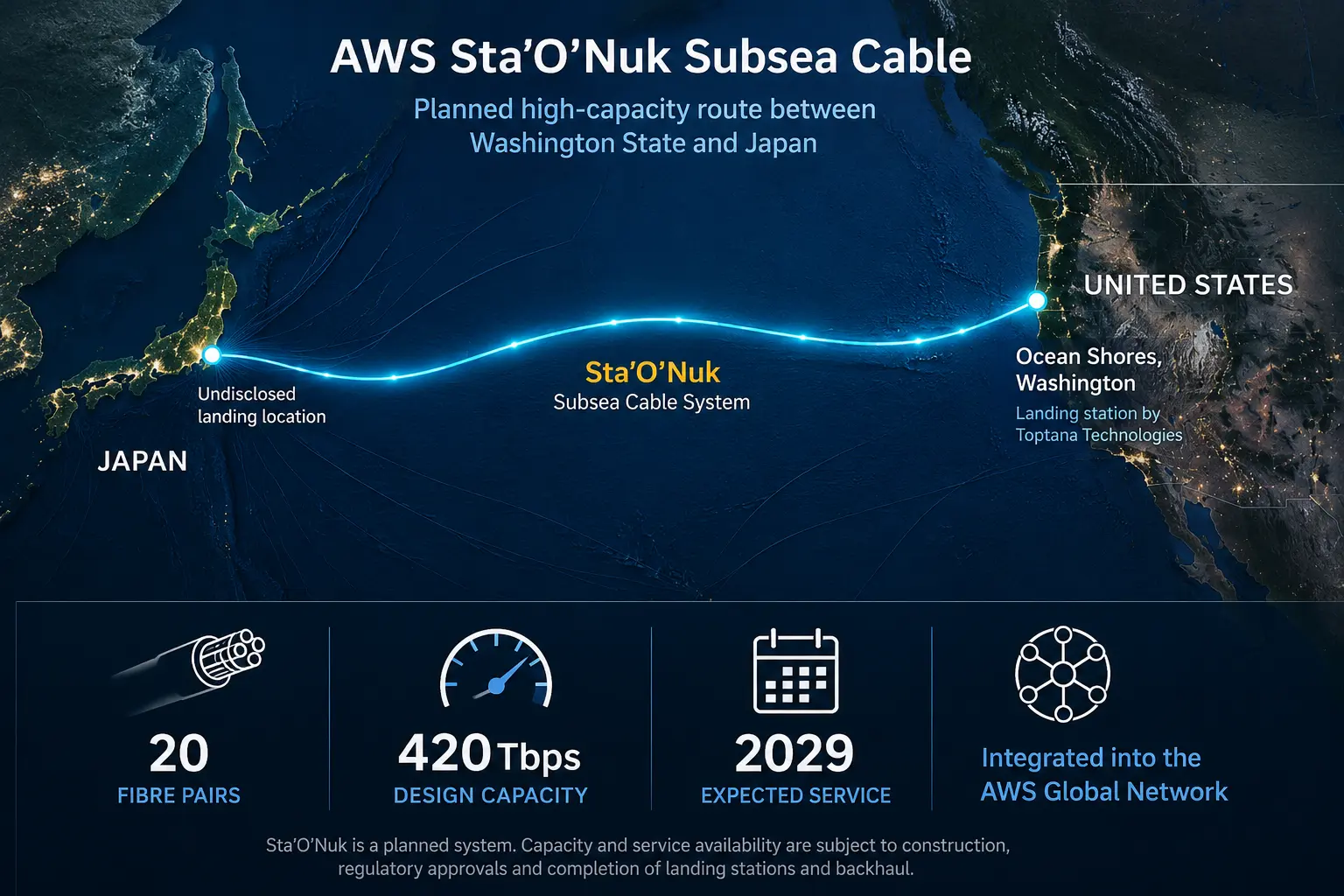
AWS plans 420Tbps US-Japan subsea cable
AWS is developing Sta’O’Nuk, a 20-fibre-pair subsea cable between Washington state and Japan that it expects to bring into service in 2029.

Global National Telecom Trends
SES, De Boer Marine expand FlexMaritime partnership
SES will supply FlexMaritime connectivity while De Boer Marine handles onboard installation and management for maritime customers under a multi-year agreement.

Global Cloud Services Trends
Genesys Expands Agent Choice. Flow Design Sets the AI Meter.
The company's larger AI ecosystem gives contact centres more options. Its native billing examples show why an unused capability can still affect the interaction's charging tier.

Global Cloud Services Trends
Fastly unbundles the domain. Buyers still have to arrange its handover
A public address can outlive several application teams. Fastly's versionless domains make that separation easier to manage, but the commercial benefit depends on who retains the proof and permissions to put a new operator behind the old name.

Global Cloud Services Trends
Wasabi's Storage Bill Remembers More Than the Latest File
Overwriting one entity can leave several generations on the bill. A shorter minimum duration, a new invoice and a new price each change a different part of that history.