
Intelligence
Latest Articles
Latest intelligence on infrastructure operators, policy decisions, market moves, and digital power shifts.

CASE FILE
The Older Service Record Won. The Service Had Already Moved
A name collision is supposed to stop a newcomer from impersonating an established local service. Put two registration proxies between the service and that local link, however, and the same safeguard can protect yesterday’s address from today’s legitimate update. DNSSD’s proposed…

History
The Gateway Kept the Message. It Could Not Preserve Every Meaning: RFC 1496
RFC 1496 gave an X.400(84)–MIME gateway an admirably stubborn rule: convert what it can, encapsulate what it cannot, and never discard an entire message merely because one body part is unfamiliar. That discipline protected the carrier. It did not make every heading survive, every…

Story
ARIN’s IRR Objects Keep the Channel That Created Them
An IRR object migrated from ARIN’s email service can be deleted in ARIN Online but not edited there. The asymmetry is defensible as a record of provenance. The trouble begins when the web remedy—delete and recreate—changes that provenance without a visible continuity receipt.

CASE FILE
The EAP Method Succeeded. The Protected Session Still Needed a Second Witness: RFC 9820
The access controller displayed three green facts: the EAP method had succeeded, the Master Session Key had been exported, and the constrained device had been placed in the security domain. Only the first two facts could be reconstructed. No one could produce the protected…

CASE FILE
The IESG Approved Three ML-KEM Groups. The Registry Recommended None
An approved IETF document can define exactly how three post-quantum groups travel through TLS while leaving the deployment verdict deliberately unresolved. That is not bureaucratic ambiguity. It is a precise boundary between an interoperable mechanism, a registry coordinate and…

History
The Table Moved the Service. It Did Not Rename It: RFC 1498
A 1993 RFC recovered an older lesson: a table can change where a service runs while its name survives. Reaching it still requires separate evidence for the node, attachment point and path—and none of those bindings alone proves identity, authority or delivery.

History
The Code Was Available. The Original Specification Was Not: RFC 1492
The original TACACS specification existed, and the author of RFC 1492 could not obtain it because of copyright issues. What reached the public record in July 1993 was therefore an Informational reconstruction, constrained by running code and candid about the possibility that the…

CASE FILE
The Switch Executed the Program. It Did Not Inherit the Right to Read, Rewrite or Decide: RFC 9817
A program that runs inside a switch or network interface card is no longer merely near the traffic. It can become part of the path by which traffic is classified, transformed, delayed, replicated or converted into a control action. RFC 9817 catalogs the opportunity and, more…

CASE FILE
All Three Attestations Were True. They Still Did Not Belong to the CSR Key
A certification request can arrive with one valid statement about an HSM, another about corporate ownership and a third about platform health. The dangerous moment comes when a certificate authority treats three successful checks as one joined fact. Revision 29 of an IETF draft…

CASE FILE
One Timer Drove Three IPv6 Decisions. The Counters Could Not Explain Which One
A network team changes one millisecond value on an IPv6 interface. Address resolution, reachability probing and duplicate-address detection all inherit it. The edit receipt is precise; the operational meaning is not, until the team joins the change to an interface, an epoch and…
History
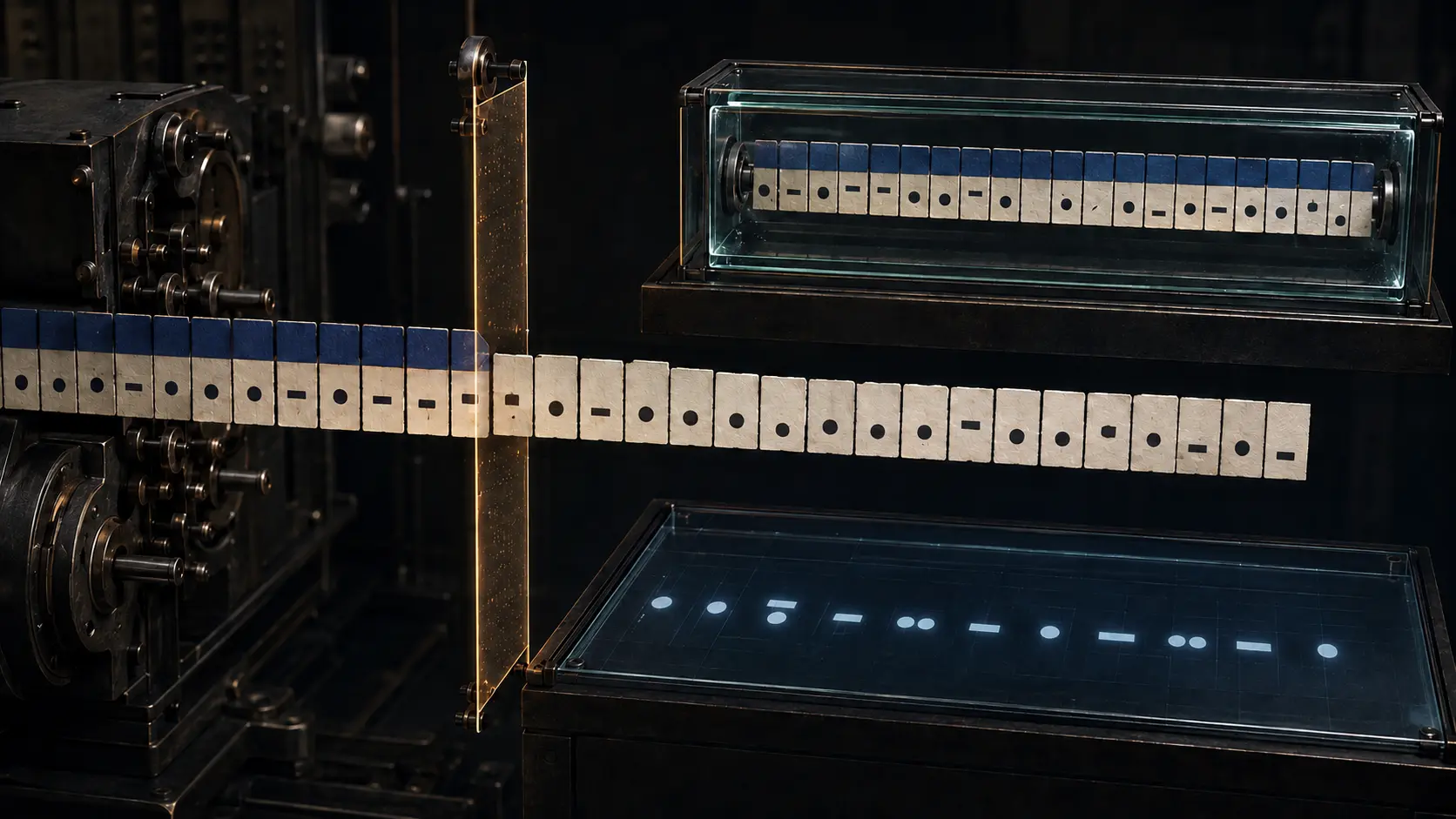
The Damaged Text Became Readable Latin. It Did Not Become the Russian Original: RFC 1489
When the eighth bit disappeared from a KOI8-R message, Russian letters could fall into a strange, case-reversed Latin shadow. A reader might still guess the words. That humane failure mode did not restore the erased bits, certify the charset or turn recognition into proof of the…

CASE FILE
The Route Reflector Distributed the Link. It Never Witnessed It: RFC 9815's Sparse-Peering Evidence Boundary
A route reflector can hold the newest authenticated account of a data-centre link and still know nothing directly about whether that link carries a packet. RFC 9815 makes this separation operationally useful: BGP can distribute a link-state graph over far fewer sessions than the…

CASE FILE
The Packet Had No SRH. It Could Still Target an SRv6 SID
An edge filter inspects an IPv6 packet, finds no Segment Routing Header and lets it pass. The packet still carries a locally instantiated SRv6 SID as its destination. The visible header test succeeded; the admission decision examined the wrong fact.

History
The MX Record Found a Gateway. It Did Not Prove the Fax Machine Existed: RFC 1486
A wildcard in the Domain Name System could announce that a mail gateway was willing to serve thousands of telephone numbers. It could not say whether any one of those numbers existed, answered, belonged to a fax machine or put a page into the intended person's hands. RFC 1486…

CASE FILE
The HSM Signed a Small Attribute Set. The Large CMS Content Was Bound Through One Digest: RFC 9814
An operator can truthfully say that a hardware security module produced an SLH-DSA signature while still leaving the most important question unanswered: which bytes did the module actually sign? RFC 9814 makes that question decisive for CMS. A multi-gigabyte archive may never…

History
The String Carried the Distinguished Name. It Did Not Become the Directory Entry: RFC 1485
The String Carried the Distinguished Name. It Did Not Become the Directory Entry: RFC 1485 intelligence summary explains the development, the public evidence available to readers, the organisations involved, the regional context, market exposure, and the infrastructure…

CASE FILE
The IP Address Stopped Naming the RADIUS Client. The Cleartext PSK Identity Took Over: RFC 9813
Two network access servers can stand behind one public address, while one mobile appliance can appear from several addresses in a week. RFC 9813 lets RADIUS/TLS distinguish those relationships with a PSK Identity. The useful part is not the new name. It is the sequence of checks…

History
The String Could Be Parsed Without Ambiguity. It Still Was Not the Directory Entry: RFC 1485
The String Could Be Parsed Without Ambiguity. It Still Was Not the Directory Entry: RFC 1485 intelligence summary explains the development, the public evidence available to readers, the organisations involved, the regional context, market exposure, and the infrastructure…

CASE FILE
The HTTP Request Returned 200. The Certificate Decision Was Still Inside: RFC 9811
A green transport result is tempting because it is immediate, familiar and easy to graph. RFC 9811 makes that result useful without letting it impersonate the certificate-management decision carried inside it. The distinction is small enough to fit in one response and important…

History
The Name Was Easy to Type. Its Identity Still Depended on the Directory Around It: RFC 1484
A person could say a short, natural name and let the directory fill in types, hierarchy and spelling. The convenience was real because the omitted context still existed: inside the local environment, current entries, matching rules and the user’s final choice.