
Intelligence
Latest Articles
Latest intelligence on infrastructure operators, policy decisions, market moves, and digital power shifts.

History
Philip F. Smith and the Routing Report That Could Observe, Not Command
A daily BGP report begun in 1999 made routing behaviour public at a moment when registry records and operator claims could not show what the network was actually announcing. Philip F. Smith’s long-running instrument matters because it also exposes its own limits: a selected path…

Story
One Portal, Four Unfinished Clocks
MyAFRINIC v2 has become more than a software project: AFRINIC's own records place four materially different policy paths behind the same portal milestone, making it necessary to prove each implementation separately rather than letting one launch announcement stand for all four.

ICANN
ICANN Broadened the Project Fund Before Fixing Its Qualification Rule
A capital request can look complete before it is governable. Give it a fund name, an owner and an estimated cost, and the card resembles an authorization. Yet the decisive field is still missing: which published rule made this work eligible for exceptional funding rather than the…

History
The Link the Origin Asked to Remove: Why HTTP 410 Was Not 404
Two dead-looking links can lead to the same empty browser view while making very different claims. HTTP 404 leaves the reason and duration unresolved. HTTP 410 lets an origin say that access ended deliberately, is likely to stay ended, and should change how the rest of the Web…

History
The Message That Expired at Only One End
A sender could stop pursuing a message whose usefulness had run out. It could not make the receiver infer that decision from silence, or recall a copy already on its way. SCTP’s partial-reliability extension made abandonment a shared procedure without disguising it as delivery.

CASE FILE
Zero is not a diagnosis
An alert that says only “BGP saw zero” has thrown away the fact that decides the response. Zero is a valid ORIGIN code, a prohibited autonomous-system identity, and an RPKI disavowal value in three different protocol entities. RFC 7607 makes the distinction operational: refuse…

CASE FILE
Who Owns the Renewal Clock? ACME ARI and the Last Mile of Certificate Replacement
A certification authority can spread renewal work across a day, yet a fleet can still compress that day into one frantic minute. ACME Renewal Information supplies a window; the client, deployment system and live service decide whether that window becomes a safe replacement.
History
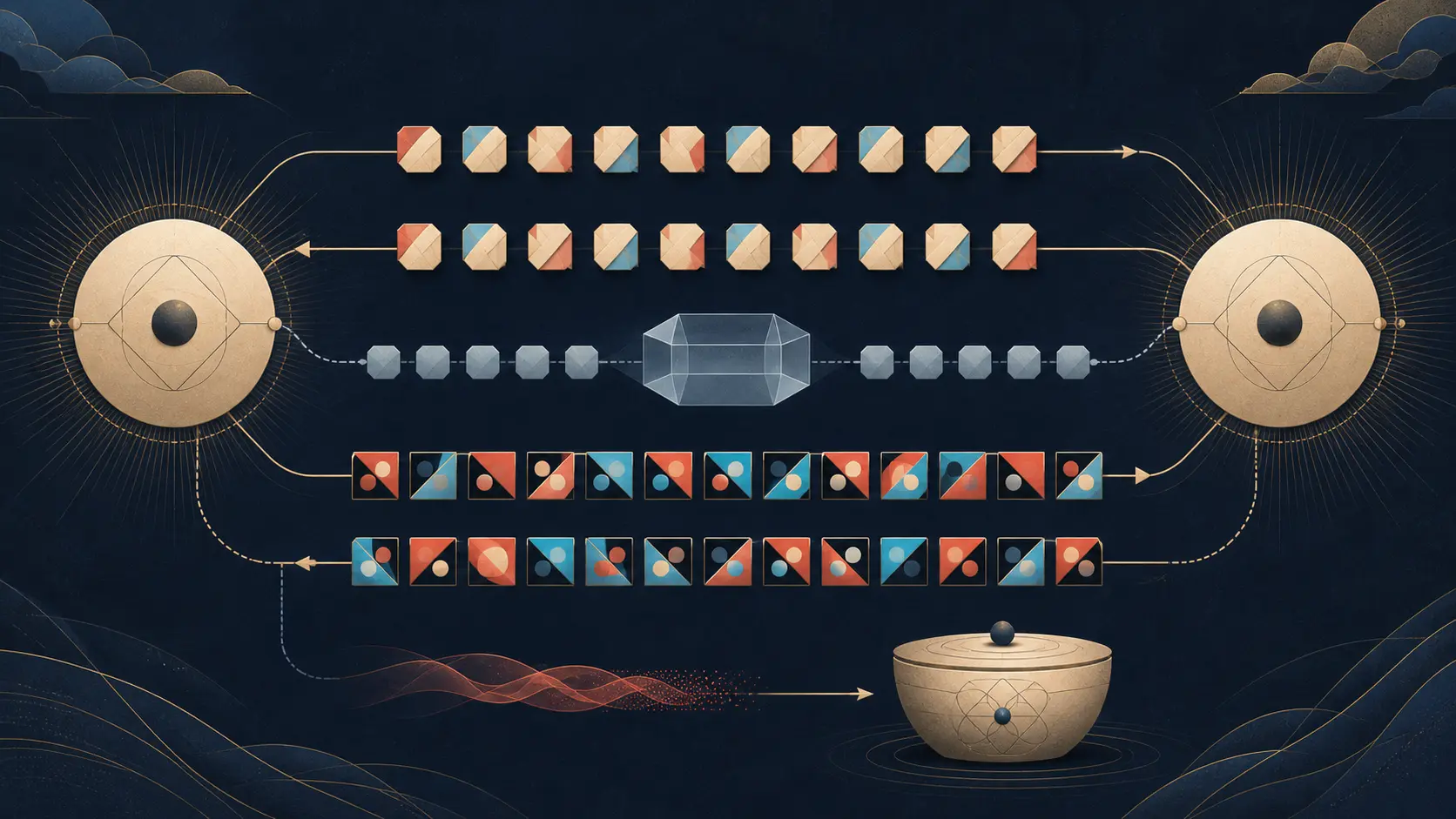
The Name That Spent Its Capital Letters: How DNS Turned Case into a Reply Challenge
DNS was built to recognize a name regardless of how its ASCII letters were capitalized. Two decades later, engineers noticed that the discarded distinction could still make a forged reply harder: the name could mean the same thing to the server while carrying a pattern only the…

Story
The Prefix Must Keep Its History: AFRINIC’s Proposed Pool Decision
Under `AFPUB-2026-IPv4-003-DRAFT01`, one recovered IPv4 block would first enter the temporary `Recovered Pool`. AFRINIC staff would trace its original source-pool category, return it there, classify a partial block proportionally, or send an uncertain origin to the…

IETF
An IETF Process Variance Does Not Silently Rewrite the Rule
The most dangerous exception in a governance system is not the red waiver attached to one named case. It is the value copied from that waiver into the default column. The first record still invites questions: which specification, which requirement, whose recommendation, what…

CASE FILE
The Reply Said Success. No Client Had Changed: DHCPv6 Reconfigure and the Authority of a Trigger
A relay can report that configuration changed, a server can answer `Success`, and an authenticated packet can reach a client without any of those events proving that the client now runs different addresses, prefixes or service parameters. DHCPv6 Reconfigure is useful precisely…

CASE FILE
The route outlived the speaker
BGP Long-Lived Graceful Restart can keep a failed peer’s routes for hours or days after ordinary restart protection ends. That buys time, but it also turns stale state into a temporary operating promise whose timer, forwarding basis and exit must be proved.

History
The Packet That Had to Go Home Before Going On
A mobile computer could carry its address to another network, but not necessarily the right to emit that address from there. Mobile IPv4's reverse tunnel sent an outgoing packet home before letting it continue to its correspondent. The detour was less an admission that the…

History
The New Key That Inherited Its Past: What TLS KeyUpdate Could Rotate
A protected connection may last far longer than the key that first carried its traffic. TLS 1.3 gave that connection a way to move forward without renegotiating who its peers were—but the new secret remained a descendant of the old one, with a sharply bounded security promise.

History
The Alert EOF Could Not Replace: How TLS Made One Direction's End Explicit
A receiver can authenticate every byte it saw and still not know whether more bytes were meant to arrive. TLS solved that narrower problem by putting the ending inside the protected conversation, then learned that the two directions should not be forced to end together.

History
The Report That Had to Wait for the Crowd
An RTCP report timer reaches its appointment, and the source still does not send. The report is ready. The correct next action may still be to send nothing. In the control protocol accompanying real-time media, an appointment made with an incomplete picture of the group is not an…

CASE FILE
The User Matched Twice. The Packet Was Valid: RADIUS CoA and the Authority to Change a Live Session
A correctly protected control request reaches an access router and asks for a new traffic filter. The subscriber name matches two live sessions. Cryptography has answered who sent the packet on this hop. It has not answered which connection may be changed.

IETF
IETF LLC Bars AI Note-Takers from Board Meetings
The April 2025 attendance list placed a human observer and an `AI Noota Assistant` on the same line. A separate human scribe still owned the minutes. The current IETF Administration LLC Board page now draws a harder boundary: AI note-taking and transcription tools may not enter…

Story
The Commitment Must Keep Its Name: RIPE NCC’s Missing Annual Ledger
RIPE-862 offers a precise starting chain: **Internet Resilience, Scalability and Routing Security**; the service-level objective **Security**; and the key metric **Internet Number Resources covered by ROAs and ASPA**. The next links—a costed 2027 Activity Plan and Budget…

History
The Record the Receiver Could Not Hold: How TLS Made Size a Local Claim
A small endpoint may be able to stream encrypted output while lacking the memory to authenticate an equally large record arriving from its peer. TLS eventually learned that the two directions do not have to pretend they are the same machine.