
Summary
- Iridium and Deutsche Telekom IoT demonstrated a satellite voice message from a Toyota vehicle after completing integration and a roaming agreement.
- Commercial NTN Direct availability remains planned for Q4 2026; the demonstrated message does not establish live calling or support across existing vehicles and devices.
The useful unit in Iridium's latest automotive demonstration is a message, not a telephone conversation. A short piece of speech can become an IoT payload. For businesses connecting people and equipment beyond terrestrial coverage, that opens a different design question from installing an ordinary satellite phone: what combination of device, subscription and application can reliably deliver that payload?
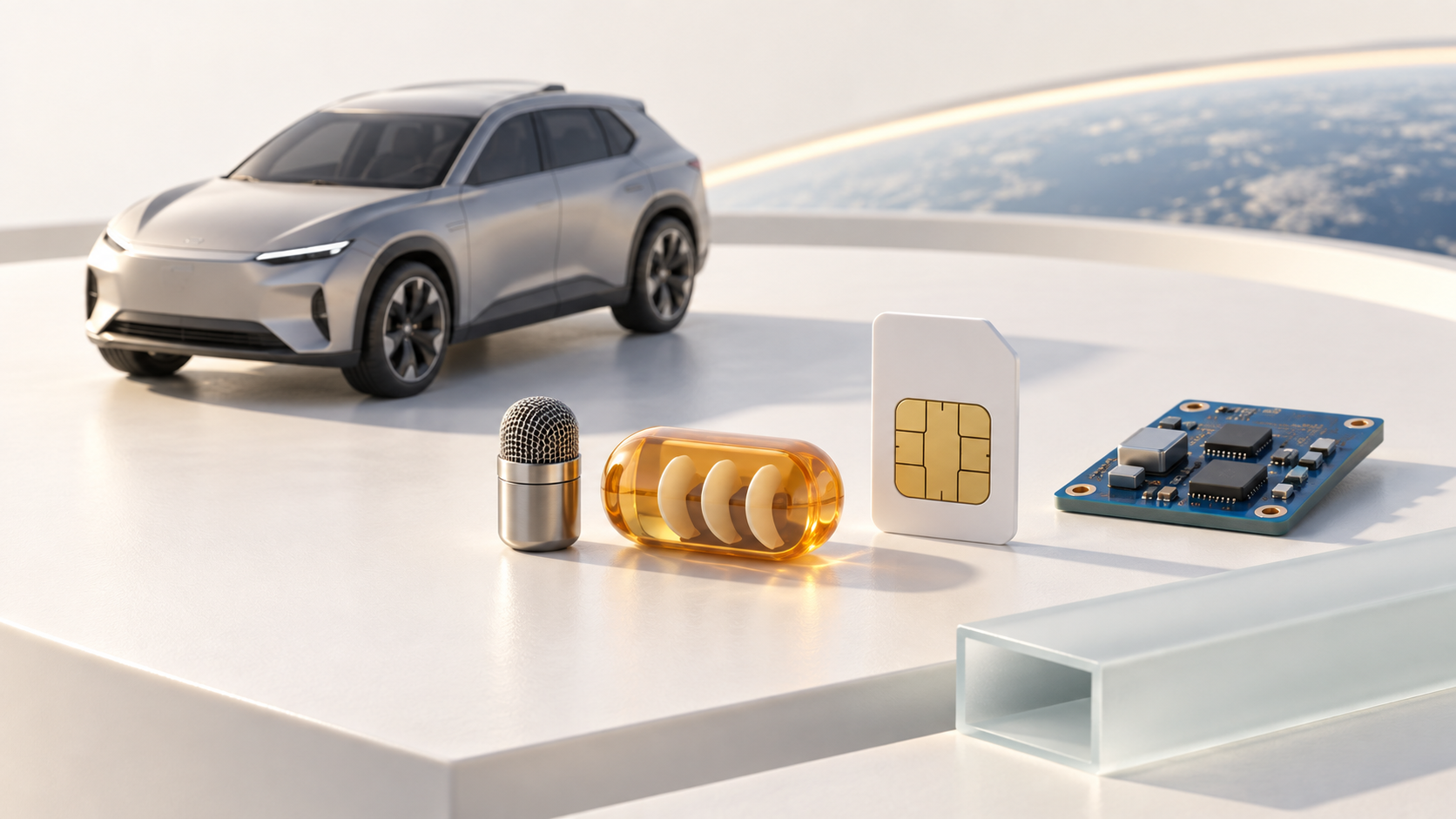
In its September 10 announcement, Iridium says a Toyota vehicle sent a voice message entirely through its satellite network during Telekom Satellite Day 2026. The setup used a Nordic Semiconductor nRF9151 development board, a Deutsche Telekom IoT SIM and Fraunhofer's NESC voice codec. The demonstration followed completed technical integration and a global roaming agreement between the two network companies. It is a new operational milestone beyond the previously announced partnership, not a new announcement of that original relationship.
The commercial timetable still matters. Iridium says NTN Direct is due to become commercially available in the fourth quarter of 2026. Selected European customers are already testing and developing with Deutsche Telekom's Global SIM. Future roaming is described for eligible customers using compatible standards-based NB-IoT devices. Those qualifications exclude an inference that every installed SIM or vehicle has acquired the service today.
The codec helps explain why speech can fit this route. Fraunhofer describes NESC as an AI-based speech codec operating at about 1 kbit/s or less. Its wider product material discusses both voice messages and voice calls. That does not turn this particular Toyota message into proof of a live two-way call. Nor is the coding bitrate a measurement of total radio traffic, delivery time or the number of users a satellite service can support.
Hardware names need similar discipline. Nordic's public NTN firmware notes specify compatibility with the nRF9151 LACA A1A revision, excluding LACA A0A and several other nRF91 variants; some capabilities also require matching SDK support. These are general supplier conditions. They do not identify the demonstration's undisclosed firmware or certify that a particular public download supports this exact Iridium service. They show why a familiar chip-family name is not a complete qualification record.
For an IoT buyer, the next deliverable is an application path: capture the speech, encode it, transmit it under an eligible subscription, and make it usable at the receiving end. Those steps identify questions to verify, not undocumented features guaranteed by the release. A successful transmission is important evidence, but it does not describe message acknowledgement, retry handling or the receiving workflow in a deployed business.
The announcement establishes neither a standard Toyota production feature nor a certified emergency-calling service. It also provides no customer price or volume commitment. Its narrower significance is commercially useful enough: a completed roaming arrangement can carry a richer kind of IoT payload, provided the device and service are qualified together. The map of satellite coverage is only one part of that sale.
Member Briefing
Deeper Profile Context
Sign in with the right membership level to unlock the full briefing and source notes.
Only for Strategic Circle
Strategic Circle
Open to all readers. Unlock profile briefings after joining and signing in.
Join Strategic CircleOnly for Leadership Alliance
Leadership Alliance
For qualified IP-asset owners and management; sign in to unlock alliance briefings.
Join Leadership Alliance