
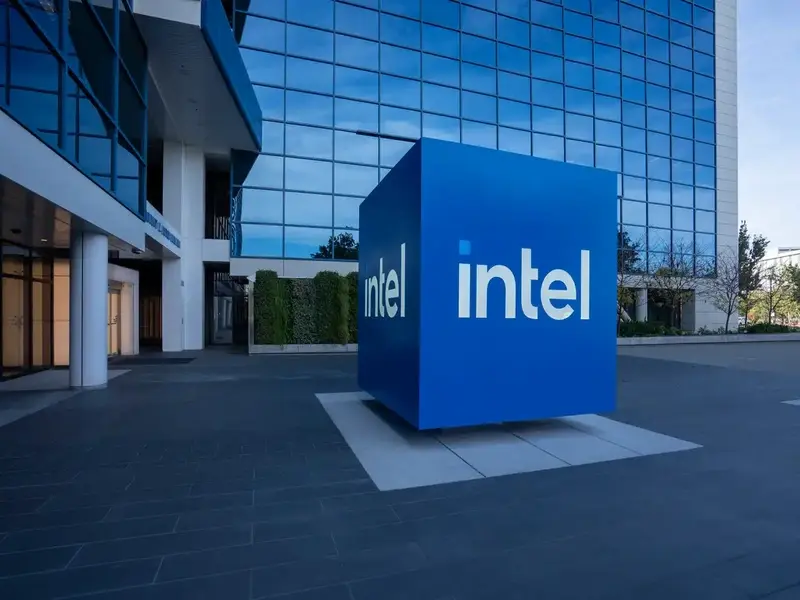
Institution Profiling / Internet infrastructure institution

Intel to cut 20% of staff under new CEO strategy

Intel to cut 20% of staff under new CEO strategy is tracked as a internet infrastructure institution within the internet infrastructure ecosystem.

Intel to cut 20% of staff under new CEO strategy

Evidence Pack

Primary-source references used for classification and impact scoring.

CategoryInstitution Type

Controlled classification for comparative analysis.

RegionGlobal

Primary geography where strategy signal is most visible.

Signal FocusInternet infrastructure institution

Principal area tracked in this profile.

Content TypeProfile

Structured profile with operational and governance relevance.

Primary DomainSecurity

Domain interpretation lens.

TopicInternet infrastructure institution

Session topic under controlled profile taxonomy.

ImpactMedium

Leadership and execution signals affect strategy timing.

Confidence?Confidence Grade · doctrine v2 §8 / SOP §2
0.90–1.00AHigh — direct sources
0.75–0.89A/BStrong
0.55–0.74B/CMedium
0.35–0.54C/DWeak–medium
0.10–0.34DWeak signal
0.00–0.09DInternal monitoring
C · 0.76

Mixed-source

Intel to cut 20% of staff under new CEO strategy is profiled by BTW Media because public-source evidence links it to internet infrastructure, governance, operational dependencies, or market visibility.

  • Intel to slash over 20% of employees in data centre and edge divisions as part of restructuring
  • Cost-cutting move aligns with CEO Pat Gelsinger’s renewed focus on AI and chip manufacturing

What happened: Semiconductor giant aims to streamline operations amid financial pressure and shifting priorities

Intel is set to reduce more than 20% of its workforce in key business units, including the data centre and network and edge divisions, according to a report by The Information and cited by The News International. The layoffs are expected to affect thousands of employees globally, beginning in May. This marks one of the largest workforce reductions under CEO Pat Gelsinger’s leadership. The job cuts follow Gelsinger’s earlier pledge to cut $10 billion in costs by 2025 and focus on transforming Intel into a leading semiconductor foundry.

The impacted divisions include the Data Centre and AI Group (DCAI) and the Network and Edge Group (NEX), both of which were merged into a new division earlier this year, now headed by Intel veteran Alexis Bjorlin. Intel did not comment publicly on the exact number of jobs to be eliminated but confirmed ongoing organisational changes aimed at improving efficiency and business focus.

Also read: Intel offloads Altera to Silver Lake in $8.75B deal
Also read:
Intel and TSMC set to form joint venture

Why it is important

This sweeping restructuring reflects Intel’s struggle to keep up with rivals in a fast-changing chip industry, particularly in the AI and cloud computing sectors. Competitors like Nvidia and AMD have surged ahead in AI-driven hardware, while Intel has faced delays in chip development and production. The layoffs signal a strategic shift away from legacy business units towards more profitable, forward-looking technologies.

Intel’s renewed emphasis on its foundry ambitions is part of a larger effort to regain technological leadership and supply chain independence, especially as global tensions spotlight semiconductor security. Gelsinger’s cost-cutting and reinvestment plan is high-risk but necessary, given that Intel’s revenue fell 20% in 2023. The affected divisions, DCAI and NEX, were once seen as growth engines. Downsizing them raises questions about Intel’s execution strategy and its ability to balance innovation with profitability. While painful, the restructuring may be critical to Intel’s long-term survival in a market increasingly dominated by AI and hyperscale data.

Core Entity Brief

  • Entity: Intel to cut 20% of staff under new CEO strategy
  • Subject Type: Internet infrastructure institution
  • Region: Global
  • Classification: Institution Type

Service Surface / Control Surface

  • Public records support monitoring of governance, service, and infrastructure control surfaces.

Governance and Policy Surface

  • Public-source signals support medium-impact monitoring for infrastructure visibility and dependency analysis.
  • Operational criticality: Medium
  • Time horizon: Quarter (30-120d)

Decision Trigger Matrix

  • Monitoring focuses on verified service continuity, governance changes, and relationship signals.
NowMedium priority

Current state favours active tracking due to infrastructure relevance.

QuarterMedium policy sensitivity

Public-source signals support medium-impact monitoring for infrastructure visibility and dependency analysis.

YearQuarter (30-120d) continuity dependency

Long-cycle infrastructure decisions likely to remain path-dependent.

Member Unlock

Restricted Profile Intelligence

Login is required to unlock full profile briefings and deep-dive sections.

Only for Strategy Circle

Strategic Circle Access

Open to all readers. Unlock profile briefings after joining and logging in.

Join Strategic Circle

Only for Leadership Alliance

Leadership Alliance Access

For owners and management of IP-holding companies. Login required to unlock.

Join Leadership Alliance
← BackAll Companies