
Institution Profiling / Internet infrastructure institution

India accuses Amazon and other e-commerce giants of undermining local retailers

India accuses Amazon and other e-commerce giants of undermining local retailers is tracked as a internet infrastructure institution within the internet infrastructure ecosystem.

India accuses Amazon and other e-commerce giants of undermining local retailers
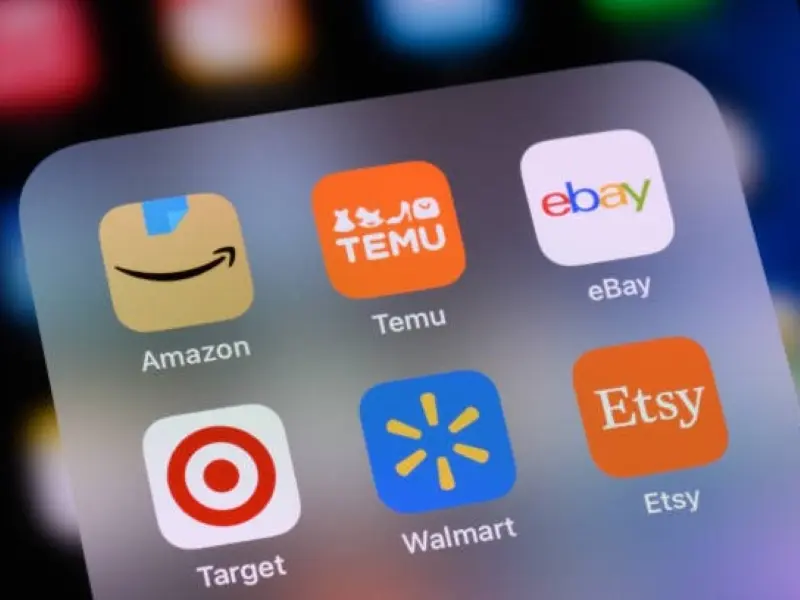
Caption: India accuses Amazon and other e-commerce giants of undermining local retailers visual context for BTW intelligence coverage. · Source context: Existing article media was retained or restored as the subject-specific visual basis. · Relevance reason: India accuses Amazon and other e-commerce giants of undermining local retailers is the primary subject or event subject; the image supports the article's governance reading. · Image provenance: Existing curated article image retained because it is subject- or event-specific and not a generic pool placeholder.

Sources

Public references used for this article.

CategoryInstitution

India accuses Amazon and other e-commerce giants of undermining local retailers is tracked as a internet infrastructure institution within the internet infrastructure ecosystem.

RegionAsia Pacific

India accuses Amazon and other e-commerce giants of undermining local retailers has public-source relevance to network operations, governance, dependency mapping, or market structure.

Signal FocusInternet infrastructure institution

India accuses Amazon and other e-commerce giants of undermining local retailers has public-source relevance to network operations, governance, dependency mapping, or market structure.

Content TypeProfile

India accuses Amazon and other e-commerce giants of undermining local retailers is tracked as a internet infrastructure institution within the internet infrastructure ecosystem.

Primary DomainGovernance

Public-source signals support medium-impact monitoring for infrastructure visibility and dependency analysis.

TopicInternet infrastructure institution

India accuses Amazon and other e-commerce giants of undermining local retailers is profiled by BTW Media because published evidence links it to internet infrastructure, governance, operational dependencies, or market visibility.

ImpactMedium

Public-source signals support medium-impact monitoring for infrastructure visibility and dependency analysis.

Confidence?Confidence Grade
0.90–1.00AHigh — direct sources
0.75–0.89A/BStrong
0.55–0.74B/CMedium
0.35–0.54C/DWeak–medium
0.10–0.34DWeak signal
0.00–0.09DInternal monitoring
Limited confidence (80%)

Several public sources

India accuses Amazon and other e-commerce giants of undermining local retailers is profiled by BTW Media because published evidence links it to internet infrastructure, governance, operational dependencies, or market visibility.

  • Amazon and Walmart’s Flipkart have significantly reshaped India’s retail landscape by investing billions to attract consumers with enticing discounts.
  • Commerce Minister Piyush Goyal criticised the narrative surrounding Amazon’s investments in India.

OUR TAKE
Understanding the implications of e-commerce practices, particularly those of giants like Amazon, is crucial for protecting millions of small, brick-and-mortar stores in India. These retailers often struggle to compete with the aggressive pricing and vast resources of larger companies, which can lead to their closure.
-Lia, XU, BTW reporter

What happened

India’s commerce minister, Piyush Goyal, has publicly accused Amazon and other e-commerce companies of predatory pricing practices. He expressed concerns that these practices could disrupt the livelihoods of millions of traditional retail stores nationwide. Goyal suggested that the substantial funds being invested are often used to cover business losses rather than to improve services. He questioned the sustainability of such investments and their true benefit to the Indian economy.

“When Amazon says we are going to invest a billion dollars in India and we all celebrate, we forget the underlying story that the billion dollars are not coming in for any great service”, Goyal said.

The Indian government’s regulations stipulate that companies like Amazon and Flipkart must operate as marketplaces, facilitating sales between third-party sellers and consumers rather than directly selling products themselves. Yet, there have been ongoing allegations that these regulations are being circumvented through complex business structures, with small retailers claiming that these e-commerce giants are effectively engaging in predatory pricing.

Also read: Telkomsel hosts Amazon’s CTO for insights into cost-efficient cloud architecture

Also read: TikTok targets Spain, Ireland to revive European e-commerce push

Why it’s important

The Indian government has been critical of foreign e-commerce companies in the past. In 2021, Goyal had accused these giants of using their scale and access to large pools of capital to disadvantage local retailers. He also alleged that these companies were not adhering to local laws. Commerce minister Piyush Goyal’s accusations underscore the complex dynamics at play and highlight the ongoing debate over the impact of e-commerce on local businesses. As regulatory scrutiny increases and investigations continue, the future of e-commerce in India will likely involve continued tension between innovation and regulatory compliance.

The rapid rise of e-commerce can lead to a homogenisation of products and services, potentially limiting consumer choice. By addressing the practices of major e-commerce players, stakeholders can help ensure a diverse marketplace that offers a variety of options for consumers, benefiting the overall economy. As e-commerce grows, jobs in brick-and-mortar stores may decline, leading to economic instability for workers in these industries. Addressing these changes is important for workforce planning and financial resilience.

At A Glance

  • Name: India accuses Amazon and other e-commerce giants of undermining local retailers
  • Type: Internet infrastructure institution
  • Base: Asia Pacific
  • Profile focus: Institution

What It Does

  • Public records support monitoring of its role, services, and key relationships.

Why It Matters

  • Public-source signals support medium-impact monitoring for infrastructure visibility and dependency analysis.
  • Operational criticality: Medium
  • Time horizon: Next quarter

What To Watch

  • Monitoring focuses on verified service continuity, governance changes, and relationship signals.
NowMedium priority

Track verified source updates, role changes, and current public evidence.

QuarterMedium policy sensitivity

Public-source signals support medium-impact monitoring for infrastructure visibility and dependency analysis.

YearNext quarter outlook

Longer-term relevance depends on verified operating, policy, and relationship changes.

Member Briefing

Deeper Profile Context

Login is required to unlock the full profile briefing and source notes.

Only for Strategy Circle

Strategic Circle Access

Open to all readers. Unlock profile briefings after joining and logging in.

Join Strategic Circle

Only for Leadership Alliance

Leadership Alliance Access

For owners and management of IP-holding companies. Login required to unlock.

Join Leadership Alliance
← BackAll Companies