
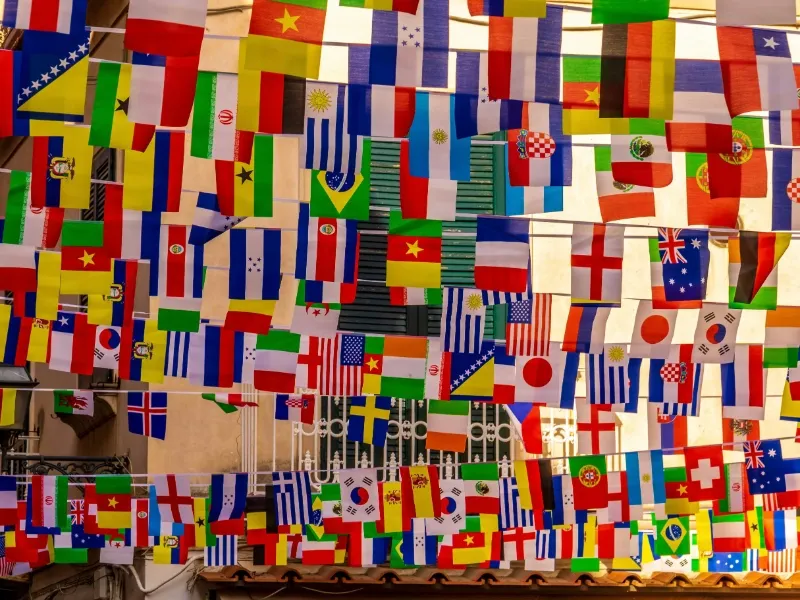
- Globalisation has revolutionised connectivity by enabling instantaneous communication and the free flow of information, goods, and ideas across the globe.
- It has fostered cultural exchange and understanding, as well as the movement of talent and knowledge, enriching the global community.
- Globalisation has fundamentally altered the way we connect with one another, transcending geographical boundaries and creating a more interconnected world.
OUR TAKE
Understanding the intricate effects of globalisation on various forms of connectivity, such as economic, social, and technological links between countries and regions, is essential. Only in this way can maximum benefits be gained from the process of globalisation.
–Jinny Xu, BTW reporter
Instantaneous communication
Globalisation changes how people, firms, and states connect, and it does so by making messages, goods, and ideas move fast across borders, so phones, the internet, and simple social apps let friends talk, teams work, and traders deal in real time, and this speed also shapes daily life because families keep ties at distance and companies run projects across time zones;
at the same time, large supply chains link factories and shops in many countries, so parts travel far before a product reaches a home, and this web of exchange builds mutual dependence but also spreads risk when one hub slows;
culture moves in the same way, as travel is cheaper and media from many places is easy to see, so people learn from food, music, and film, and classes discuss new views in mixed groups; schools and labs now work across borders because online courses and joint degrees let students join seminars from anywhere, and shared datasets and open tools let scholars check results and build on them;
workforces also change because people move to study or to find jobs, and skills flow both ways, so host cities gain new workers while home regions gain new links and ideas when people return or send support; taken together, these changes show that globalisation is not only trade or tourism but a wide set of ties—economic, social, and technical—that grow side by side, and clear study of these ties is needed so policy can keep the gains, reduce weak points, and make sure access is broad and fair.
Also read: Ant eyes Europe and US for its Alipay+travel payment service
The internet and social media
The emergence of the internet has played a pivotal role in fostering worldwide connectivity. Social media platforms such as Facebook, Twitter, and Instagram have effectively established virtual communities, allowing individuals from diverse cultural and societal backgrounds to engage with one another, exchange ideas, and cultivate meaningful relationships. This transformative phenomenon has undeniably contributed to the creation of a more interconnected and well-informed global society.