
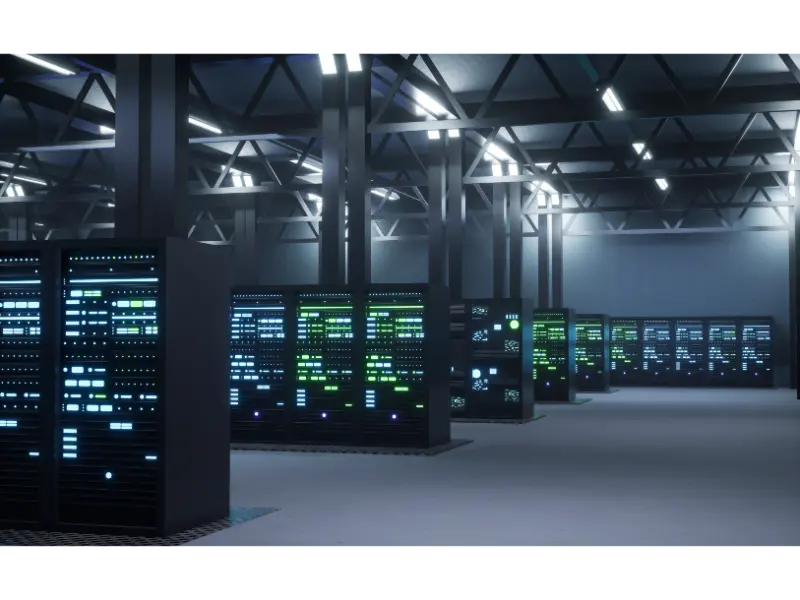
- Supercomputers, the largest and most powerful computational systems, are crucial for solving complex problems, enabling breakthroughs in science and technology, and shaping the future of various fields including medicine, climate research, and immersive virtual experiences.
- Supercomputers are transforming climate research and renewable energy optimization by accurately predicting and enhancing wind farm efficiency through advanced modeling of climate trends and environmental factors.
- Scaling supercomputing technology requires extensive collaboration between public and private sectors, as well as community efforts in open-source development, to drive advancements and accessibility globally.
Supercomputers, comprised of tens of thousands of interconnected nodes, perform complex computations far beyond the capabilities of standard computers, playing a critical role in data analysis and problem-solving across various scientific disciplines.
Understanding supercomputers: The behemoths of modern computing
Supercomputers, the largest and most powerful computers globally, utilize massive memory blocks and multiple central processing units (CPUs) grouped into tens of thousands of ‘compute nodes.’ Picture 50,000 laptops interconnected, running a single software application simultaneously. These systems, unlike standard computers, require specialized cooling and power systems due to their immense power consumption and heat generation. The cooling often involves water, making it thermally and energy-efficient. This unique setup allows supercomputers to solve complex problems, such as disease cures, energy issues, and advancements in material science, which would be too time-consuming or costly with conventional computers.
Also read: What is machine learning and computer vision?
Also read: What is an example of a supercomputer?
Supercomputers and climate change: Optimizing renewable energy
Supercomputers are revolutionizing climate research and renewable energy optimization. They help predict and enhance the efficiency of wind farms by integrating climate trends, local turbulence from wind turbines, and other environmental factors. This advanced modeling allows for maximizing the energy output and operational efficiency of wind farms, contributing to sustainable energy solutions.
As climate change remains a pressing global issue, supercomputing provides the necessary computational power to analyze complex environmental data, aiding in the development of effective strategies to combat climate change and promote renewable energy use.
Scaling supercomputing technology: The need for collaboration
To scale supercomputing technology, extensive collaboration between public and private sectors is essential. This cooperation has driven the industry forward and must continue to expand globally. An example is the LUMI consortium in Europe, where multiple states collaborated to build a supercomputer, providing access to scientists and industries across the region. Additionally, community collaboration in open-source development plays a vital role in advancing supercomputing capabilities. Cultivating the next generation of scientists and engineers familiar with this technology is crucial for continuing progress, ensuring that future talent can tackle complex problems and drive further innovations in the field.
Future prospects: Supercomputers shaping the next decades
In the next 20 years, supercomputers are expected to drive significant scientific and technological advancements. They will enable breakthroughs in medical research, potentially leading to cancer cures and improved energy efficiency. Moreover, supercomputers will play a crucial role in developing the Metaverse and future space explorations by simulating complex environments. These simulations will enhance immersive experiences, from virtual reality to physical training scenarios.
The ability to create detailed, realistic simulations will open new opportunities in various fields, from entertainment to defense, demonstrating supercomputers’ far-reaching impact on future innovations.