
Strategic Circle Briefing
Join to unlock strategic briefings after signing in.
Join Strategic CircleGovernance / RIR Watchdog
Five regional registries decide who gets IP addresses and on what terms. We watch ARIN, RIPE NCC, APNIC, AFRINIC and LACNIC — elections, transfer rules, fees and failures — so you see the change before it reaches your allocation.

Latest Coverage
3,279 articles
Story
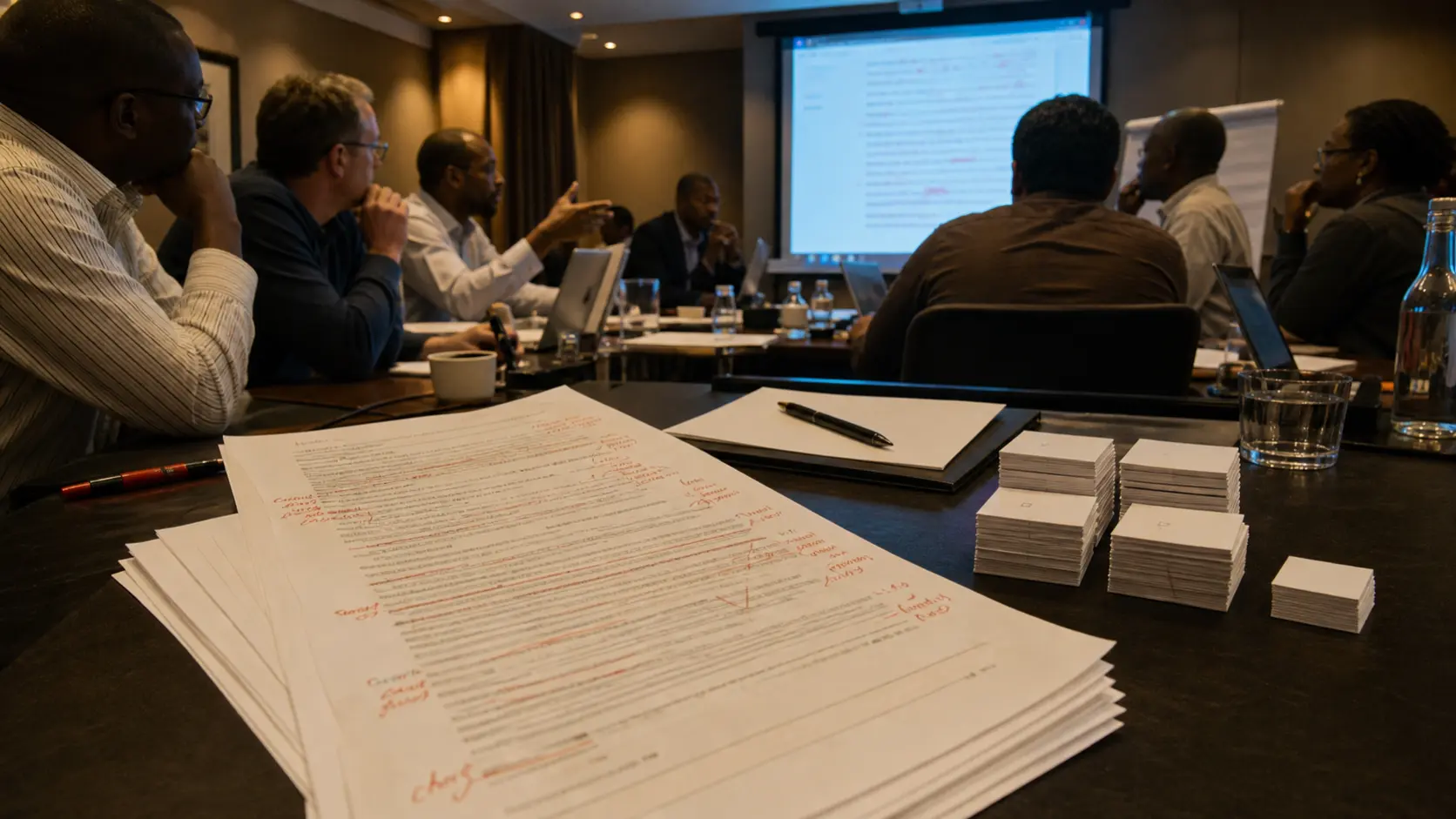
On 25 November 2010, AFRINIC’s public-policy meeting did not approve a finished Soft Landing policy. It agreed to move an identifiable proposal to Last Call while assigning three changes to be incorporated afterward and deliberately leaving a disputed /27 minimum unchanged.…

Story
The decisive entity in June 2010 was not only a proposal about scarce IPv4 space. It was the notice that told people which proposal they were being asked to examine. Because the draft changed during a dated review window without a redline, a stable version or a published…

Story
On 12 May 2010 a revised Soft Landing proposal quietly acquired a new reference in AFRINIC's later history — but the email that carried it showed neither the number nor a redline. That gap is the whole story: a label can locate a document, yet only an exact lineage and a…

Story
AFRINIC’s 2010 replacement policy did more than propose new procedure. It recorded the faults of the procedure it was meant to replace—and a later implementation note revealed how much discretion survived the repair.

Story
In Kigali on 3 June 2010, AFRINIC's chair recorded consensus on the IPv4 Soft Landing proposal 'with some modifications' — then lost the receipt. The direction survived. The text did not. BTW Media reconstructs the missing custody chain between the gavel and last call.

Story
AFRINIC Stamped a Policy 'Implemented' Four Months Before the World Ratified It intelligence summary explains the development, the public evidence available to readers, the organisations involved, the regional context, market exposure, and the infrastructure consequences that may…

Story
AFRINIC's public Case List separates three Skyconnect proceedings: a 9 March plaint challenging the Board's ratification of the inter-RIR transfer policy, an interim-order application marked declined and not served, and a 7 April appeal. All three are labelled ongoing. With no…

Story
AFRINIC's registry service cleared USD 139,469 before finance in 2009. A USD 140,218 exchange loss consumed 89.85 percent of it, leaving USD 14,157 — and the audited accounts bury the loss inside operating expenses. The arithmetic is clean. The authority trail is not.

Story
On 27 November 2009 in Dakar, a substantially revised IPv4 Soft Landing proposal failed to reach consensus for the second public meeting, leaving evidence consistent with a dispute that had moved beyond drafting detail to the limits of what a private registry should decide when…

Story
AFRINIC-11's ASN consensus met its real test in compatibility intelligence summary explains the development, the public evidence available to readers, the organisations involved, the regional context, market exposure, and the infrastructure consequences that may follow. The Story…

Story
In Dakar, a technical policy proposal was withdrawn and its affordability problem was handed to an author, staff and a private Board; the enduring question is not whether that boundary was sensible, but whether the alternative ever became visible enough to audit.

Story
At AFRINIC-10 in Cairo, a small survey finding exposed a large governance problem: opening a channel is not the same as carrying people across it. The meeting report said 59 percent were subscribed to an unspecified AFRINIC mailing list, but supplied neither the item count nor…

Story
Both candidates won AFRINIC's two community NRO NC / ASO AC seats unopposed. A separate vote then gave Musa Stephen Honlue a term through 2029 and Nitin Kelawon Sookun one through 2028. The minutes disclose the 106-34 tally and a five-to-two eligibility funnel—but not the voter…

Story
At Cairo’s AFRINIC-10 meeting, a called bundle of seventeen proxy votes plus one associated vote was counted, questioned and counted again. The surviving record confirms that signed proxies carried real ballot weight on 21 May 2009, but it does not let an outside reader…

Story
AFRINIC’s own account of its May 2009 meeting records a specific promise: gather the election criticisms, report them to the Board and return appropriate recommendations to the community. AFRINIC has never publicly traced that promise through receipt, decision, implementation and…

Story
On 21 May 2009, the AFRINIC-10 election committee announced that a valid ballot was green and stamped on both faces. AFRINIC did not publish how the promised genuineness check worked, who held the stamp or how ballot stock was reconciled, and no paper rule could turn a private…

Story
At AFRINIC's 21 May 2009 meeting, a dispute over whether a candidate could vote became a precise test of institutional authority: a new bylaw could empower the Board to change an election regulation, counsel said, but neither expectation nor practice could perform the Board's…

Story
AFRINIC's report on AFRINIC-10 counted 135 entities and 42 survey respondents. Its own arithmetic shows that 42 answers can describe a meeting — but can never authorise anything on behalf of 135 people, a membership, or a continent.

Story
AFRINIC's Board-approved 2026 rules opened two staggered PDWG co-chair seats. The record shows two applicants, one found eligible, one accepted by a show of hands for a two-year term, and the second seat pushed to November — with no entity roll, no hand count and no…

Story
A number on a presentation slide became a live test of how a private registry turns its accounts into a corporate voter roll: the official account of AFRINIC-10 records 36 certified eligible voters at slide time, a correction to 40 before the ballot, 41 ballots cast and 40 found…
Member Unlock
Login is required to unlock full profile briefings and deep-dive sections.
Join to unlock strategic briefings after signing in.
Join Strategic CircleFor IP-asset owners and leadership teams: alliance briefings, private reports and direct analyst support.
Join Leadership AllianceSession Map
North America governance, transfer-market behavior, and member process monitoring.
Open ARINAccountability, member visibility, and implementation signals across the RIPE NCC region.
Open RIPE NCCAllocation pressure, policy adaptation, and Asia Pacific institutional execution.
Open APNICElection process, legal continuity, and board legitimacy under institutional stress.
Open AFRINICInstitutional adaptation and ICP-2 governance trajectory in Latin America.
Open LACNIC