
Single-stack monitoring for RIR governance continuity.
Governance / RIR Watchdog
RIR Watchdog
RIR Watchdog governance intelligence tracks institutions, policy processes, standards activity, registry operations, accountability disputes, and implementation signals that affect internet infrastructure. BTW.
ARINRIPE NCCAPNICAFRINICLACNIC

Institution legitimacy and policy execution quality.
Decision-critical policy and control changes.
Primary-source reporting plus structural interpretation.
Latest Coverage
Latest from RIR Watchdog
2,424 articles

Story
Portable Registries Would Make Elections Less Existential
If operators could change the organisation maintaining their number-resource registration without changing the resources or routes themselves, board elections would still matter but would no longer concentrate every accountability question inside one provider.

Story
A Valid Vote Is Not a Regional Mandate
A regional registry election can lawfully authorise directors to govern a corporation without authorising them to speak for every network, institution or person in the region it serves.

Story
The Candidate Statement That Cannot Be Challenged
An official election page cannot borrow institutional authority for a candidate's claims while offering voters no durable way to test, correct or answer them.

Story
Campaign Finance in a System That Says It Has No Politics
Regional registry elections have no parties and rarely use the language of campaigns, but candidates still compete with money, travel, staff time, data and organisational sponsorship that voters deserve to see.
Story
The Spoiled Ballot as Institutional Evidence
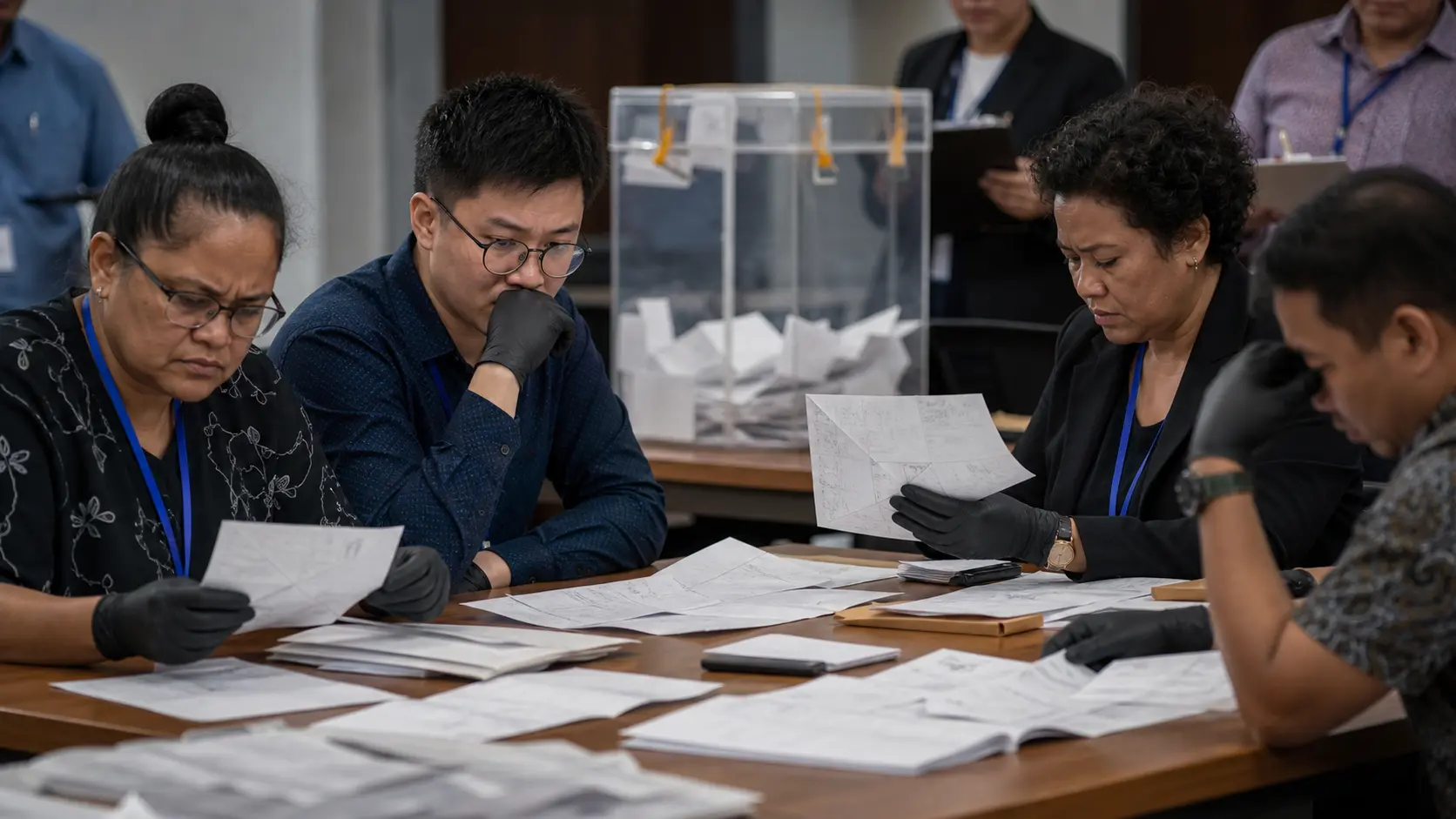
An invalid vote may be irrelevant to the winning margin and still be the most revealing fact in an election, because rejection patterns expose where instructions, access, timing and institutional assumptions fail.

Story
Tie-Breakers, Randomness and Chair Power
When a registry election or resolution ends in a tie, the secondary rule—not the original tally—allocates power. Repeat ballots, auditable random draws, automatic rejection and bounded chair discretion each shift authority differently, so the applicable mechanism must be fixed…

Story
Board Vacancies and the Power of Temporary Appointments
RIPE NCC directors are unpaid and periodically re-elected, yet office itself supplies visibility, information, travel, institutional roles and a record of decisions that challengers cannot reproduce. None of those advantages proves an unfair election; together they form a loop…

Story
Election Observers Without Remedial Power
Election observers are valuable precisely because they do not decide who wins, but their neutrality becomes decorative when no institution must preserve, assess and answer the evidence they report.

Story
When Staff Call the Voters
During a contested election, an ordinary verification call can alter the event it is meant to protect. Staff possess contact data, institutional authority and knowledge of who is trying to vote. If they contact one member about one disputed mandate without a published rule…

Story
Secret Ballot, Public Infrastructure
A registry member's selection should remain private. Almost everything that makes that selection valid should be capable of examination: the electorate, authority to vote, system configuration, custody, tally procedure, conflicts, incidents and certification. Treating all…

Story
The Proxy Holder Who Carries Fifty Mandates
Imagine fifty member organisations delegating their ballots to one trusted conference regular. Every instrument may be genuine and every principal willing, yet the resulting concentration changes the election. The important governance question is not whether delegation is…

Story
Remote Voting Did Not Remove the Attendance Premium
Regional Internet registries have made ballots reachable from laptops and phones, but the choice placed on those screens is still shaped by meetings. Regular attendees encounter candidates, institutional language and emerging disputes before a remote member receives a voting…

Story
The Election Calendar as an Instrument of Control
An election calendar looks administrative until one asks what every deadline makes possible, and for whom. Across the regional Internet registries, time determines whether a member can authorise a voter, whether a challenger can become known, whether a disputed credential can be…

Story
Term Limits That Move Power Sideways
Removing a director after a fixed number of terms can refresh one board while leaving the same person free to chair a committee, take an appointed regional seat, advise management or return after a short break. Effective rotation must follow authority across connected offices…

Story
The Incumbency Loop in Registry Boards
RIPE NCC directors are unpaid and periodically re-elected, yet office itself supplies visibility, information, travel, institutional roles and a record of decisions that challengers cannot reproduce. None of those advantages proves an unfair election; together they form a loop…

Story
Nominating Committees as Unelected Gatekeepers
ARIN members elect trustees and advisers, but the range of choices is shaped earlier by a Board-created committee, annual guidance, an outside assessor and a petition threshold. The legitimacy question is not whether nominations need administration; it is whether unelected…

Story
The Candidate Vetting File Nobody May Inspect
ARIN now separates candidate assessment from its Nomination Committee and gives excluded nominees a petition route, yet the decisive record still sits between legitimate confidentiality and democratic accountability. The test is not whether every background document becomes…

Story
LACNIC's Electoral Commission and the Independence Test
LACNIC gives its five-member Electoral Commission broad powers to certify elections, investigate incompatibilities, exclude candidates and determine winners. Its independence, however, depends on who writes the rules, supplies evidence and resources, reviews reasons and controls…

Story
APNIC's 2023 Proxy Storm: When Corporate Votes Crossed Borders
APNIC's 2023 election exposed how a lawful proxy can move a weighted corporate ballot across organisational and national boundaries. The crisis was not proof that every delegation was abusive; it was evidence that concentrated mobilisation could outrun the safeguards around…

Story
ARIN's Two Turnout Numbers and the Cost of an Inconsistent Record
ARIN's official 2024 election page says both that 862 organisations voted and that 959 organisations cast ballots. The unexplained difference does not prove a bad election, but it prevents the public record from carrying the certainty ARIN claims for it.
Member Unlock
Restricted Profile Intelligence
Login is required to unlock full profile briefings and deep-dive sections.
Strategic Circle Briefing
Join to unlock strategic briefings after signing in.
Join Strategic CircleLeadership Alliance Briefing
For qualified IP-asset owners and management; sign in to unlock alliance briefings.
Join Leadership AllianceSession Map
Registry Sessions
ARIN
North America governance, transfer-market behavior, and member process monitoring.
Open ARINRIPE NCC
Accountability, member visibility, and implementation signals across the RIPE NCC region.
Open RIPE NCCAPNIC
Allocation pressure, policy adaptation, and Asia Pacific institutional execution.
Open APNICAFRINIC
Election process, legal continuity, and board legitimacy under institutional stress.
Open AFRINICLACNIC
Institutional adaptation and ICP-2 governance trajectory in Latin America.
Open LACNIC