
Strategic Circle Briefing
Join to unlock strategic briefings after signing in.
Join Strategic CircleGovernance / RIR Watchdog
Five regional registries decide who gets IP addresses and on what terms. We watch ARIN, RIPE NCC, APNIC, AFRINIC and LACNIC — elections, transfer rules, fees and failures — so you see the change before it reaches your allocation.

Latest Coverage
3,279 articles

Story
Reverse DNS looks like a technical service until a holder tries to leave. Then parent-side delegation becomes a price on exit, transfer and customer continuity.

Story
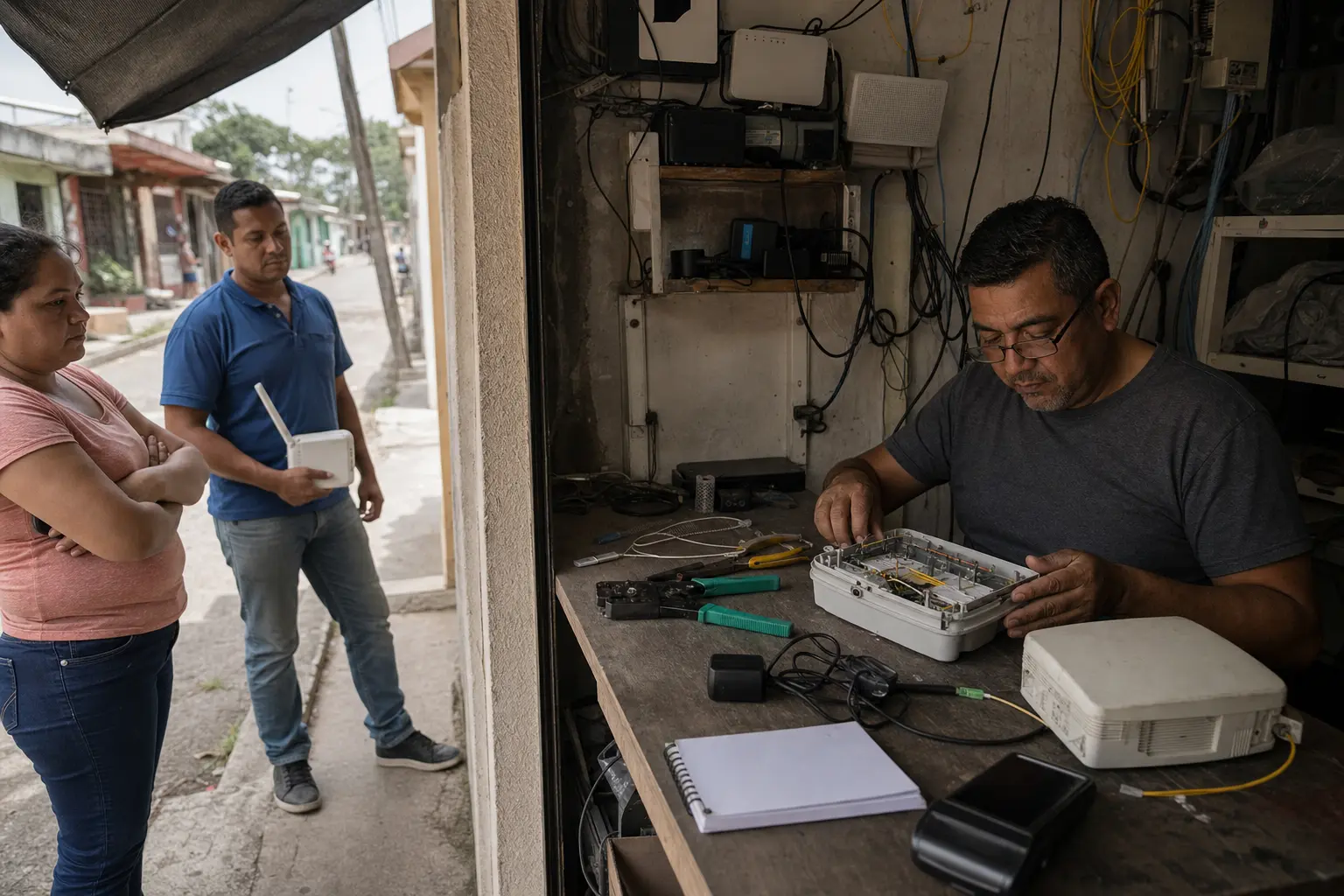
A rural network can travel farther than its revenue. When few active lines must carry every tower, truck roll and address dependency, scarcity becomes a unit-cost problem.

Story
A clean registry entry does not always mean a clean address block. Reputation memory can turn scarce IPv4 capacity into a discounted asset with hidden operating debt.

Story
Old enterprise address holdings are not administrative curiosities. They are operational memory, transaction evidence and balance-sheet optionality in a scarce IPv4 market.

Story
An island can buy a second path and still own only one failure. Redundancy has value only when network identity survives the clock between breakage and restoration.

Story
Language is not just a courtesy cost in policy governance. When scarce address rights depend on text, translation and procedural voice, meaning itself becomes part of the market infrastructure.
Story
Equal nominal charges are not equal burdens. A hard-currency network obligation divided by a soft-currency customer bill becomes a regressive claim on service quality and expansion.

Story
Routing registries are supposed to reduce uncertainty. When their evidence fragments, scarcity turns old records into new transaction costs.

Story
The title-insurance analogy is not a claim that IP addresses are land. It is a way to see why record history, authority and correction matter to scarce-number markets.

Story
IPv4 brokers exist because search, trust and proof are costly. Their market can reduce friction only if the registry stays a ledger rather than a moral authority over trade.

Story
Scarce address assets invite false authority claims. The hard institutional task is to reject fraud without converting verification into discretionary control over legitimate holders.

Story
A route object is not a constitution. Yet in scarce IPv4 markets it can decide whether a transfer, lease or upstream change is treated as operationally credible.

Story
Opaque IPv4 prices tax the least informed party first. A thin ledger can support market transparency without setting prices or policing capital.

Story
Suballocation visibility is the quiet line between privacy and operational accountability. Downstream users need continuity, while markets and abuse desks need enough truth to price risk.

Story
A sanctions hit can begin as a name-match query, but in a scarce-address market it can end as a continuity shock. The question is whether the registry checks evidence or becomes a discretionary compliance gate.

Story
A registry decision is several contracts away from an end user. The distance does not remove the liability; it merely hides who pays when network identity stops travelling.

Story
Routing-security evidence increasingly travels with IPv4 value. It does not make addresses land, but it now shapes whether scarce resources can be accepted, financed and used.

Story
A cable cut is physical, but the continuity bill is also institutional. Edge networks need address identity to survive reroutes, emergency upstreams and the cost of redundancy.

Story
Cross-border IPv4 transfers do not close on engineering alone. They close on authority, translation, banking evidence and tax risk, and every extra proof burden changes the price of liquidity.

Story
Silence is cheap to count and costly to interpret. In a scarce-address regime, the absence of objections may show agreement, but it may also show fatigue, exclusion, language cost or the rational decision not to spend scarce time on a process whose consequences arrive later.
Member Unlock
Login is required to unlock full profile briefings and deep-dive sections.
Join to unlock strategic briefings after signing in.
Join Strategic CircleFor IP-asset owners and leadership teams: alliance briefings, private reports and direct analyst support.
Join Leadership AllianceSession Map
North America governance, transfer-market behavior, and member process monitoring.
Open ARINAccountability, member visibility, and implementation signals across the RIPE NCC region.
Open RIPE NCCAllocation pressure, policy adaptation, and Asia Pacific institutional execution.
Open APNICElection process, legal continuity, and board legitimacy under institutional stress.
Open AFRINICInstitutional adaptation and ICP-2 governance trajectory in Latin America.
Open LACNIC