
Strategic Circle Briefing
Join to unlock strategic briefings after signing in.
Join Strategic CircleGovernance / RIR Watchdog
Five regional registries decide who gets IP addresses and on what terms. We watch ARIN, RIPE NCC, APNIC, AFRINIC and LACNIC — elections, transfer rules, fees and failures — so you see the change before it reaches your allocation.

Latest Coverage
3,279 articles

Story
An emergency can justify accelerated adoption, but a rule that survives the emergency without automatic expiry, mandatory evidence or a credible return to ordinary authority converts temporary necessity into permanent institutional advantage.

Story
Requiring a entity to seek reconsideration from the chairs whose judgment they dispute can resolve error quickly, but it is not an independent appeal and must not become a gate that protects the original decision from review.

Story
IPv4 exhaustion transformed number-resource policy from distribution of a replenished pool into governance of scarcity, but urgency could not legitimately turn rough consensus into applause, silence or a race against the counter.

Story
A policy proposal that failed, stalled or was withdrawn is not administrative debris: it is evidence about unresolved needs, rejected trade-offs, institutional memory and who had the stamina to remain in the room.

Story
When the people who draft a registry policy must later turn it into operational decisions, practical knowledge is valuable, but unmarked authority can make implementation a second and less visible legislature.

Story
A public policy thread can end without reaching a public conclusion. Entities begin calling one another, exchange private drafts, create a small chat or wait for a meeting corridor. When discussion returns, the text has changed and the people inside the private exchange…

Story
Public mailing lists are among the strongest accountability devices in Internet governance. They preserve reasons, allow participation beyond meetings and make chair decisions reviewable. They are also easy to misread. A long thread may be produced by a few persistent people…

Story
An open microphone looks egalitarian: anyone in the room can join the queue, remote entities can send comments, and chairs can hear disagreement before judging consensus. Yet speaking order quietly structures the evidence. Early speakers establish vocabulary, repeat contributors…

Story
Institutional expertise is indispensable to number-resource policy. Registry staff know which requests recur, which systems must change, where legal duties attach and how a seemingly modest sentence will alter daily administration. Yet an impact assessment can become a hidden…

Story
A number-resource policy proposal often appears to begin with a neutral description of a shared difficulty. In reality, the sentence that defines the problem allocates attention, identifies legitimate evidence and narrows the remedies that can later appear reasonable. The author…

Story
AFRINIC's Resource Transfer Policy began as a 2019 attempt to define how IPv4 registrations could move across regional boundaries. By draft 4, the proposal had absorbed repeated revisions, compatibility questions from other registries, a disputed consensus determination and a…

Story
LACNIC gives a proposal that has reached consensus a final public interval before Board ratification. The design is sensible: people who missed the main discussion can identify a neglected issue, while the wider community can test whether agreement survives the final text. The…

Story
ARIN's Advisory Council is called advisory, but the Policy Development Process gives it a more consequential position. It receives proposals, determines whether they become drafts, develops and revises language, judges readiness, abandons or advances work and recommends policy to…

Story
APNIC's prop-050 did not move from proposal to policy through one act of agreement. It crossed meetings, revisions, a majority that was not consensus, agreement on selected points, an eight-week comment period, Executive Council return, a new text, member-meeting support, another…

Story
The first European address rules are often remembered as the natural response of a technical community to scarcity and routing growth. The surviving record tells a more demanding story. A small, identifiable set of people translated global guidance into regional practice, while…

Story
If operators could change the organisation maintaining their number-resource registration without changing the resources or routes themselves, board elections would still matter but would no longer concentrate every accountability question inside one provider.

Story
A regional registry election can lawfully authorise directors to govern a corporation without authorising them to speak for every network, institution or person in the region it serves.

Story
An official election page cannot borrow institutional authority for a candidate's claims while offering voters no durable way to test, correct or answer them.

Story
Regional registry elections have no parties and rarely use the language of campaigns, but candidates still compete with money, travel, staff time, data and organisational sponsorship that voters deserve to see.
Story
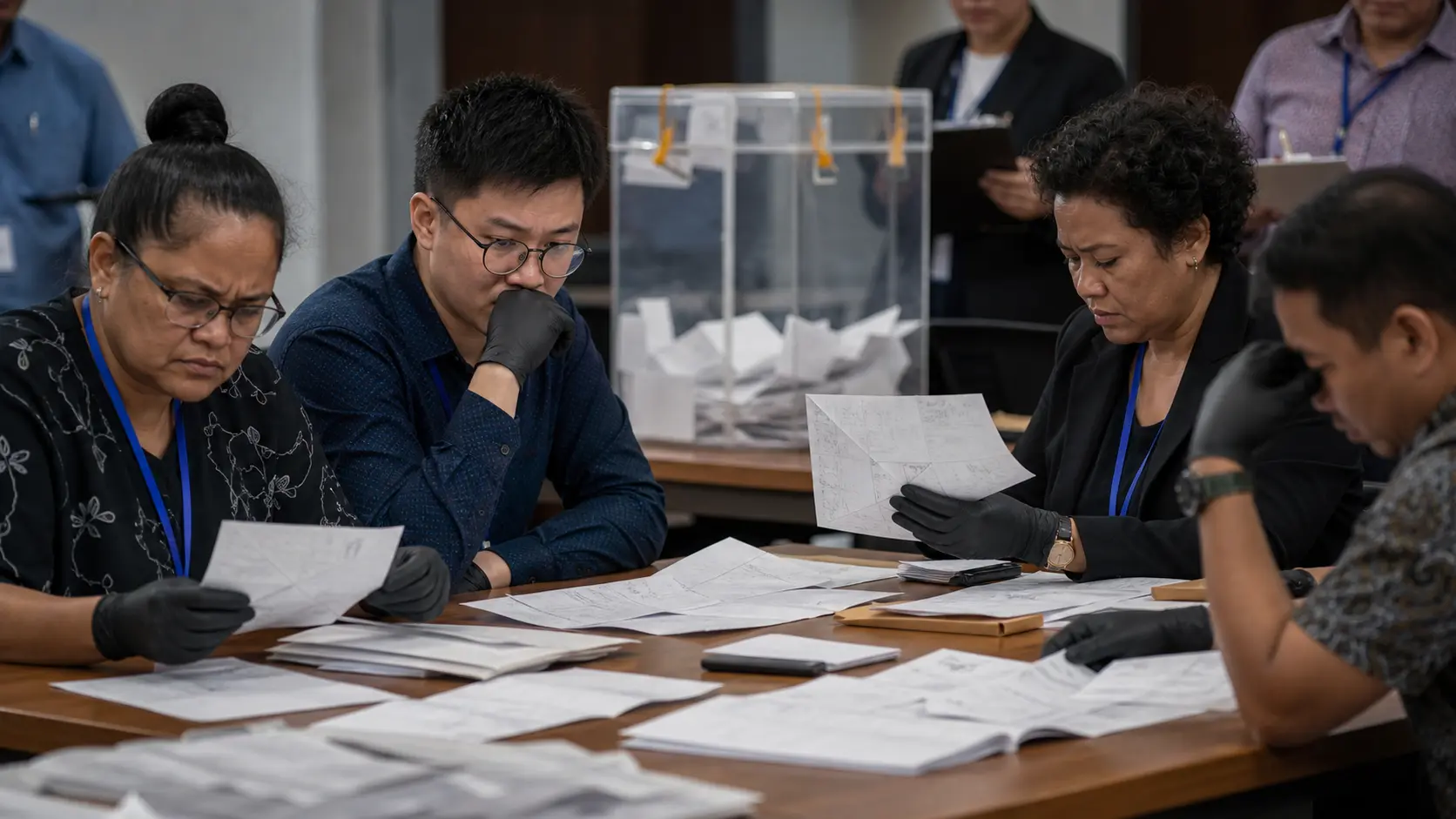
An invalid vote may be irrelevant to the winning margin and still be the most revealing fact in an election, because rejection patterns expose where instructions, access, timing and institutional assumptions fail.
Member Unlock
Login is required to unlock full profile briefings and deep-dive sections.
Join to unlock strategic briefings after signing in.
Join Strategic CircleFor IP-asset owners and leadership teams: alliance briefings, private reports and direct analyst support.
Join Leadership AllianceSession Map
North America governance, transfer-market behavior, and member process monitoring.
Open ARINAccountability, member visibility, and implementation signals across the RIPE NCC region.
Open RIPE NCCAllocation pressure, policy adaptation, and Asia Pacific institutional execution.
Open APNICElection process, legal continuity, and board legitimacy under institutional stress.
Open AFRINICInstitutional adaptation and ICP-2 governance trajectory in Latin America.
Open LACNIC