
Institution Profiling / Internet infrastructure institution

Google and Chile to build first South Pacific submarine cable

Google and Chile to build first South Pacific submarine cable is tracked as a internet infrastructure institution within the internet infrastructure ecosystem.

Google and Chile to build first South Pacific submarine cable

Evidence Pack

Primary-source references used for classification and impact scoring.

CategoryInstitution Type

Controlled classification for comparative analysis.

RegionAsia Pacific

Primary geography where strategy signal is most visible.

Signal FocusInternet infrastructure institution

Principal area tracked in this profile.

Content TypeProfile

Structured profile with operational and governance relevance.

Primary DomainTechnology

Domain interpretation lens.

TopicInternet infrastructure institution

Session topic under controlled profile taxonomy.

ImpactMedium

Leadership and execution signals affect strategy timing.

Confidence?Confidence Grade · doctrine v2 §8 / SOP §2
0.90–1.00AHigh — direct sources
0.75–0.89A/BStrong
0.55–0.74B/CMedium
0.35–0.54C/DWeak–medium
0.10–0.34DWeak signal
0.00–0.09DInternal monitoring
C · 0.82

Mixed-source

Google and Chile to build first South Pacific submarine cable is profiled by BTW Media because public-source evidence links it to internet infrastructure, governance, operational dependencies, or market visibility.

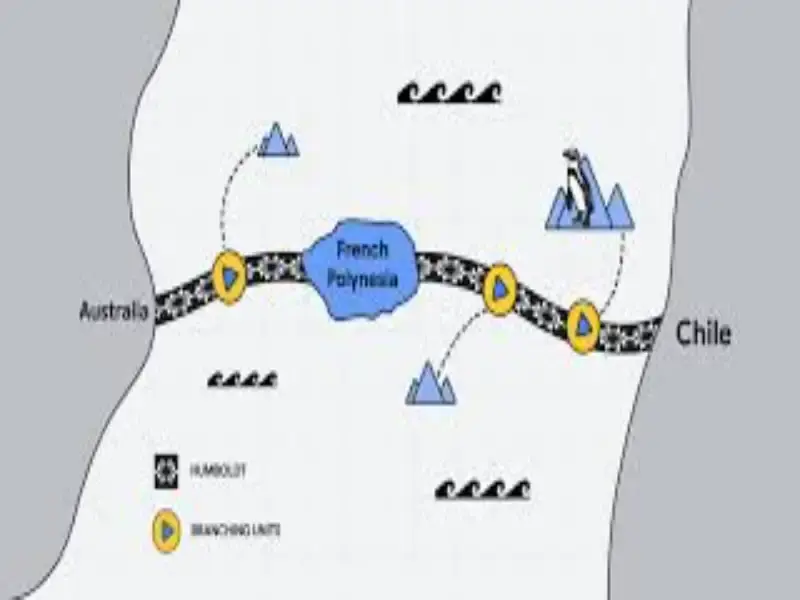
  • Google and Chile have agreed to build the Humboldt Cable, a 14,800-kilometre submarine data cable connecting South America to the Asia-Pacific region, expected to be operational by 2027.
  • The project aims to enhance digital connectivity, support various services and industries, and establish Chile as a regional digital hub.

What happened: Google and Chile sign deal for South Pacific data cable project

Google and the Chilean government have signed an agreement to deploy a 14,800-kilometre submarine data cable, named the Humboldt Cable, connecting Valparaíso, Chile, to Sydney, Australia, via French Polynesia. This initiative, the first of its kind in the South Pacific, aims to enhance digital connectivity between South America and the Asia-Pacific region. The project, initially proposed in 2016, is scheduled for deployment in 2026 and expected to be operational by 2027.

The estimated cost of the project ranges between $300 million and $550 million, with Chile contributing $25 million through its state-owned infrastructure company, Desarrollo País. The cable will be open for use by other entities, including technology companies operating in Chile.

The Humboldt Cable is expected to improve services such as TikTok, facilitate the transmission of astronomical data, and support mining operations in both Chile and Australia. Additionally, Chile is exploring extending the cable to Argentina and is planning a separate submarine cable to Antarctica for research purposes.

Also read: ODATA ST02 data centre shaping Chile’s digital future
Also read: Chile, Google to make 15,000 km cable connecting LatAm and Asia

Why it’s important

This project positions Chile as a digital hub in Latin America, strengthening its connectivity with Asian nations, including China, its largest trading partner. The Humboldt Cable also reflects the growing importance of submarine cables in global digital infrastructure and the strategic interests of major technology companies in expanding their global networks.

Core Entity Brief

  • Entity: Google and Chile to build first South Pacific submarine cable
  • Subject Type: Internet infrastructure institution
  • Region: Asia Pacific
  • Classification: Institution Type

Service Surface / Control Surface

  • Public records support monitoring of governance, service, and infrastructure control surfaces.

Governance and Policy Surface

  • Public-source signals support medium-impact monitoring for infrastructure visibility and dependency analysis.
  • Operational criticality: Medium
  • Time horizon: Quarter (30-120d)

Decision Trigger Matrix

  • Monitoring focuses on verified service continuity, governance changes, and relationship signals.
NowMedium priority

Current state favours active tracking due to infrastructure relevance.

QuarterMedium policy sensitivity

Public-source signals support medium-impact monitoring for infrastructure visibility and dependency analysis.

YearQuarter (30-120d) continuity dependency

Long-cycle infrastructure decisions likely to remain path-dependent.

Member Unlock

Restricted Profile Intelligence

Login is required to unlock full profile briefings and deep-dive sections.

Only for Strategy Circle

Strategic Circle Access

Open to all readers. Unlock profile briefings after joining and logging in.

Join Strategic Circle

Only for Leadership Alliance

Leadership Alliance Access

For owners and management of IP-holding companies. Login required to unlock.

Join Leadership Alliance
← BackAll Companies